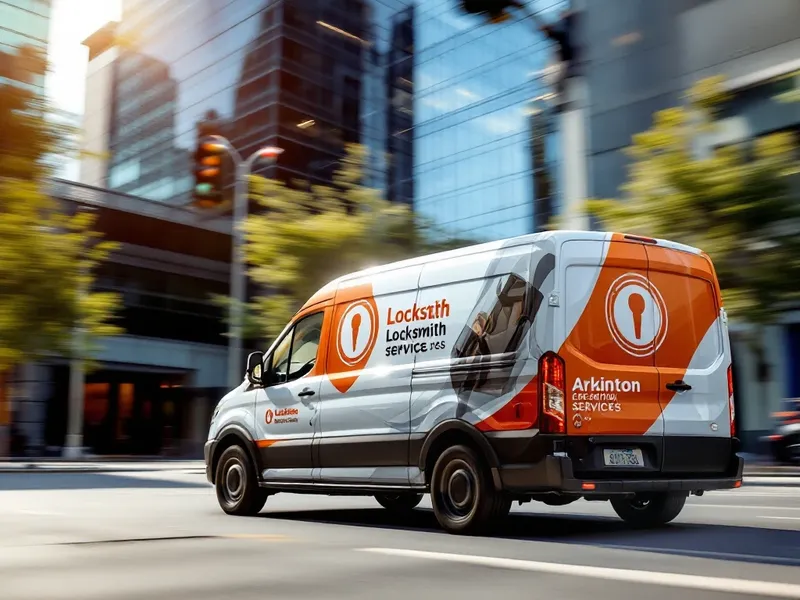
ECM, BCM & TCM Programming in Arlington TX: The Definitive Guide to Mobile Computer Module Service
Every modern vehicle on Arlington roads is controlled by a network of interconnected computers. Your engine does not just burn fuel—the Engine Control Module (ECM) precisely calculates air-fuel ratios, ignition timing, emissions output, and thousands of other parameters hundreds of times per second. Your transmission does not just shift gears—the Transmission Control Module (TCM) analyzes vehicle speed, throttle position, engine load, and driver behavior to deliver the perfect shift at the perfect moment. And tying it all together, the Body Control Module (BCM) manages everything from your power windows and door locks to your interior lighting and security system.
When one of these modules fails, needs replacement, or requires reprogramming after a repair, you face a critical decision. The dealership will charge $800 to $2,500 or more, require you to tow the vehicle in, and keep it for days. Or you can call a specialist with OEM-level diagnostic tools who comes to your location and completes the job same-day.
That specialist is Not Your Basic Locksmith. With over 15 years of hands-on experience programming automotive computer modules, factory-grade OEM tools, and a fully equipped mobile service unit, we deliver dealership-quality ECM, BCM, and TCM programming at your driveway, parking lot, or roadside location anywhere in the DFW metroplex.
What Is Automotive Module Programming?
Automotive module programming is the process of installing, updating, or configuring the software that runs on a vehicle's electronic control units (ECUs). Think of it as installing an operating system on a computer—except this computer controls a 4,000-pound machine traveling at highway speeds, so there is zero margin for error.
Why Modules Need Programming
- Module replacement — A new ECM, BCM, or TCM arrives from the manufacturer as a blank unit. It must be flashed with the correct software calibration for your specific vehicle, engine, transmission, and options package.
- Software updates — Manufacturers release Technical Service Bulletins (TSBs) that update module software to fix known issues, improve performance, or meet new emissions requirements.
- VIN writing — Every module must be encoded with your vehicle's VIN for the immobilizer, emissions, and onboard diagnostic systems to function correctly.
- Module configuration — After programming, modules must be configured for your vehicle's specific options: engine size, transmission type, axle ratio, tire size, key count, and dozens of other parameters.
- Post-repair initialization — After major repairs (engine swap, transmission replacement, body work), modules often require re-initialization to recognize new components.
- Security re-registration — Anti-theft systems bind the ECM, BCM, keys, and other modules together. Replacing any one component requires re-registering the entire security chain.
The Three Core Modules Explained
ECM — Engine Control Module
Also called the PCM (Powertrain Control Module) or ECU (Engine Control Unit), the ECM is the brain of your engine. It continuously monitors and controls:
- Fuel injection — Precisely how much fuel each injector delivers, down to millisecond timing
- Ignition timing — When each spark plug fires relative to piston position
- Variable valve timing — VVT, VTEC, VVT-i, MultiAir, and other variable timing systems
- Turbo/supercharger boost — Wastegate control, boost pressure regulation
- Emissions control — Catalytic converter efficiency, EGR valve operation, O2 sensor feedback loops
- Idle speed control — Maintaining stable idle across temperature ranges
- Knock detection — Real-time ignition timing retard to prevent engine damage from detonation
- Transmission communication — Sending torque data to the TCM for shift optimization
- OBD-II diagnostics — Monitoring all systems and setting diagnostic trouble codes (DTCs)
When ECM programming is needed:
| Scenario | Why Programming Required |
|---|---|
| ECM replacement after failure | New unit has no software—must be flashed with correct calibration |
| Engine swap (different size/type) | Software must match new engine parameters |
| TSB/recall software update | Manufacturer fix for driveability, emissions, or reliability issue |
| Check engine light after repair | Module needs re-initialization to clear adaptive values |
| Performance tuning | Custom calibration for increased power output |
| Emissions test failure | Updated software may resolve borderline emission readings |
| Immobilizer conflict | ECM security must be re-registered after key or module change |
- Dealership: $400 - $1,200 (programming only, not including the module)
- Our mobile service: $200 - $600
TCM — Transmission Control Module
The TCM manages your automatic transmission's behavior. Modern transmissions have 8, 9, or even 10 speeds, and the TCM must execute flawless shifts across all driving conditions:
- Shift scheduling — When to upshift and downshift based on speed, throttle, load, and grade
- Torque converter lockup — Engaging and disengaging the torque converter clutch for efficiency
- Line pressure control — Hydraulic pressure regulation for smooth, precise shifts
- Adaptive learning — The TCM learns your driving style and adjusts shift patterns over time
- Sport/Eco modes — Altering shift points and firmness based on selected drive mode
- Limp mode management — Protecting the transmission by limiting gears when a fault is detected
- CVT belt/chain management — For continuously variable transmissions, controlling the ratio spread
- Dual-clutch control — DCT transmissions (VW DSG, Ford PowerShift, Hyundai DCT) require precise clutch engagement programming
When TCM programming is needed:
| Scenario | Why Programming Required |
|---|---|
| TCM replacement | New unit must be flashed and configured for your vehicle |
| Transmission replacement or rebuild | TCM must learn new transmission's clutch pack tolerances |
| Harsh or erratic shifting | Software update from manufacturer may resolve the issue |
| Transmission slipping | Adaptive values may need reset after fluid change or repair |
| CVT judder or shudder | Updated CVT calibration from manufacturer |
| Sport mode not working | Drive mode configuration stored in TCM |
| Transmission warning light | May require re-flash after fault code repair |
- Dealership: $350 - $1,000 (programming only)
- Our mobile service: $175 - $500
BCM — Body Control Module
The BCM is the most underappreciated module in the vehicle, yet it controls more features than any other single computer:
- Exterior lighting — Headlights, taillights, turn signals, DRLs, fog lights, ambient lighting
- Interior lighting — Dome lights, map lights, footwell illumination, ambient color settings
- Power windows — One-touch up/down, pinch protection, auto-close with key fob
- Power locks — Central locking, auto-lock at speed, delayed locking, approach lighting
- Security system — Alarm, immobilizer communication, key registration, panic mode
- Wiper control — Intermittent timing, rain-sensing wipers, rear wiper logic
- HVAC interface — Climate control communication, blower speed, temperature doors
- Seat memory — Driver seat position, mirror angles, steering wheel position (luxury vehicles)
- Remote start — Authorization and engine runtime management
- Tire pressure monitoring — TPMS sensor registration and threshold settings
- Chime management — Seatbelt reminder, key-in-ignition, lights-on warning
When BCM programming is needed:
| Scenario | Why Programming Required |
|---|---|
| BCM replacement | New module must be configured for all vehicle options |
| Electrical gremlins after repair | BCM re-initialization resolves phantom issues |
| Key fob programming | BCM manages key registration on many vehicles |
| Adding aftermarket accessories | Remote start, lighting, alarm integration |
| Window/lock malfunction | BCM reset after battery disconnect or module communication fault |
| TPMS sensor replacement | New sensors must be registered in BCM |
| Retrofit features | Programming BCM to enable options (auto-fold mirrors, approach lighting) |
- Dealership: $300 - $800 (programming only)
- Our mobile service: $150 - $400
Our OEM-Level Tool Arsenal
The difference between a professional module programmer and an amateur with a cheap scan tool is the equipment. We invest in factory-grade, OEM-level diagnostic platforms that provide the same programming capabilities as the dealership service department.
Why OEM Tools Matter
Generic aftermarket scan tools can read and clear codes. They cannot flash firmware, write VINs, configure modules, or perform security procedures. Module programming requires manufacturer-specific software with active subscriptions, calibration file access, and J2534 passthrough devices.
What We Bring to Your Location
- J2534 Passthrough Interface — The industry-standard hardware bridge between our diagnostic laptop and your vehicle's OBD-II port. J2534 is the protocol mandated by the EPA for emissions-related reprogramming.
- Manufacturer Diagnostic Software — We maintain active subscriptions to multiple OEM programming platforms, providing access to the latest calibration files and programming procedures for domestic, Asian, and European vehicles.
- High-Speed Stable Power Supply — Module programming can take 15 to 45 minutes of continuous communication. A voltage drop during programming can permanently brick a module. We use a professional-grade battery maintainer that delivers rock-solid 13.5V throughout the entire process.
- Dedicated Programming Laptop — A hardwired (not Wi-Fi) connection to the vehicle ensures zero packet loss during firmware transfer. One corrupted byte can destroy a $1,500 module.
- Calibration File Database — Access to thousands of vehicle-specific calibration files organized by VIN, model year, engine, transmission, and options package.
Make-Specific Programming: What Sets Us Apart
Every manufacturer has a different programming architecture. Our 15+ years of experience means we have performed thousands of module programming jobs across every major brand.
Domestic (GM, Ford, Stellantis)
General Motors (Chevrolet, GMC, Buick, Cadillac):
- SPS (Service Programming System) for ECM, TCM, BCM programming
- TIS2Web online programming with latest calibrations
- Tech 2 legacy support for pre-2015 vehicles
- Security re-learn procedures for theft deterrent systems
Ford / Lincoln:
- FDRS (Ford Diagnostic and Repair System) for all 2018+ programming
- IDS/VCM II for 2005-2017 vehicles
- PCM, TCM, BCM, and IPC (Instrument Panel Cluster) programming
- PATS (Passive Anti-Theft System) key re-registration after module replacement
Stellantis (Dodge, Chrysler, Jeep, RAM):
- wiTECH 2.0 for all current programming
- StarSCAN/StarMobile for legacy vehicles
- PCM, TCM, WIN module, TIPM programming
- Proxi alignment (module network configuration)
Asian (Toyota/Lexus, Honda/Acura, Nissan/Infiniti, Hyundai/Kia)
Toyota / Lexus:
- Techstream for ECM, TCM, BCM programming
- Immobilizer registration for smart key systems
- Hybrid powertrain module programming (Prius, Camry Hybrid, RAV4 Hybrid)
Honda / Acura:
- HDS (Honda Diagnostic System) for module programming
- i-HDS for 2018+ vehicles
- IMOES (Immobilizer Owner Entry System) for security reset
Nissan / Infiniti:
- CONSULT III+ for all module programming
- NATS (Nissan Anti-Theft System) re-registration
- CVT TCM programming and adaptation
Hyundai / Kia / Genesis:
- GDS (Global Diagnostic System) for module programming
- KDS for Kia-specific procedures
- Immobilizer PIN extraction and registration
European (BMW, Mercedes, Audi/VW, Jaguar/Land Rover)
BMW:
- ISTA+ for all programming and coding
- FRM (Footwell Module), CAS (Car Access System), DME programming
- E-sys for NBT/iDrive and module coding
Mercedes-Benz:
- Xentry/DAS for all module programming
- FBS3/FBS4 key integration
- ELV (Electronic Steering Lock) virgin programming
- SCN (Software Calibration Number) online coding
Volkswagen / Audi:
- ODIS (Offboard Diagnostic Information System) for all programming
- Component protection handling
- Long coding and adaptation channels
Jaguar / Land Rover:
- SDD (Symptom Driven Diagnostics) and Pathfinder for programming
- PEPS (Passive Entry Passive Start) key registration
- Module replacement and VIN writing
When Do You Need Module Programming? Real-World Scenarios
Scenario 1: Used Module from Salvage Yard
Your vehicle's ECM failed. A new OEM module costs $1,200. You found a used unit from a salvage yard for $200. The used module will not work without programming — it still contains the donor vehicle's VIN, calibration, and security data. We flash it with your vehicle's correct software, write your VIN, and register it to your security system.
Our cost: $200-$400 for programming vs. $1,200+ for a new module from the dealer. Combined with the $200 salvage unit, you save $600 or more.
Scenario 2: Check Engine Light After Major Repair
Your mechanic replaced the engine in your Nissan Pathfinder. The engine runs, but the check engine light is on with multiple codes, the transmission shifts harshly, and the security light is flashing. The new engine's ECM needs to be reprogrammed with the correct calibration, the TCM needs adaptive re-learning, and the immobilizer needs re-registration.
We handle the entire chain in one visit.
Scenario 3: Transmission Replacement
Your Ford F-150's transmission was replaced with a remanufactured unit. The truck shifts erratically—slamming into gear, hunting between gears on the highway, and the overdrive light is flashing. The TCM still has the old transmission's learned shift parameters. We reset the adaptive values and perform a TCM re-flash with the latest Ford calibration.
Time on-site: 45 minutes. Problem solved.
Scenario 4: Electrical Chaos After Battery Disconnect
Your BMW 5 Series had the battery replaced. Now the windows do not auto-up, the sunroof does not close with the key, the seat memory is lost, the iDrive settings are reset, and the steering angle sensor needs calibration. All of these are BCM-controlled features that require initialization after a power loss.
We re-initialize every BCM-controlled feature in a single visit.
Scenario 5: Manufacturer Recall or TSB
Your Chevy Silverado has a TSB for harsh 1-2 shift on the 8-speed transmission. The dealer can do it, but the appointment is three weeks out and they want the truck for a full day. We flash the updated TCM calibration at your location in under an hour.
Scenario 6: Vehicle Will Not Start After Module Replacement
A shop replaced the BCM on your Dodge Charger. The car cranks but will not start. The security light is on. The new BCM does not have your keys registered, and the proxi alignment (module network configuration) was not performed. This is the most common reason shops call us — they can swap parts but cannot complete the programming.
The Mobile Advantage: Why We Come to You
Problem With the Dealership Model
- Towing required — If your vehicle will not start after a module replacement, you need a tow truck to get it to the dealer. In Arlington, that is $150-$400 depending on distance.
- Appointment backlog — DFW dealership service departments are typically booked 1-3 weeks out for programming appointments.
- Diagnostic fee — Most dealers charge $150-$200 just to diagnose the issue before quoting the programming.
- Multi-day turnaround — Even simple programming jobs often take 2-3 days because the vehicle sits in queue.
- Parts markup — If a module needs replacement, dealer markup on parts is typically 40-60% over wholesale.
- No transparency — You drop off the vehicle and wait for a call. You have no visibility into what is being done.
Our Mobile Service Model
- We come to you — Your driveway, your mechanic's shop, a parking lot, roadside. Wherever the vehicle is.
- Same-day service — Most programming jobs are completed within hours of your call, not days or weeks.
- Watch the process — You are welcome to observe every step. We explain what we are doing and why.
- Transparent pricing — We quote the job before we start. No hidden fees, no diagnostic charges that roll into the repair.
- 15+ years experience — We have seen every scenario, every failed module, every edge case. Our experience means faster diagnosis and fewer surprises.
- OEM-equivalent results — Same tools, same software, same calibration files as the dealership. The vehicle does not know the difference.
Cost Comparison: Full Breakdown
ECM Programming
| Scenario | Dealership Total | Our Mobile Price | You Save |
|---|---|---|---|
| ECM flash/update (vehicle runs) | $400 - $800 | $200 - $400 | Up to $400 |
| ECM replacement programming (new module) | $600 - $1,200 | $300 - $600 | Up to $600 |
| ECM replacement programming (used module) | $600 - $1,200 | $200 - $450 | Up to $750 |
| ECM + immobilizer re-registration | $800 - $1,500 | $350 - $650 | Up to $850 |
| Full powertrain programming (ECM + TCM) | $1,000 - $2,000 | $450 - $800 | Up to $1,200 |
TCM Programming
| Scenario | Dealership Total | Our Mobile Price | You Save |
|---|---|---|---|
| TCM flash/update | $350 - $700 | $175 - $350 | Up to $350 |
| TCM replacement programming | $500 - $1,000 | $250 - $500 | Up to $500 |
| TCM adaptive reset after rebuild | $250 - $500 | $125 - $250 | Up to $250 |
| CVT TCM reprogramming | $400 - $800 | $200 - $400 | Up to $400 |
BCM Programming
| Scenario | Dealership Total | Our Mobile Price | You Save |
|---|---|---|---|
| BCM flash/update | $300 - $600 | $150 - $300 | Up to $300 |
| BCM replacement programming | $500 - $800 | $250 - $400 | Up to $400 |
| BCM + key registration | $400 - $900 | $200 - $450 | Up to $450 |
| Full BCM initialization (post-battery) | $200 - $400 | $100 - $200 | Up to $200 |
Other Modules We Program
Beyond the three core modules, modern vehicles contain dozens of programmable computers. We service them all:
- TIPM (Totally Integrated Power Module) — Chrysler/Dodge/Jeep fuse box and relay controller
- IPC (Instrument Panel Cluster) — Odometer, gauges, warning light configuration
- ABS/ESC Module — Anti-lock brake and stability control programming
- SRS/Airbag Module — Crash data clearing and module replacement programming
- TPMS Module — Tire pressure monitoring sensor registration
- HVAC Module — Climate control calibration and actuator initialization
- Steering Angle Sensor — Calibration after alignment or module replacement
- Parking Assist Module — Sensor calibration for backup sensors and parking cameras
- Blind Spot Monitor Module — Radar sensor calibration
- Adaptive Cruise Control Module — Radar/camera calibration
- Headlight Control Module — Adaptive headlight aiming and LED driver programming
- Seat Control Module — Memory position and heating/cooling configuration
- Gateway Module — Network routing and security access (VW/Audi, FCA)
Frequently Asked Questions
What vehicles do you service?
All makes and models from 1996 (OBD-II era) to present. Domestic, Asian, and European. Cars, trucks, SUVs, vans, and commercial vehicles. Our coverage includes GM, Ford, Stellantis (Chrysler/Dodge/Jeep/RAM), Toyota, Lexus, Honda, Acura, Nissan, Infiniti, Hyundai, Kia, Genesis, BMW, Mercedes-Benz, Audi, Volkswagen, Jaguar, Land Rover, Porsche, Volvo, Subaru, Mazda, Mitsubishi, and more.
Can you program a used module from a junkyard?
Yes. This is one of our most common services. We flash the used module with your vehicle's correct software calibration, write your VIN, and register it to your security system. This saves hundreds to thousands of dollars compared to buying a new module from the dealer.
How long does programming take?
Most single-module programming jobs take 30 to 90 minutes. Complex jobs involving multiple modules, security re-registration, or all-keys-lost scenarios can take 2 to 3 hours. We always provide a time estimate before starting.
Can a module be damaged during programming?
It is extremely rare when performed by an experienced technician with proper equipment. The two main risks are power interruption (voltage drop during flash) and incorrect calibration file selection. Our professional battery maintainer eliminates the first risk, and our 15+ years of experience selecting correct calibrations eliminates the second. We have never bricked a customer's module.
Do I need to tow my vehicle to you?
No. We are a fully mobile service. We come to your location anywhere in the DFW metroplex. If your vehicle does not start, that is perfectly fine — we program modules on non-running vehicles every day.
My mechanic replaced a module but the car still does not work. Can you help?
This is one of the most common calls we receive. Many repair shops can physically install a module but lack the diagnostic tools and software subscriptions to program it. We work with dozens of independent shops across DFW who call us for their programming needs. We are happy to come to your mechanic's shop.
What is the difference between programming, coding, and adaptation?
Programming (flashing) — Installing or updating the module's operating software. This is a major procedure that writes firmware to the module's memory.
Coding — Configuring the module's options. For example, telling the BCM that your vehicle has fog lights, rain-sensing wipers, and auto-dimming mirrors. This does not change the software—it changes the configuration within the existing software.
Adaptation — Teaching the module learned values. For example, resetting the TCM's shift adaptation so it re-learns your new transmission's clutch engagement points. This is a reset of dynamic values, not a software or configuration change.
We perform all three as needed for every job.
Do you offer a warranty on programming?
Yes. Our programming labor carries a warranty. If a module we programmed develops a software-related issue within the warranty period, we will re-flash it at no charge. Hardware failures of the module itself are not covered as we did not manufacture the part.
Service Area
We provide mobile ECM, BCM, and TCM programming throughout the Dallas-Fort Worth metroplex:
Arlington & Mid-Cities: Arlington, Grand Prairie, Mansfield, Pantego, Dalworthington Gardens, Kennedale, Hurst, Bedford, Euless, Colleyville, Southlake, Grapevine
Fort Worth Metro: Fort Worth, North Richland Hills, Keller, Watauga, Saginaw, White Settlement, Benbrook, Crowley, Burleson, Weatherford, Azle
Dallas Metro: Dallas, Irving, Carrollton, Farmers Branch, Richardson, Garland, Mesquite, Duncanville, DeSoto, Cedar Hill, Lancaster
North DFW: Plano, Frisco, McKinney, Allen, Denton, Lewisville, Flower Mound, The Colony, Prosper, Celina
Outlying Areas: Waxahachie, Midlothian, Cleburne, Granbury, Mineral Wells, Decatur, Gainesville, Sherman
Why Not Your Basic Locksmith for Module Programming?
15+ Years of Proven Experience
We did not start programming modules yesterday. With over 15 years and thousands of successful programming jobs across every major manufacturer, we have the depth of knowledge that only comes from years in the field. When an edge case arises — and in this business, edge cases are common — experience is the difference between a resolved problem and a bricked module.
OEM-Level Tools, Not Cheap Alternatives
We invest in factory-grade diagnostic platforms with active manufacturer subscriptions. This is not a $200 scan tool from Amazon. Our tool investment ensures we have access to the latest calibration files, programming procedures, and security protocols for every vehicle we service.
Same-Day Mobile Service
We understand that a vehicle that will not start or drive is an emergency. Our mobile service model means we can typically reach you within hours, not days. Programming is completed on-site. You do not lose your vehicle for days.
Trusted by Independent Shops Across DFW
Dozens of independent repair shops, body shops, and used car dealers across the DFW metroplex rely on us for their module programming needs. When the shop that fixed your car cannot finish the job, they call us.
Ready to Get Your Vehicle's Computer Programmed?
Whether you need an ECM flashed after an engine swap, a TCM updated to fix harsh shifting, or a BCM programmed after replacement, Not Your Basic Locksmith has the tools, the experience, and the mobile capability to get it done right — today.
Call (682) 344-1957
Same-day mobile ECM, BCM & TCM programming throughout DFW. 15+ years experience | OEM tools | All makes and models
Or text us on WhatsApp at (682) 344-1957 for a quick quote.
Call (682) 344-1957 — 24/7 Module Programming Service
FAQ
Q: What is ECM programming and when is it needed? A: ECM (Engine Control Module) programming involves flashing the correct software calibration to your engine computer. It's needed after ECM replacement, software updates, emission recalls, or performance modifications.
Q: Can a locksmith do ECM/TCM/BCM programming? A: A specialized automotive locksmith with manufacturer-level diagnostic tools can program these modules. Not all locksmiths offer this service — it requires advanced training and equipment.
Q: How much does ECM programming cost? A: ECM programming at our shop costs $150-$500 depending on the module type and vehicle. Dealers charge $500-$1,500+. We also offer mobile service at your location.
Q: Can a used ECM be programmed to my car? A: In most cases, yes. We VIN-flash used ECMs and marry them to your vehicle's immobilizer and security system. This saves thousands compared to new dealer modules.
Q: What's the difference between ECM, TCM, and BCM? A: ECM controls the engine (fuel, ignition, emissions). TCM controls the automatic transmission (shift points, torque converter). BCM controls body electronics (lights, locks, windows). Each requires specific programming when replaced.
DFW Market Standards & Industry Context
The automotive locksmith service market in Dallas-Fort Worth follows established industry standards documented by multiple authoritative sources. Per Associated Locksmiths of America (ALOA) published Service Standards, qualified mobile automotive locksmiths in the DFW market should hold Master Automotive Locksmith (MAL) credentials, maintain current OEM diagnostic tool licensing (Autel IM608, AVDI, Xhorse VVDI Prog), and provide flat-rate VIN-based quotes in writing before dispatch.
Per U.S. Bureau of Labor Statistics OEWS 49-9094 data, the U.S. locksmith workforce totals approximately 17,400 across all specialties. The automotive-specialty subset with current OEM tooling and chassis-specific experience represents a small fraction of that total — particularly in specialty work like European luxury all-keys-lost, EEPROM bench programming, and module-level diagnostic.
Real 2026 DFW market pricing context for routine services:
- Standard vehicle lockout: $75-$150 mobile inside Loop 635/I-820; $90-$175 outer DFW corridors
- Transponder key cut + programming: $150-$275 mobile vs $300-$450 + tow at dealership
- Smart-key fob program with working original: $200-$450 mobile vs $400-$650 dealer
- All-keys-lost domestic: $300-$500 mobile vs $500-$900 + tow + 3-7 day wait dealer
- All-keys-lost European luxury: $500-$1,000 mobile vs $1,100-$2,200 + tow + 5-7 days dealer
Per J.D. Power 2024 OEM Service Cost Surveys, dealership labor rates in the DFW market range $145-$240/hour depending on make, with parts markup 30-65% above OEM cost. Mobile operators with the same OEM-licensed programming software operate at $90-$130/hour labor with 10-25% parts markup — a structural cost differential that flows through to customer pricing on every job.
Consumer Protection Verification Standard
Per the Better Business Bureau's published locksmith scam advisory, bait-and-switch pricing is the most-reported pattern in locksmith complaints nationally. The Federal Trade Commission's published consumer protection guidance emphasizes that legitimate service operators quote flat prices in writing before dispatch, identify themselves and their service vehicles, and bill at the quoted price on arrival.
The verification checklist before authorizing any DFW locksmith service:
- VIN-based flat-rate written quote (text or email) before dispatch
- Marked service vehicle with business name and phone — operator describes color/make/branding
- Named technician — operator gives the actual technician's first name
- Verified physical Arlington/DFW address confirmable on Google Maps street view
- OEM tool list by brand for specialty work (AVDI for Mercedes, Autel IM608 + Xhorse VVDI Prog for BMW F-series, Autel IM608 + Land Rover license for Range Rover)
- Insurance and bonding with policy number on request
- 30-90 day workmanship warranty explicitly on invoice
- Itemized invoice format with labor, parts, programming as separate line items
- Credit card payment accepted (preserves chargeback rights)
- ALOA membership verifiable for specialty European luxury or module-level work
What experts say
> "The differentiator between qualified mobile operators and dispatch brokers isn't equipment — anyone can buy Autel IM608. It's chassis-specific recent reps, current manufacturer database licensing, and flat-rate transparency before dispatch. The five-minute verification before authorizing service prevents 95% of the price-escalation scenarios that drive customer complaints." > — Master Automotive Locksmith (ALOA-MAL), Arlington TX
Per ALOA published Service Standards and the BBB locksmith scam advisory, the verification framework above is industry-standard practice. Operators who follow it consistently produce better customer outcomes than operators who optimize for fast booking through vague pricing language and unmarked vehicles.
For a complete framework across all service categories — from routine lockouts to specialty European luxury all-keys-lost work — see the Not Your Basic Locksmith DFW knowledge base covering 115+ articles across automotive locksmith specialty topics.