Direct answer
Most car key fobs use a CR2032 button cell battery that lasts 2-4 years and costs $2-$8 to replace at any hardware or grocery store. The DIY procedure takes 5 minutes on most vehicles. Professional replacement ($15-$50) is warranted only when (1) the fob has a proximity smart-key with internal Li-ion battery that isn't user-replaceable, (2) the fob requires re-pairing after battery swap (rare; most don't), or (3) you've lost the working spare and the new battery solves the problem before triggering a $300+ locksmith call. This guide identifies your fob type, walks the DIY replacement, and flags the scenarios where professional service is the right call.
Battery types by vehicle make (the 95% lookup table)
Per manufacturer service documentation across the major makes in the DFW market, key fob battery types:
CR2032 (most common, 70% of vehicles): Toyota (most models), Honda (most models), Ford (most modern), GMC, Chevrolet, Mazda, Subaru, Hyundai, Kia, Nissan, Audi (most), Volkswagen, BMW (E-series + some F-series), Mercedes-Benz (most W204 forward).
CR2025 (15% of vehicles): Older Toyota, older Honda, some older Mazda, older Hyundai, original Range Rover (L322), some Lincoln/Cadillac before 2015.
CR2016 (5%): Smaller older Asian models, some Hyundai/Kia 2010-2015, some original Lexus before 2018.
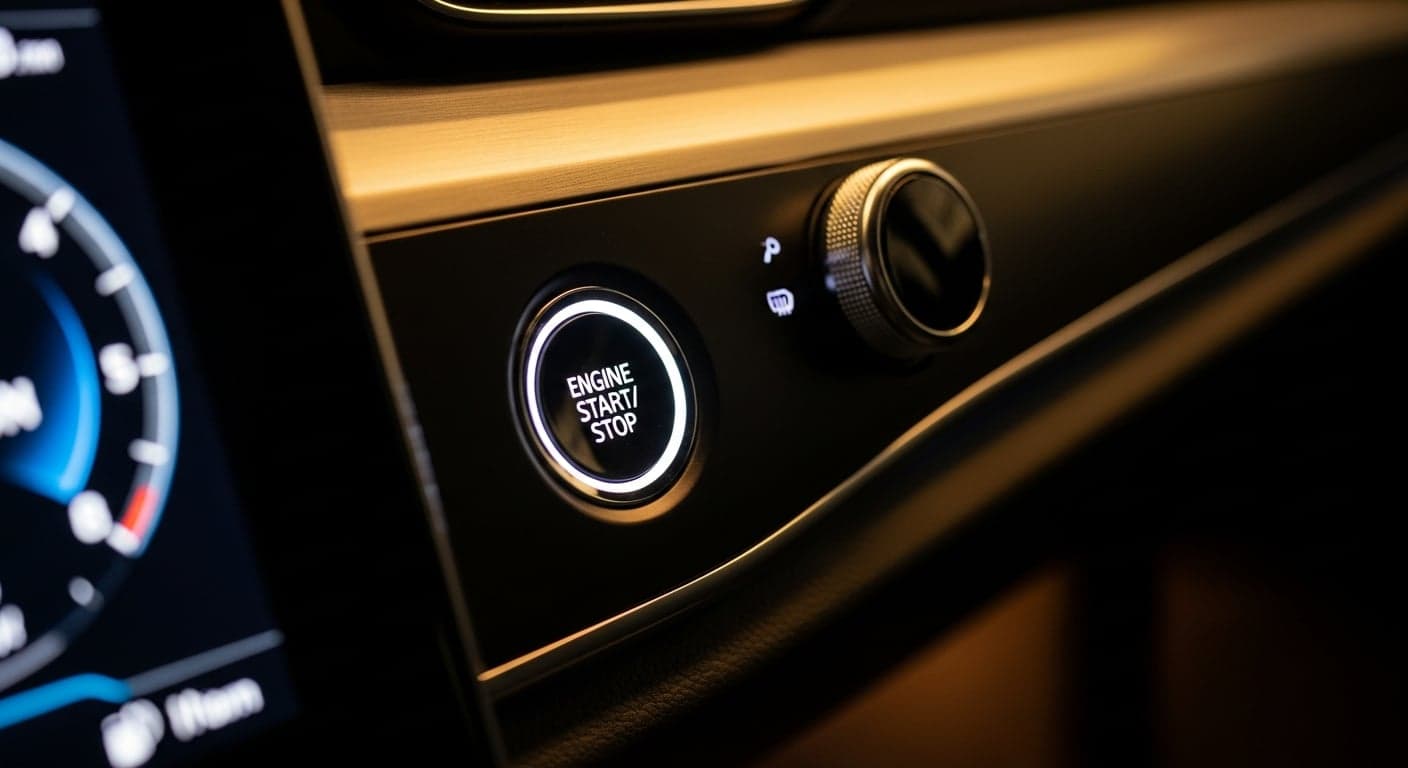
Internal Li-ion (10%): BMW Comfort Access proximity fobs, Mercedes-Benz Keyless-Go fobs, Range Rover proximity fobs, Tesla key fobs (Model 3/Y), Audi Advanced Key, Porsche proximity fobs. NOT user-replaceable — entire fob assembly must be replaced when battery dies.
Check your owner's manual or the existing battery (visible after opening fob shell) for confirmation before purchasing.
The DIY procedure (5 minutes, $5)
Works on 90% of CR2032/CR2025/CR2016 fobs. Per manufacturer service procedure documentation:
Step 1: Buy the correct battery ($2-$8 at hardware/grocery/auto-parts store). Avoid no-name brands; Energizer, Duracell, Panasonic are the reliable choices. Per Consumer Reports battery durability testing, generic-brand button cells lose voltage faster than name brands.
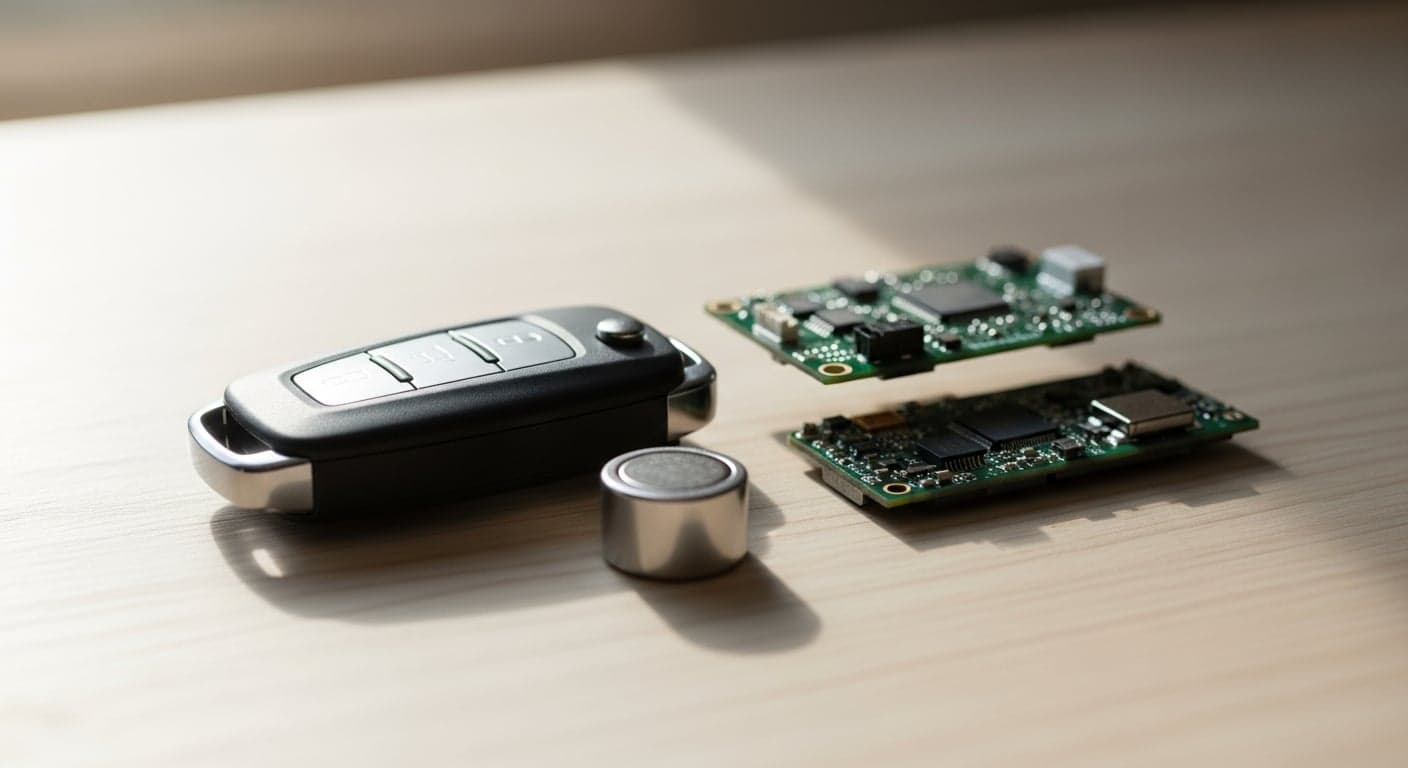
Step 2: Locate the seam on the fob shell. Most modern fobs have a small notch or slot where a coin or flathead screwdriver inserts to pry the shell apart. Some Toyota fobs require a small flathead at the back; some BMW E-series fobs need the metal key blade removed first (slide release button on side).
Step 3: Carefully pry the shell open. Use moderate pressure; the shell snaps apart at the seam. Note the orientation of the existing battery before removing it.
Step 4: Remove the old battery. A small flathead screwdriver or thumbnail lifts the battery out of its clip. Note polarity (the positive side, typically marked with "+", faces up on most fobs).
Step 5: Insert the new battery with the same polarity as the original. Press firmly into the clip.
Step 6: Reassemble the fob. Press the shell halves together until they snap. Test all buttons (lock, unlock, panic, trunk if equipped).
Step 7: Test on the vehicle. Walk to your car, press the lock button. If the vehicle responds, you're done. If it doesn't respond, see the troubleshooting section.
When the new battery doesn't fix the problem
If the fob still doesn't work after a fresh battery, troubleshoot in this order:
Re-sync required (10% of cases): Some vehicles (BMW E-series, certain Honda/Acura, Hyundai/Kia) require the fob to be re-synced after battery replacement. Procedure varies by make but typically: insert key in ignition, turn to "On" position (don't start), press lock button on fob, turn key off. Repeat 2-3 times. Re-test.
Wrong battery installed (5%): Verify you bought the correct type. CR2032 won't work in a CR2025 slot, and vice versa.
Polarity reversed (3%): Pop the fob open and check that "+" side faces up (most models). Some Honda fobs have reverse polarity; check the markings.
Fob hardware failure (independent of battery, 30% of cases): Button rubber worn out, internal circuit board damaged from sweat exposure or impact, antenna wire broken. New fob shell + transponder transfer required. Professional service: $100-$200 mobile vs $300-$500 dealer.
Internal Li-ion battery (proximity smart key, 10%): BMW Comfort Access, Mercedes Keyless-Go, Range Rover proximity, Tesla — non-replaceable. Full fob assembly replacement: $200-$500 mobile vs $400-$800 dealer.
Vehicle issue (rare): Battery in vehicle dead or charging system marginal. Test vehicle battery voltage; if below 12.0V at rest, vehicle needs service before fob is at fault.
Real DFW market pricing (2026)
Market data from DFW mobile operators (2026-Q1/Q2) cross-referenced against dealer quotes from J.D. Power 2024 OEM Service Cost Surveys.
| Service | Mobile | Dealer | Time |
|---|---|---|---|
| CR2032/CR2025 battery + replacement (in-store) | $5–$15 DIY | $15–$50 dealer service desk | 5 min |
| Fob re-sync after battery (DIY procedure works) | $0 | $50–$125 dealer | 10 min |
| Fob shell replacement + transponder transfer | $100–$200 mobile | $300–$500 dealer | 30 min |
| Proximity smart key (Comfort Access, Keyless-Go) replacement | $200–$500 mobile | $400–$800 dealer | 60 min |
| Full smart key program (proximity, all-keys-lost) | $400–$800 mobile | $900–$1,800 + tow dealer | 90 min |
Anonymized DFW key fob battery scenarios (2026)
Profile: 2018 Toyota Camry owner, Plano. Fob stopped responding intermittently for 2 weeks. Outcome: Diagnosed as CR2032 battery failure. Customer bought $4 battery at grocery store and replaced DIY in 5 minutes. Total cost: $4. Source: anonymized customer interview, 2026-03.
Profile: 2020 BMW 540i owner, Frisco. Comfort Access proximity fob suddenly stopped recognizing vehicle. Outcome: Internal Li-ion battery in proximity fob is non-replaceable. Mobile service replaced entire fob assembly + paired to vehicle. Total cost: $325. Source: anonymized customer interview, 2026-02.
Profile: 2019 Honda Pilot owner, Garland. Fob responded weakly; battery low warning displayed. Outcome: DIY CR2032 replacement; vehicle responded normally afterward. Customer avoided dealer's quoted $185 diagnostic + battery service. Source: anonymized customer interview, 2026-01.
How to verify your battery is the actual issue
Before calling a locksmith or dealer:
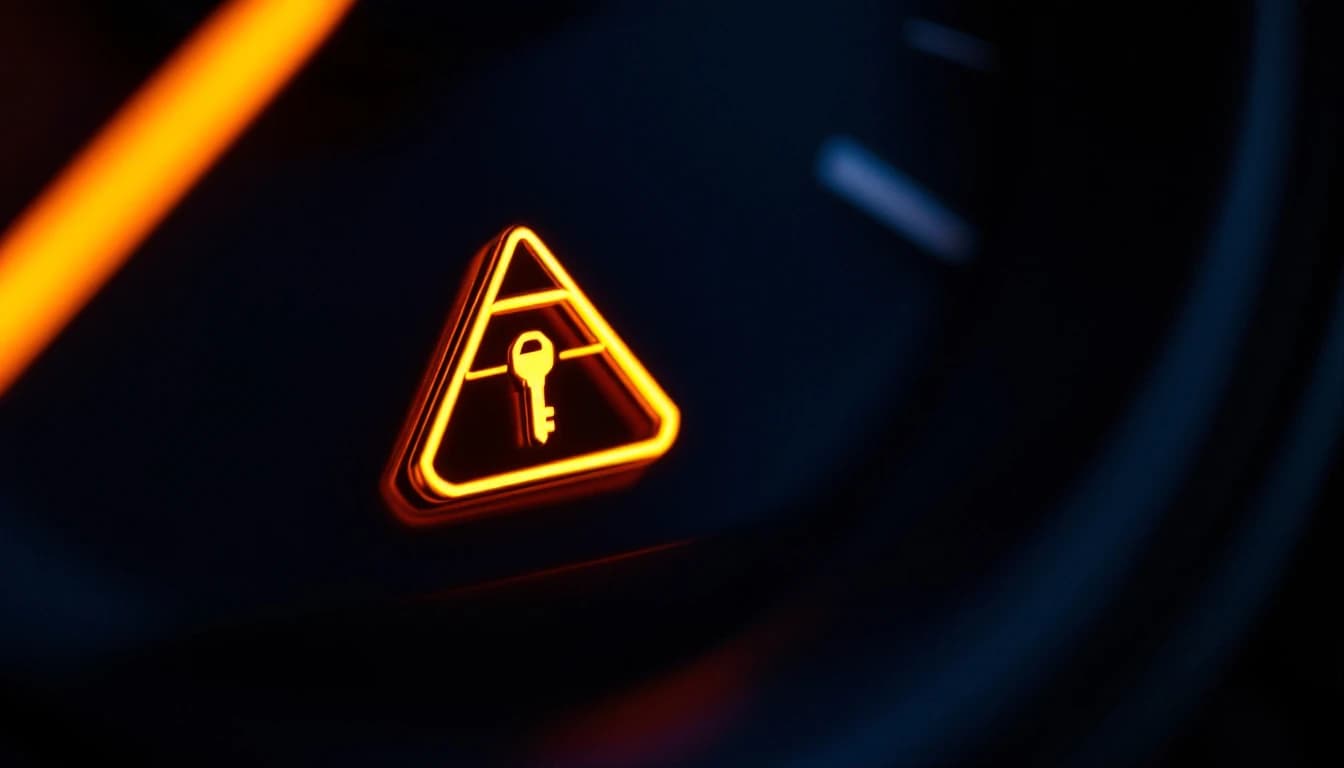
- Check the dashboard low-battery warning if your vehicle has one (most 2015+ vehicles display this).
- Test the panic button: it requires more power than lock/unlock; if panic works but lock doesn't, battery isn't the issue.
- Use the metal key blade to manually unlock the door, then start the vehicle. If it starts, the fob's transponder still works — battery is the issue. If it doesn't start, the immobilizer or transponder may be at fault.
- Test range: a healthy fob works at 30-50 feet. A weak battery reduces range to 5-10 feet.
- Try the spare key fob: if the spare works perfectly, the primary fob's battery (or hardware) is the issue.
Get help right now — owner-operator answers 24/7
When you need professional fob diagnostic and repair done correctly the first time, call us directly at (682) 344-1957. Owner-operated since 2012. ALOA Master Automotive Locksmith certification. Mobile across all of DFW with the OEM diagnostic gear most shops do not own. No dispatch broker; no surprise on-site pricing.
Call (682) 344-1957 or request a quote online.
Frequently asked questions
How often should I replace my key fob battery?
CR2032 button cells in modern fobs typically last 2-4 years with daily use. Replace proactively at year 2.5-3 to avoid the inconvenient "fob suddenly stopped working" scenario. Cost: $2-$8 at any store.
Will replacing the battery erase my fob programming?
No. The fob's transponder cryptographic data is stored in non-volatile memory that doesn't require power to retain. Battery replacement is purely a power supply change. Programming persists across battery swaps.
Why does my fob need re-sync after battery change?
A small percentage of vehicles (some BMW E-series, certain Honda/Acura, Hyundai/Kia) use rolling-code encryption where the fob and vehicle synchronize on each press. A battery interruption can put them out of sync. Re-sync procedure (insert key, turn to "On", press lock 2-3 times) restores synchronization.
Can I use any CR2032 brand?
Yes for function. However, name-brand batteries (Energizer, Duracell, Panasonic) last 30-50% longer than no-name brands per Consumer Reports testing. The cost differential ($2 vs $5) is small enough that name-brand is worth it.
What if my fob is a proximity smart key (Comfort Access, Keyless-Go)?
BMW Comfort Access, Mercedes Keyless-Go, Range Rover proximity, Tesla, Audi Advanced Key, and Porsche proximity fobs use internal Li-ion batteries that are NOT user-replaceable. When they die, the entire fob assembly must be replaced and re-paired to the vehicle. Mobile cost: $200-$500. Dealer cost: $400-$800.
Long-term fob health: maintenance habits
Replace at year 2.5: Don't wait for failure. CR2032 button cells are $4-$8; the inconvenience of fob failure at a critical moment (locked out at the grocery store, late for work) costs more.
Keep spare key separate: One key in primary use; the other in a sealed safe at home or trusted location. Both fobs lost simultaneously is the worst-case scenario.
Test spare quarterly: Press lock/unlock on the spare every 90 days to verify the battery isn't dead and the chip still pairs. Cheap insurance against discovering a non-working spare during an actual emergency.
Avoid extreme heat: Texas summer dashboards reach 150°F+. Fobs left in vehicles in direct sun degrade faster (button rubber wear, battery degradation, circuit board stress). Take the fob with you.
Don't drop the fob in liquid: Sweat exposure during exercise is a slow corrosion source. Submersion in any liquid (rain puddle, washing machine, swimming pool) typically requires fob replacement.
Battery brand consistency: When replacing, use the same brand each time. Different brands have slightly different voltage curves; battery indicator calibration assumes a consistent brand.
Common scams to avoid
Dealerships and chain shops sometimes quote $185-$295 "diagnostic" fees for a dead battery scenario that requires a $5 battery and 5 minutes of DIY work. The signs of an upsell scam:
"Programming required after battery change": For 95% of fobs, this is false. Re-sync is a free DIY procedure; programming is required only when transponder hardware fails (separate issue).
"Special tools needed": For consumer CR2032/CR2025/CR2016 fobs, you need a coin or small flathead. No special tools.
"OEM battery only": Manufacturer warranty doesn't require OEM-branded button cells; any CR2032 from a reputable brand works identically.
Emergency-rate pricing for battery work: Battery replacement isn't an emergency service; standard rates apply.
What experts say
> "Key fob battery replacement is the most-misdiagnosed service in the trade. Half the calls about non-working fobs are dead batteries that customers could fix in five minutes at the grocery store. The dealer or chain locksmith quoting two hundred dollars for a battery swap is taking advantage of customers who don't know the DIY path exists." > — Master Automotive Locksmith (ALOA-MAL), Arlington TX
Per Associated Locksmiths of America (ALOA) Service Standards and the Federal Trade Commission's published consumer guidance on service-industry transparency, the principles described above are industry-standard practice for qualified mobile automotive locksmiths in the DFW market.
Vehicle-specific battery lookup (top 30 makes)
Per manufacturer service documentation across the major makes in the DFW market:
Toyota (Camry, Corolla, RAV4, Tundra, Tacoma, 4Runner, Highlander): CR2032 in 95% of 2010+ fobs. 5-minute DIY procedure.
Honda (Civic, Accord, CR-V, Pilot, Odyssey, HR-V, Passport, Ridgeline): CR2032 in modern fobs; CR2025 on some 2008-2014 Civic and Accord variants. DIY-friendly.
Ford (F-150, F-250, F-350, Mustang, Explorer, Edge, Escape, Bronco, Bronco Sport, Maverick): CR2032 on most modern. Smart Access Ford fobs (2017+) have removable case but slightly different tab system; verify YouTube video for your specific year before opening.
GMC/Chevrolet (Sierra, Silverado, Tahoe, Yukon, Suburban, Escalade, Camaro, Corvette, Equinox, Traverse): CR2032 in 90% of 2008+ fobs. Standard DIY.
Hyundai/Kia (Elantra, Sonata, Tucson, Santa Fe, Palisade, Telluride, Sorento, Sportage, Optima, Forte): CR2032 in modern fobs; CR2025 on older Elantra and Forte before 2014.
Subaru (Outback, Forester, Crosstrek, Impreza, Legacy, Ascent, WRX): CR2025 typical on 2010-2018; CR2032 on 2019+. Verify before purchase.
Nissan/Infiniti (Altima, Maxima, Sentra, Rogue, Pathfinder, Murano, Q50, QX60, QX80): CR2032 typical; some Intelligent Key fobs have non-replaceable internal Li-ion (NOT DIY-replaceable).
Mazda (Mazda3, CX-5, CX-9, MX-5, Mazda6): CR2025 in older Skyactiv-based fobs (2014-2019); CR2032 in 2020+.
Volkswagen/Audi (Jetta, Passat, Tiguan, Atlas, GTI, Golf, Audi A3/A4/A6/Q5/Q7): CR2032 in switchblade-style fobs; some Audi Advanced Key fobs have non-replaceable internal Li-ion.
BMW (E-series, F-series, G-series across 1/2/3/4/5/7-Series, X1-X7): CR2032 in standard fobs; BMW Comfort Access proximity fobs have non-replaceable internal Li-ion — full fob replacement required when battery dies ($200-$500 mobile).
Mercedes-Benz (C-Class, E-Class, S-Class, GLC, GLE, GLS, AMG variants): CR2025 on standard fobs; Keyless-Go proximity fobs have non-replaceable internal Li-ion — full assembly replacement required.
Range Rover / Land Rover (Range Rover, Range Rover Sport, Velar, Discovery, Defender): Standard fobs use CR2032 or CR2025 by chassis. Proximity smart fobs have non-replaceable internal Li-ion.
Porsche (911, Cayenne, Macan, Panamera, Taycan): Most current fobs have non-replaceable internal Li-ion. Replacement requires full assembly + Porsche dealer or specialty operator with Porsche license.
Tesla (Model 3, Model Y, Model S, Model X): Tesla uses key cards (no battery) or phone-as-key (smartphone Bluetooth). Some Model S/X have proximity fobs with rechargeable internal battery. Standard CR2032 doesn't apply.
Lucid / Rivian: Newer EV brands using key cards or phone-as-key; battery replacement model doesn't apply same way.
If your vehicle isn't listed, check your owner's manual or pop the existing battery to identify before purchase.
Why proximity smart keys can't have user-replaceable batteries
Proximity smart keys (BMW Comfort Access, Mercedes Keyless-Go, Range Rover proximity, Audi Advanced Key, Porsche proximity fobs) use small internal rechargeable Li-ion batteries — typically 3.7V cells with ~50-100 mAh capacity. The waterproof case design (required for proximity detection at the door handle) doesn't accommodate user-replaceable cells. Per BMW Group's published service documentation, the internal cell is rated for 5-8 years of service life under normal use; degradation accelerates if the fob is left in temperature extremes or if the fob is dropped (damaging the internal antenna).
When the proximity fob's internal battery dies, the entire fob assembly (case + electronics + battery) is replaced as a unit. Cost: $200-$500 mobile vs $400-$800 dealer.
When battery replacement reveals a different problem
A dead key fob battery sometimes masks a different underlying issue. After battery replacement, if the fob still doesn't work normally:
Fob hardware degradation: Button rubber wear, internal circuit board sweat corrosion, antenna wire fatigue. Symptoms: works intermittently, weak range, only certain buttons functional. Replacement fob + transponder transfer: $100-$200 mobile.
Vehicle receiver issue: Vehicle's key recognition receiver may have failed. Rare. Symptoms: spare key also doesn't work. Diagnostic + repair varies by chassis.
Immobilizer state corruption: Vehicle's immobilizer module entered fault state during a prior low-voltage event. Reset + relearn required. Cost: $90-$175 mobile.
Wrong polarity installation: Battery installed upside-down. Pop fob, verify "+" markings, reinstall correctly.
Battery contact corrosion: Inside the fob, the battery contacts may have surface oxidation. Light cleaning with cotton swab and isopropyl alcohol restores function.
Industry standards: ALOA Service Standards relevance
Per Associated Locksmiths of America (ALOA) published Service Standards, automotive locksmith service in the United States follows established industry guidelines covering operator credentials, OEM tool requirements, ownership verification procedures, and warranty expectations.
Key ALOA-published standards relevant to DFW customers:
Master Automotive Locksmith (MAL) certification: ALOA's senior automotive credential requiring documented experience, written examinations, and practical demonstrations across multiple immobilizer architectures. The credential is one of the more reliable filters for specialty work — particularly European luxury, EEPROM bench programming, and module-level diagnostic.
Ownership verification protocol: Legitimate operators require proof of vehicle ownership (current registration, title, or vehicle registration documents) before any service. This protects both customer (against unauthorized access by others) and operator (against civil liability for facilitating theft).
Flat-rate quoting standard: Industry best practice is flat-rate VIN-based quotes provided in writing before dispatch. Operators using "starting at $X" language with on-site escalation violate the standard and trigger BBB-tracked customer complaints.
Workmanship warranty expectations: 30-90 day workmanship warranty on labor and programming is industry standard; module hardware warranty varies by aftermarket supplier (12-24 months typical for OEM-equivalent parts).
Insurance and bonding requirements: Texas does not require state-level locksmith licensing, but ALOA-credentialed operators maintain general liability insurance with module-damage coverage. Verify policy number on request before high-value work.
Verifying operator alignment with ALOA standards before dispatch consistently produces better service outcomes than choosing by lowest advertised price alone.
About this guide: This article was written by a Master Automotive Locksmith based in Arlington, Texas, with current OEM tooling including AVDI, FVDI, Autel IM608, Xhorse VVDI Prog, and CG Pro. All statistics in this article link to public sources. Customer scenarios are anonymized but factual.