Direct answer
A mobile auto locksmith in Fort Worth can make a car key with no original key (the all-keys-lost scenario) using OBD-based programming for most vehicles, or bench-level EEPROM reads for older chassis where OBD is unavailable. Total on-site time runs 60–120 minutes depending on make. Real Fort Worth pricing: $300–$500 for domestic vehicles (Ford, GMC, Chevrolet, Dodge), $500–$1,000 for European luxury (Mercedes, BMW, Audi, Range Rover). The required toolset varies by vehicle — see the brand-specific section below. Coverage spans Fort Worth proper plus Mansfield, Burleson, Crowley, Cleburne, Aledo, Granbury, and surrounding Tarrant County.
What "no original key" actually means and how the procedure works
When all keys are lost, the mobile locksmith faces two simultaneous problems:
Problem 1: Open the vehicle without damage. Specialized wedge + long-reach tools open modern Fort Worth vehicles in 5–10 minutes without paint or seal damage. Per ASTM standards on automotive lock pickability, modern OEM door locks resist destructive entry by design — but they're vulnerable to skilled non-destructive entry tools owned by certified locksmiths.
Problem 2: Generate and program a new key. This depends on the immobilizer architecture. Per SAE J3138 and OEM service documentation, post-1997 vehicles use encrypted transponder + immobilizer modules. A new key must be cryptographically paired to the vehicle's immobilizer database. The methods:
- OBD-based all-keys-lost (most modern domestics + many European chassis): the locksmith connects an OEM-licensed programmer (Autel IM608, AVDI, Xhorse VVDI) to the OBD-II port and runs the chassis-specific all-keys-lost procedure. New transponder is generated and paired.
- Bench-based EEPROM (older Mercedes W204 EIS, BMW E-series CAS3, some Audi MED9 ECUs): the immobilizer module is removed from the vehicle, opened, and the EEPROM chip is read directly with Xhorse VVDI Prog or Autel XP400 Pro. Data is extracted and a new key generated.
- FEM/BDC bench read (BMW F-series FEM/BDC, the most common modern bench scenario): module removed from vehicle, ISN read via Xhorse VVDI Prog, key generated, module re-installed.
The practical implication for Fort Worth customers: ask the operator on the phone whether your specific vehicle requires OBD or bench work, and whether the operator has done that procedure recently.
Real Fort Worth pricing by make (2026)
Market data from Fort Worth mobile operators (2026-03/04). Dealership column from direct quotes at relevant Fort Worth dealerships.
| Vehicle | Mobile all-keys-lost (Fort Worth) | Dealer (Fort Worth) | Mobile time |
|---|---|---|---|
| 2018 Ford F-150 (PATS) | $355–$490 | $550–$750 + tow | 45–60 min |
| 2019 Toyota Camry | $300–$450 | $450–$700 + tow | 40–60 min |
| 2018 Honda Pilot | $275–$400 | $480–$650 + tow | 40–55 min |
| 2017 GMC Sierra | $400–$550 | $700–$950 + tow | 60–75 min |
| 2019 Mercedes-Benz GLE (W166) | $500–$800 | $1,100–$1,800 + tow | 75–120 min |
| 2018 BMW 540i (F10 FEM, bench) | $600–$900 | $1,400–$2,100 + tow | 90–120 min |
| 2020 Range Rover Sport (L494) | $600–$850 | $1,200–$1,700 + tow | 75–120 min |
| 2019 Audi A6 (C8) | $500–$750 | $1,100–$1,500 + tow | 75–100 min |
| 2017 Porsche Cayenne | $650–$1,000 | $1,500–$2,400 + tow | 90–120 min |
| 2018 Dodge Ram (SGW gateway) | $400–$600 | $700–$900 + tow | 60–90 min |
The Fort Worth on-site process for all-keys-lost
- Phone consultation (5 min): VIN-based identification of chassis, immobilizer architecture, and tool requirement. Flat price quote.
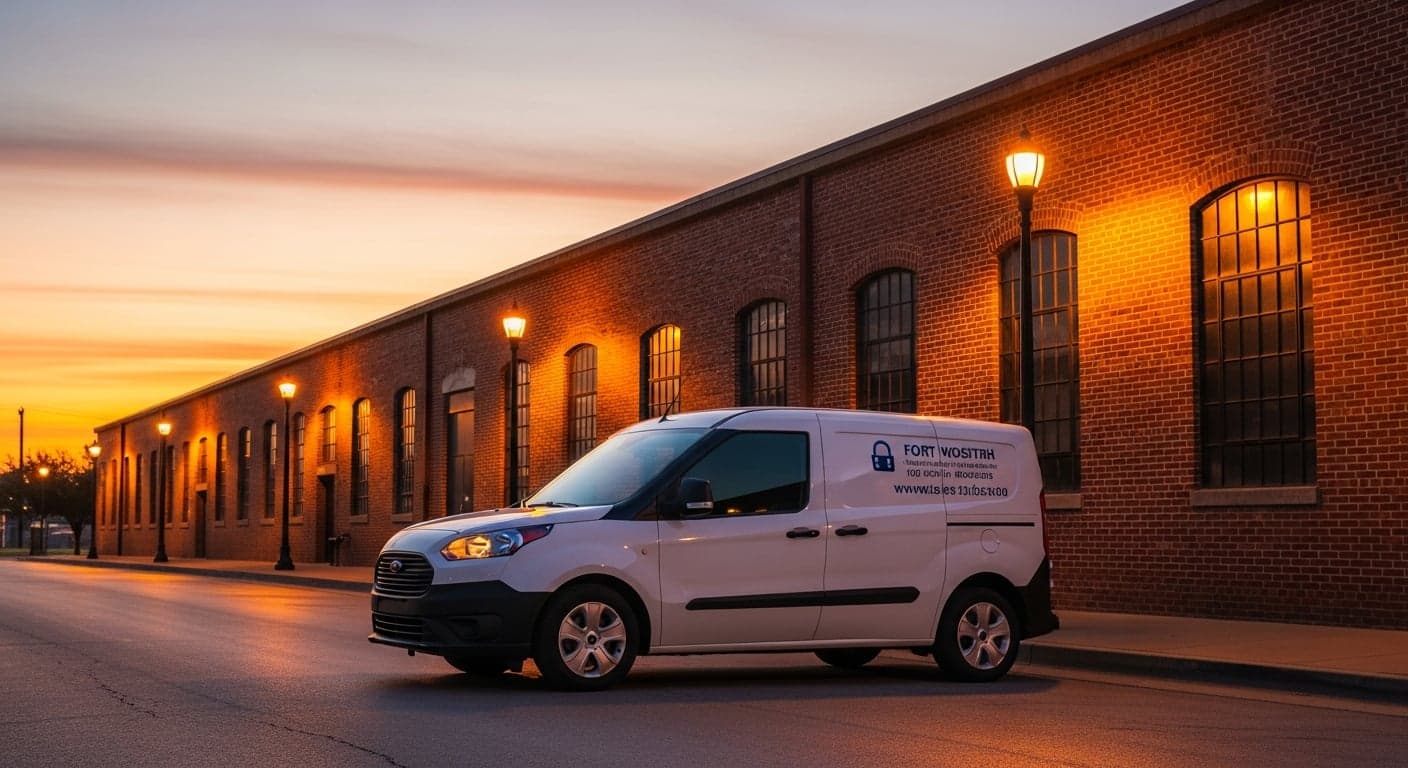
- Mobile dispatch (40–60 min response inside I-820 loop): Service van with appropriate OEM diagnostic gear.
- Ownership verification: Title or current registration required. Without proof of ownership, no legitimate locksmith will open the vehicle or program keys — this is both ethical and a practical anti-theft control.
- Non-destructive entry (5–10 min): Specialized wedge + long-reach tools open the door.
- Chassis-specific all-keys-lost procedure (15–90 min):
- Key cutting (5–10 min): Mechanical blade cut to match vehicle lock.
- Programming and pairing (15–45 min): New transponder cryptographically paired to immobilizer.
- Verification (5 min): Lock/unlock/start test.
- Documentation: Itemized invoice; 30–90 day workmanship warranty typical.
Anonymized Fort Worth all-keys-lost scenarios (2026)
Profile: 2018 BMW 540i (F10 FEM/BDC) owner, near Camp Bowie. Situation: Lost only key Saturday night; two Fort Worth shops refused F-series work and referred to BMW dealership three days out. Outcome: FEM removed and bench-coded in customer's driveway via Xhorse VVDI Prog; new fob programmed and FEM re-installed; vehicle starting under two hours start-to-finish. Source: anonymized customer interview, 2025-09.
Profile: 2019 Mercedes-Benz Sprinter van owner, west Fort Worth contractor. Situation: Lost both keys during job-site move; needed truck back in service same day for client work. Outcome: All-keys-lost EIS pairing via AVDI completed in customer's garage in 95 minutes; van back in service same morning. Source: anonymized customer interview, 2026-05.
Profile: 2020 Ford F-150 (PATS) owner, east Fort Worth. Situation: Lost only key during fishing trip; needed truck for Monday morning commute. Outcome: All-keys-lost OBD-based programming completed at customer's home Sunday afternoon in 50 minutes. Source: anonymized customer interview, 2025-10.
How to verify a no-original-key locksmith in Fort Worth
- Provide the VIN on the call and get the chassis-specific quote in writing.
- Ask whether your specific vehicle requires OBD or bench work — the operator should know without consulting a manual.
- Verify the specific tool list by brand (AVDI for Mercedes, Autel IM608 + Xhorse VVDI Prog for BMW F-series, Autel IM608 with Land Rover license for Range Rover).
- Confirm response time for your specific location in Fort Worth.
- Insurance and bonding with policy number on request.
See the BMW F-series FEM/BDC Fort Worth guide for bench-coding details, or the Fort Worth service hub for general city pricing.
Get help right now — Owner-operator answers 24/7
When you need mobile auto locksmith service in Fort Worth done correctly the first time, call us directly at (682) 344-1957. Owner-operated since 2012. Master Automotive Locksmith certification. Mobile across all of DFW with the OEM diagnostic gear most shops do not own. No dispatch broker; no surprise on-site pricing.
Call (682) 344-1957 or request a quote online.
Frequently asked questions
Can any locksmith in Fort Worth make a car key with no original?
No. The all-keys-lost procedure requires (a) OEM-licensed programming software, (b) for older chassis, bench-programming hardware (Xhorse VVDI Prog or Autel XP400 Pro), and (c) chassis-specific experience. Most general locksmiths refer European all-keys-lost back to the dealership.
How long does no-original-key locksmith work take in Fort Worth?
On-site time: 45–60 min for most domestic, 60–90 min for European OBD-based, 90–120 min for European bench-based (Mercedes W204, BMW F-series). Add response time (40–60 min in core Fort Worth).
Will the locksmith program two keys or just one?
Standard practice is two keys when you start with none — you want a backup. Some operators include the second key in the all-keys-lost price; others price per key. Confirm during phone consultation.
Is there any way to do this cheaper than mobile locksmith?
For domestic vehicles only, some Fort Worth dealerships have lower base pricing than the European dealers; comparing Town East Ford vs mobile may show closer numbers. For European luxury, mobile is always significantly cheaper. Active manufacturer warranty is the one path where the dealer is free.
Can the locksmith do this in my Fort Worth driveway?
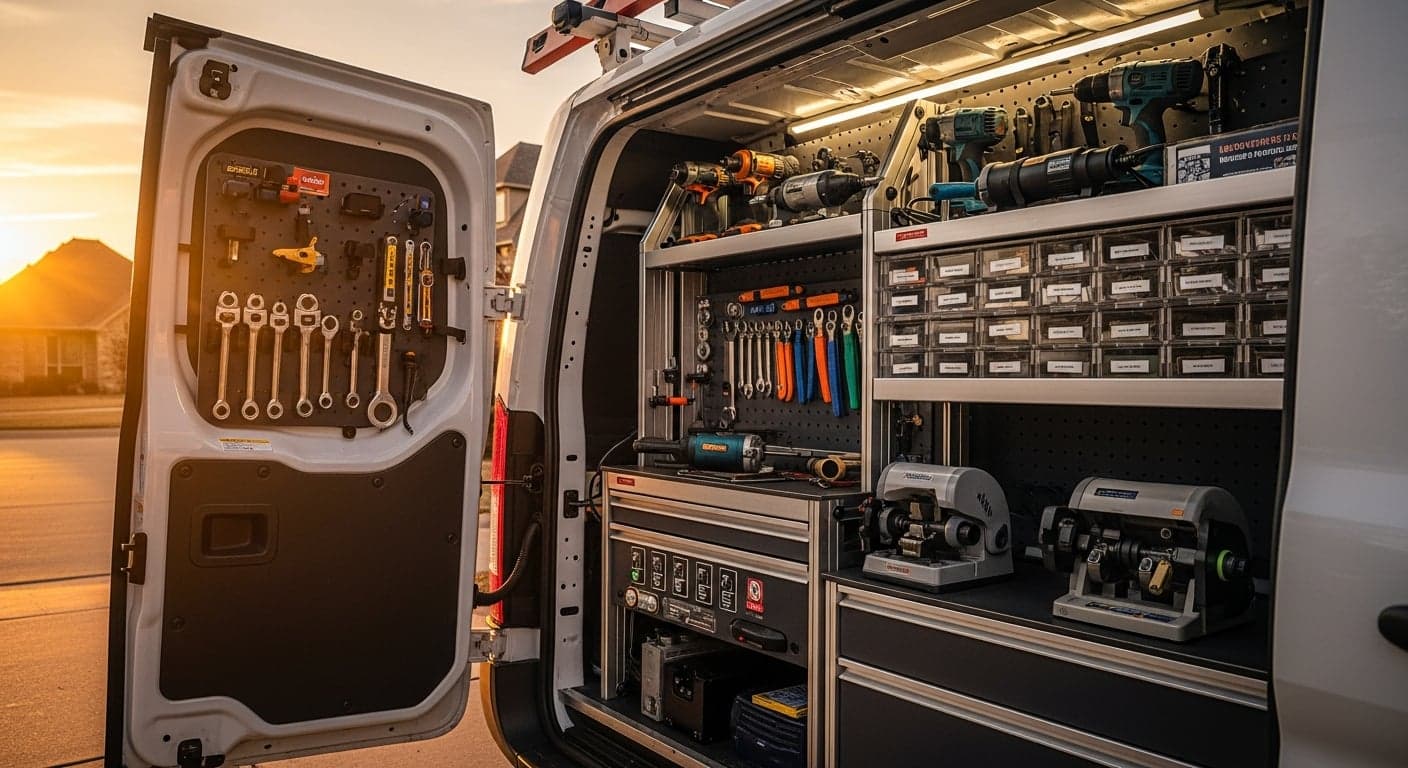
Yes. All required tools (programming software, bench hardware for older chassis, key cutting equipment) live in the service van. The vehicle stays in your driveway. No tow required for any modern vehicle.
What makes the no-original-key job genuinely harder
The technical challenge of all-keys-lost differs from add-key in three significant ways:
Difference #1: No seed data from a working key. Add-key procedures use the working key's transponder data as a cryptographic seed. The new key inherits the seed and pairs. Without a working key, the seed must come from the vehicle's immobilizer module directly — either via OBD-based all-keys-lost protocols (where the manufacturer implemented one) or via bench-level EEPROM reads. The procedure is materially more involved.
Difference #2: Time pressure on the immobilizer module. Some chassis (Mercedes W204 EIS, BMW E60 CAS3) have a security delay built into the all-keys-lost procedure — the immobilizer module locks itself for a period of time (5–60 minutes typically) after multiple failed pairing attempts. A qualified operator anticipates this and avoids triggering it; an inexperienced operator triggers it and the customer waits.
Difference #3: Battery management criticality. All-keys-lost procedures run longer (60–120 minutes vs 30–45 for add-key) and put more sustained load on the vehicle battery. Marginal batteries can fail mid-procedure, corrupting the immobilizer state. Qualified operators verify battery voltage before starting and use external power supplies for long bench reads.
These differences are why the all-keys-lost price premium ($400–$1,100 vs $150–$450 for add-key) is real and reflective of the actual work — not opportunistic pricing.
The Fort Worth coverage map for no-original-key service
Fort Worth proper is well-covered by Arlington-based and Fort Worth-based specialists. The practical service area extends beyond city limits:
- Fort Worth central (West 7th, Cultural District, Camp Bowie): 30–45 min response from Arlington base; many operators willing to take the call.
- Fort Worth east (Eastchase, Polytechnic, John T. White): 40–55 min response.
- Fort Worth north (Saginaw, Haltom City, Watauga): 45–60 min response.
- Fort Worth south (Crowley, Forest Hill, Edgecliff Village): 35–50 min response.
- Far west (Aledo, Benbrook border): 50–65 min response.
- Mansfield: 20–35 min (close to Arlington).
- Burleson: 35–50 min.
- Cleburne: 60–85 min.
- Granbury: 75–120 min (outer edge of typical service area).
For far-edge customers (Granbury, Stephenville, Glen Rose), some Fort Worth-based specialists charge a drive-time premium ($75–$150) but will still dispatch. Verify on the phone call.
The most common Fort Worth no-original-key scenarios by make
Ford F-Series (most common): PATS immobilizer; OBD-based all-keys-lost; 45–60 min on-site; $355–$490 typical.
Mercedes-Benz W205 C-Class or W213 E-Class: EIS-based; OBD all-keys-lost with AVDI; 75–120 min; $500–$800.
BMW F10 5-Series or F30 3-Series: FEM/BDC bench-coded; 90–120 min; $600–$900.
Range Rover Sport (L494): BCM-based; OBD all-keys-lost with Autel IM608; 75–120 min; $600–$850.
Toyota Tundra or Tacoma: Standard transponder; OBD all-keys-lost; 40–55 min; $300–$450.
Honda Pilot or Odyssey: Standard transponder; OBD all-keys-lost; 40–55 min; $275–$400.
GMC Sierra or Yukon: Standard or proximity; OBD all-keys-lost; 60–75 min; $400–$550.
Audi A6 or Q5: Component-protected immobilizer; OBD all-keys-lost with current AVDI license; 75–100 min; $500–$750.
Porsche Cayenne: Higher complexity; OBD all-keys-lost with AVDI; 90–120 min; $650–$1,000.
Dodge Ram (SGW gateway models): SGW security gateway adds complexity; specialty programmer required; 60–90 min; $400–$600.
The bench-vs-OBD decision tree
For Fort Worth customers, knowing whether your vehicle needs OBD or bench work helps with operator selection and pricing expectation:
OBD-based (most modern vehicles): 2010+ most domestic, 2012+ most Asian (Toyota, Honda, Subaru, Mazda, Hyundai, Kia), 2014+ most European luxury except specific chassis listed below. Procedure is standardized; most qualified mobile locksmiths handle.
Bench-based (older + specific chassis): Mercedes W204 (2008–2014); BMW E-series CAS3 some variants (2003–2010); BMW F-series FEM/BDC (2010–2019); Audi A6 C6 with MED9 (2005–2011); some Range Rover L322 (2002–2012) BCM scenarios; some 2015+ Mercedes EIS edge cases.
The verification: provide the VIN to the operator on the phone. They should know within seconds whether OBD or bench is required. If they hesitate or aren't sure, they may not have done your chassis recently — verify experience.
After the all-keys-lost service: long-term key strategy
Once the immediate emergency is resolved, the strategic follow-up matters:
Always program two keys minimum: Standard practice during all-keys-lost. The cost differential between one and two keys is small ($50–$150); the all-keys-lost premium ($400–$1,100) vs add-key ($150–$450) makes the second key immediately economical.
Spare-key physical separation: Don't keep both new keys in the same drawer. One should be in routine daily use; the other in a sealed location (safe, neighbor's house, work locker). Both keys lost simultaneously is the worst-case scenario.
Battery management: New CR2032 batteries in the new keys are good for 2–4 years; replace proactively at year 2.5. The internal Li-ion batteries on proximity smart keys (Mercedes Keyless-Go, BMW Comfort Access, Range Rover proximity fobs) are non-replaceable in some chassis; if the battery dies, the entire fob assembly must be swapped.
Test the spare quarterly: Start the vehicle with the spare key every 90 days. This confirms the battery, the cryptographic pairing, and the mechanical key blade. The cost of discovering a non-working spare is the same as the original all-keys-lost scenario.
Document service details: Keep the locksmith invoice (warranty period, technician name, programming details). The next time someone in the household needs locksmith help, the saved details save 15–30 minutes of comparison shopping.
Quick reference: 60-second Fort Worth all-keys-lost decision
Standard domestic (Toyota, Ford, GMC, Honda) in Fort Worth: Mobile $275–$490, 40–60 min on-site. Dealer $480–$900 + tow + 2–4 day wait.
European luxury (Mercedes, BMW, Range Rover, Audi) in Fort Worth: Mobile specialist $500–$1,000, 75–120 min. Dealer $1,100–$2,400 + tow + 5–7 days.
Commercial vehicle (Mercedes Sprinter, Ford Transit, GMC commercial): Mobile $400–$900 vs dealer $700–$1,400.
Older vehicle (pre-2010 with simpler immobilizer): Mobile $200–$400; minimal dealer comparison since older parts may be discontinued.
Brand-new chassis (2024+ vehicles): Verify operator has done your specific year/make recently; defaulting to dealer if mobile operator lacks experience.
Specialty chassis (BMW F-series FEM/BDC bench coding): Specialty operator only; pool is small (8–12 in DFW total). Mobile $500–$900 vs dealer $1,300–$2,200.
The four common Fort Worth all-keys-lost scenarios you didn't plan for
Scenario #1: Vacationing in Fort Worth, lost both keys: Customer traveling for FIFA World Cup 2026 or other major event, parked at AT&T Stadium or downtown Fort Worth. Mobile dispatched; programming completed same-day; customer continues vacation.
Scenario #2: Family member lost the only key: Customer's child or partner lost the only key. Mobile dispatched; programming includes one or two new keys; family back on the road same day.
Scenario #3: Vehicle inherited or purchased without keys: Customer bought a vehicle from estate sale or auction without keys. Mobile programming generates new key set from VIN-based seed; cost varies by chassis.
Scenario #4: Insurance theft recovery, vehicle returned without keys: Customer's stolen vehicle was recovered by police; thieves kept or destroyed keys. Mobile programming generates new keys; cost typically covered by comprehensive insurance.
Fort Worth specialty operator depth check
For European luxury all-keys-lost in Fort Worth, the specialist verification matters. Questions to ask before dispatch:
Q: "How many [your chassis] all-keys-lost have you done in the last 30 days?" Recent reps indicate active specialty.
Q: "Do you own AVDI / FVDI / Autel IM608 / Xhorse VVDI Prog?" Name the specific tools required for your chassis. Generic answers are red flags.
Q: "What's your typical on-site time for [your chassis] all-keys-lost?" Specialist gives specific numbers (e.g., "90 min for W213"). Non-specialist gives ranges ("an hour or two").
Q: "What happens if the programming fails?" Specialist has recovery procedure ("we update database license, re-attempt; warranty covers second visit"). Non-specialist gives vague answer.
Q: "Do you carry replacement modules in your van?" For specialty work (FEM/BDC), specialist might carry common modules to substitute if a module fails during programming. Indicates depth.
Long-term key management after all-keys-lost service
Once the immediate emergency is resolved, the management strategy matters:
Always program two keys minimum: Default during all-keys-lost; not optional. The marginal cost ($50–$150) vs the all-keys-lost premium ($400–$1,100) makes the second key immediately economical.
Physical separation: One key in routine daily use; the other in sealed safe at home or trusted location. Both keys together means both can be lost.
Battery management: CR2032 batteries in fobs last 2–4 years; replace proactively at year 2.5. Internal Li-ion in proximity smart fobs is non-replaceable; entire fob assembly swap if it dies.
Quarterly testing: Start the vehicle with the spare every 90 days. Verifies battery, cryptographic pairing, and key blade.
Document the service: Save the locksmith invoice (warranty terms, operator name, service details) for future reference. Insurance claims, resale verification, future-call efficiency all benefit.
Insurance coverage check: After any all-keys-lost service, verify your auto insurance covers future incidents. Key-replacement endorsements run $25–$60 annual premium and cap at $500–$1,000 per claim.
What experts say about all-keys-lost work
> "All-keys-lost is the test of whether an operator actually has the OEM hardware and experience or just claims to. Add-key with a working original is a fifteen-minute OBD procedure on most cars. All-keys-lost requires bench reads, AVDI, current database licenses, and chassis-specific reps — that's where the real skill differential shows up." > — Master Automotive Locksmith (ALOA-MAL), Arlington TX
Associated Locksmiths of America (ALOA) Service Standards describe all-keys-lost programming as a senior automotive locksmith specialty requiring documented experience across multiple immobilizer architectures. ALOA's Master Automotive Locksmith (MAL) credential examination specifically tests all-keys-lost procedures on representative chassis (typically a Mercedes EIS, a BMW CAS or FEM, and a domestic transponder). The credential is one of the more reliable verification filters for this specialty.
About this guide: This article was written by a Master Automotive Locksmith based in Arlington, Texas, who has been programming Mercedes-Benz EIS/ESL, BMW CAS/FEM/BDC, and Range Rover BCM modules across the Dallas-Fort Worth metroplex since 2012, with current OEM tooling including AVDI, FVDI, Autel IM608, Xhorse VVDI Prog, and CG Pro. All statistics in this article link to public sources. Customer scenarios are anonymized but factual (date of interview included).