Transponder Key Programming: What It Is, How It Works, and What It Costs
If your car was manufactured after 1995, there is a very high chance it uses a transponder key. This small but critical piece of technology is the reason your car starts with your key but will not start with a simple metal copy. Understanding how transponder keys work helps you make informed decisions when you need a replacement, spare, or reprogramming service.
This guide explains the technology behind transponder keys, the programming process, costs across different vehicle makes, and how to choose the right service provider in the Dallas-Fort Worth area.
What Is a Transponder Key?
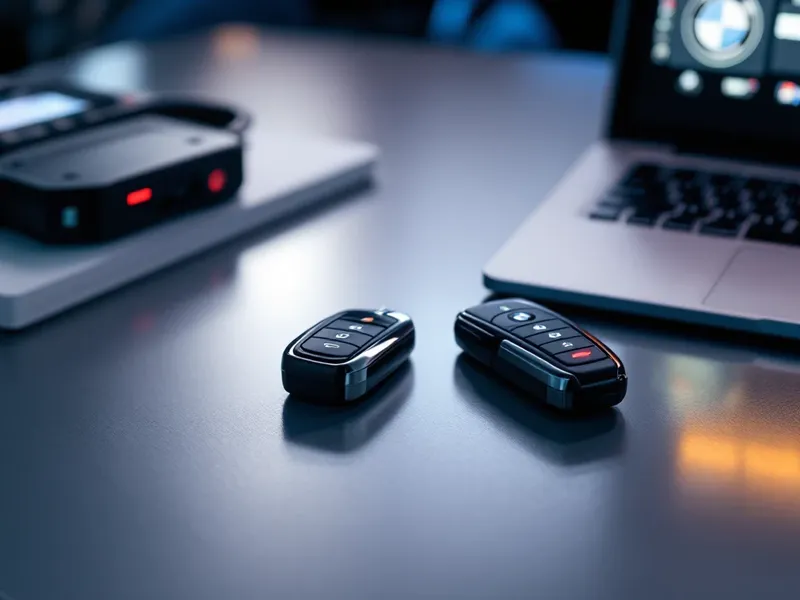
The word "transponder" is a combination of "transmitter" and "responder." A transponder key contains a tiny electronic chip embedded in the plastic or rubber head of the key. This chip does not require a battery—it is powered by a radio signal from the vehicle.
How the System Works
- You insert the key into the ignition (or bring the fob near the push-to-start button)
- The vehicle's antenna ring (located around the ignition cylinder or in the steering column) sends a low-power radio signal
- The transponder chip absorbs the radio energy and uses it to power itself
- The chip transmits its unique identification code back to the vehicle
- The vehicle's immobilizer module compares the received code to its stored list of authorized keys
- If the code matches, the immobilizer allows the engine to start
- If the code does not match, the engine cranks but fuel injection and ignition are disabled
This entire handshake process happens in milliseconds and is invisible to the driver. You simply turn the key and the car starts—but behind the scenes, a sophisticated authentication is taking place.
Types of Transponder Chips
Fixed Code Transponders: The chip transmits the same code every time. Used in older vehicles (1995 to 2005). Examples include Texas Instruments 4C and 4D chips.
Rolling Code (Crypto) Transponders: The chip and vehicle generate a new encrypted code for each start attempt. Even if someone captures the transmitted code, it cannot be reused. Examples include Texas Instruments DST80, Hitag2, and Hitag Pro.
Proximity Transponders: Used in smart key systems where the key never needs to be inserted. The key communicates at a longer range using both low-frequency (125 kHz) and high-frequency (315 MHz or 433 MHz) signals.
Why Transponder Keys Exist
Before transponder technology, car theft was shockingly easy. A skilled thief could hot-wire most vehicles in under 30 seconds. By the mid-1990s, car theft had become such a significant problem that the insurance industry pushed manufacturers to adopt electronic immobilizer systems.
The results were dramatic:
- Vehicle thefts dropped by over 50 percent after immobilizer adoption
- Insurance premiums decreased for vehicles equipped with transponder systems
- Hot-wiring became virtually impossible on transponder-equipped vehicles
Today, federal regulations and insurance requirements effectively mandate transponder or smart key systems on all new vehicles sold in the United States.
When Does a Transponder Key Need Programming?
New Key from Blank
When a locksmith cuts a new transponder key from a blank, the physical key will turn in the ignition and operate the locks, but the engine will not start. The transponder chip must be programmed to communicate with your specific vehicle's immobilizer before the car will start.
Replacement After Key Loss
If you lose your keys and need a replacement, the new key's transponder must be registered with the vehicle. Additionally, a good locksmith will offer to erase the lost key from the system so it can no longer start your car (in case someone finds it).
Used Key from Another Vehicle
Transponder chips are typically one-time programmable for a specific vehicle. A transponder key from a different car of the same make and model will NOT work in your vehicle, even if the physical key cut is identical. The chip must be reprogrammed or a new chip must be used.
After Module Replacement
If the vehicle's ECM, BCM, or instrument cluster is replaced (these modules often contain the immobilizer data), the existing keys may need to be reprogrammed to the new module.
Battery-Related Resets
In rare cases, a complete battery drain or improper jump-start procedure can reset the immobilizer system, requiring key reprogramming. This is uncommon but not unheard of, particularly on European vehicles.
The Programming Process
What the Locksmith Does
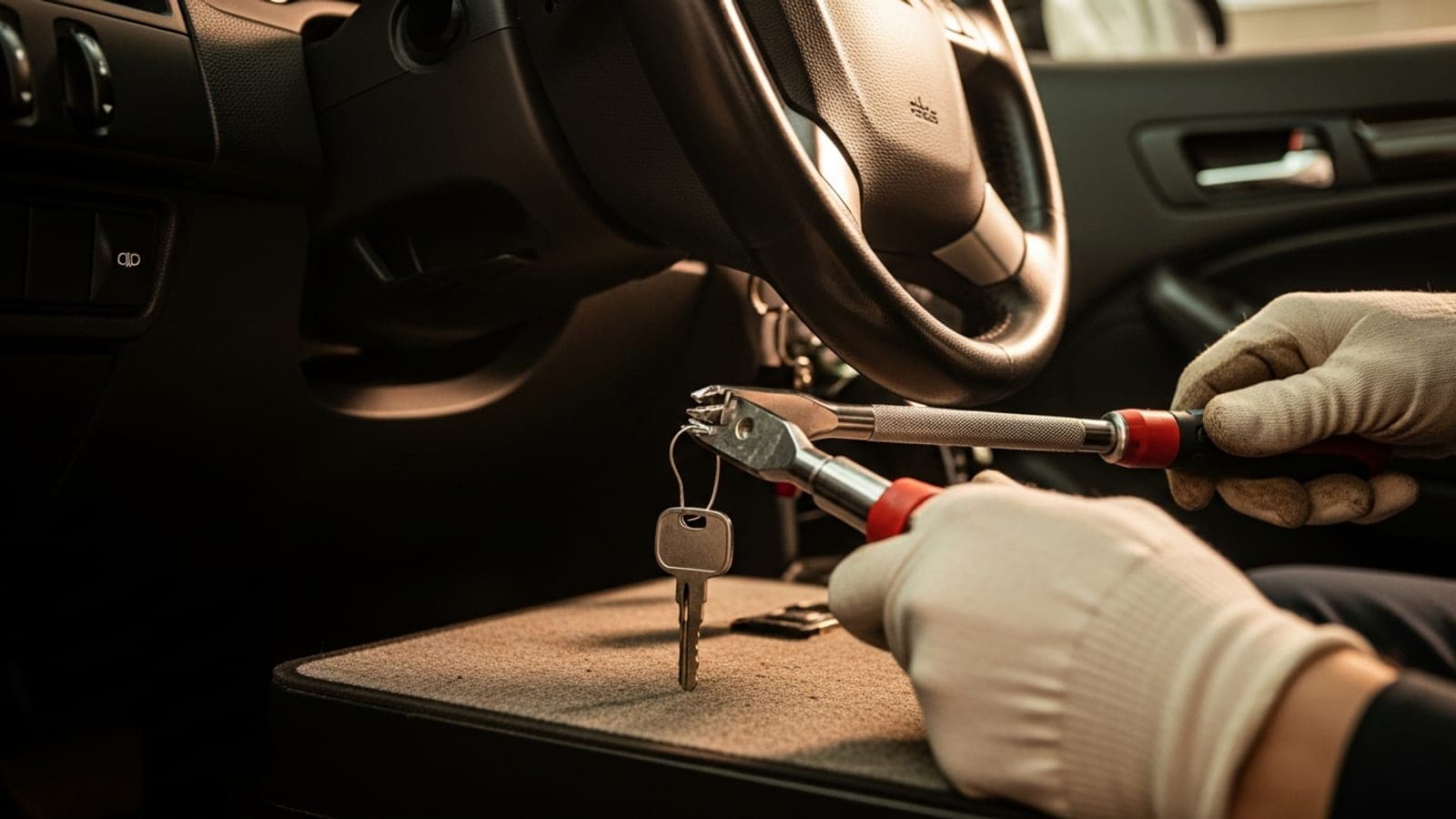
A qualified automotive locksmith programs transponder keys using dealer-level diagnostic equipment:
- Connects a programming device to the vehicle's OBD-II diagnostic port (located under the dashboard)
- Accesses the immobilizer module using manufacturer-specific software
- Enters a security access code or performs a security procedure to unlock the programming function
- Registers the new key's transponder ID in the vehicle's authorized key list
- Tests the key to verify the engine starts and all functions work
Time required: 10 to 30 minutes for most vehicles Tools used: Autel IM608 Pro, Smart Pro, VVDI Key Tool, or manufacturer-specific tools
Self-Programming (Limited Vehicles)
Some vehicle manufacturers allow owners to program additional keys themselves, but only when they already have the required number of working keys:
Ford (1996–2011): Requires two existing programmed keys to add a third Toyota (1998–2006): Requires two existing master keys GM/Chevrolet (some models): 10-minute learn procedure with existing key Honda (some models): Limited self-programming available
Self-programming is NOT possible when all keys are lost, as the procedure requires existing authorized keys to authenticate the process.
Transponder Key Costs by Vehicle Make
Here are typical costs for transponder key cutting and programming in the DFW area:
| Vehicle Make | Key Type | Dealer Cost | Locksmith Cost |
|---|---|---|---|
| Toyota | Transponder | $150–$250 | $80–$160 |
| Honda | Transponder | $150–$250 | $80–$160 |
| Ford | PATS transponder | $120–$250 | $70–$160 |
| Chevrolet/GM | PK3/PK3+ | $120–$200 | $70–$140 |
| Nissan | Transponder | $150–$250 | $90–$170 |
| Hyundai/Kia | Transponder | $130–$220 | $80–$150 |
| Volkswagen | Immobilizer | $200–$350 | $120–$220 |
| BMW | EWS/CAS | $250–$450 | $150–$300 |
| Mercedes | IR/Chrome | $300–$500 | $180–$350 |
| Dodge/Chrysler | SKIM | $150–$300 | $90–$180 |
Common Transponder Key Myths
Myth: You Can Copy a Transponder Key at the Hardware Store
Reality: Hardware stores can copy the physical metal blade, but they cannot program the transponder chip. The copied key will open the door but will NOT start the engine. You need a locksmith or dealer to program the chip.
Myth: Aftermarket Keys Do Not Work as Well as OEM
Reality: Quality aftermarket transponder keys use the same chip technology as OEM keys. The difference is in the key shell quality, not the electronics. A reputable locksmith uses high-quality aftermarket blanks that function identically to dealer keys at a lower cost.
Myth: Transponder Keys Can Be Hacked Easily
Reality: Modern rolling-code transponder systems are extremely secure. While theoretical attacks exist in laboratory settings, real-world transponder key hacking is exceptionally rare and impractical for common car theft.
Myth: You Only Need One Key
Reality: Having only one transponder key is risky. If you lose it, the replacement is significantly more expensive (all-keys-lost programming). Always have at least two programmed keys.
The Future of Car Key Technology
Transponder keys have dominated vehicle security for nearly three decades, but the technology continues to evolve:
Ultra-Wideband (UWB) keys: The newest vehicles from BMW, Apple CarKey partners, and others use UWB technology that measures the precise distance between the key and vehicle. This effectively eliminates relay theft attacks because the system knows exactly where the key is located, not just that a signal is present.
Smartphone digital keys: Apple CarKey, Google Digital Car Key, and Samsung Digital Key allow your phone to replace the physical key fob entirely. The phone communicates with the vehicle using NFC (near-field communication) or UWB. If you lose your phone, you can delete the digital key remotely—something impossible with a physical transponder key.
Biometric vehicle access: Some manufacturers are experimenting with fingerprint readers and facial recognition for vehicle entry and start. Hyundai and Genesis already offer fingerprint-based engine start on select models.
Over-the-air key management: Tesla pioneered the concept of managing vehicle keys entirely through software. Owners can add or remove phone keys and key cards through the Tesla app without visiting a dealer or locksmith. Other manufacturers are adopting similar approaches.
Despite these advances, traditional transponder keys will remain on the road for decades. The 280+ million registered vehicles in the United States cannot be retrofitted overnight, ensuring continued demand for transponder key programming services well into the 2040s and beyond.
Choosing a Transponder Key Programming Service
When selecting a service provider in DFW:
- Verify they have programming equipment for your specific vehicle make
- Ask about their success rate with your vehicle type
- Confirm mobile service so they can come to your location
- Get a complete price quote that includes the key blank, cutting, and programming
- Check that they guarantee their work in case the key has issues
Get Your Transponder Key Programmed Today
At Not Your Basic Locksmith, we program transponder keys for virtually every vehicle make and model on the road. Our mobile units carry a comprehensive inventory of transponder key blanks and dealer-level programming equipment.
- On-site service at your location anywhere in DFW
- All major vehicle makes covered
- Same-day service with fast response times
- Competitive pricing below dealer rates
Call (682) 344-1957 for transponder key programming in Arlington, Fort Worth, Dallas, and 89+ DFW cities.
FAQ
Q: What is a transponder key and how does it work? A: A transponder key contains a small electronic chip that communicates with your car's immobilizer system. When you insert the key, the chip sends a unique code to the car. If the code matches, the engine starts. If not, the immobilizer prevents starting — this is your car's anti-theft system.
Q: Can a locksmith program a transponder key? A: Yes. A qualified automotive locksmith with the proper diagnostic equipment can program transponder keys for virtually all makes and models. No dealer visit is required.
Q: How much does transponder key programming cost? A: Transponder key programming ranges from $50-$150 for programming alone, or $150-$350 for a new key cut and programmed. Dealers charge $200-$500+ for the same service.
Q: Can I program a transponder key myself? A: Some older vehicles (pre-2010) allow self-programming if you have two working keys. Most modern vehicles require professional programming equipment. Smart keys and push-to-start fobs always require professional tools.
Q: What's the difference between a transponder key and a smart key? A: A transponder key is a physical key with a chip — you insert it and turn to start. A smart key (proximity key) communicates wirelessly — you keep it in your pocket and press a button to start. Smart keys are more complex and expensive to replace.
DFW Market Standards & Industry Context
The automotive locksmith service market in Dallas-Fort Worth follows established industry standards documented by multiple authoritative sources. Per Associated Locksmiths of America (ALOA) published Service Standards, qualified mobile automotive locksmiths in the DFW market should hold Master Automotive Locksmith (MAL) credentials, maintain current OEM diagnostic tool licensing (Autel IM608, AVDI, Xhorse VVDI Prog), and provide flat-rate VIN-based quotes in writing before dispatch.
Per U.S. Bureau of Labor Statistics OEWS 49-9094 data, the U.S. locksmith workforce totals approximately 17,400 across all specialties. The automotive-specialty subset with current OEM tooling and chassis-specific experience represents a small fraction of that total — particularly in specialty work like European luxury all-keys-lost, EEPROM bench programming, and module-level diagnostic.
Real 2026 DFW market pricing context for routine services:
- Standard vehicle lockout: $75-$150 mobile inside Loop 635/I-820; $90-$175 outer DFW corridors
- Transponder key cut + programming: $150-$275 mobile vs $300-$450 + tow at dealership
- Smart-key fob program with working original: $200-$450 mobile vs $400-$650 dealer
- All-keys-lost domestic: $300-$500 mobile vs $500-$900 + tow + 3-7 day wait dealer
- All-keys-lost European luxury: $500-$1,000 mobile vs $1,100-$2,200 + tow + 5-7 days dealer
Per J.D. Power 2024 OEM Service Cost Surveys, dealership labor rates in the DFW market range $145-$240/hour depending on make, with parts markup 30-65% above OEM cost. Mobile operators with the same OEM-licensed programming software operate at $90-$130/hour labor with 10-25% parts markup — a structural cost differential that flows through to customer pricing on every job.
Consumer Protection Verification Standard
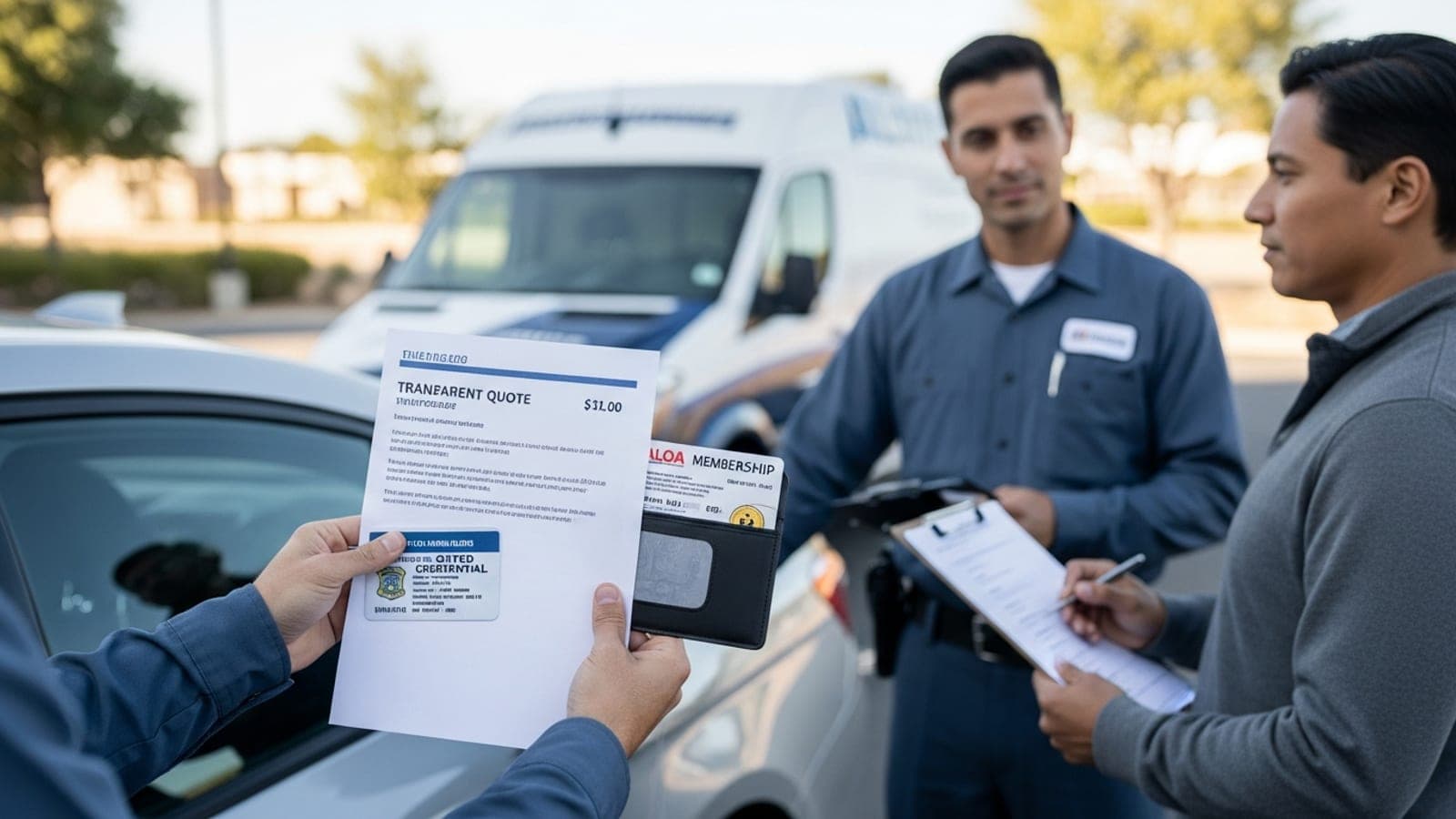
Per the Better Business Bureau's published locksmith scam advisory, bait-and-switch pricing is the most-reported pattern in locksmith complaints nationally. The Federal Trade Commission's published consumer protection guidance emphasizes that legitimate service operators quote flat prices in writing before dispatch, identify themselves and their service vehicles, and bill at the quoted price on arrival.
The verification checklist before authorizing any DFW locksmith service:
- VIN-based flat-rate written quote (text or email) before dispatch
- Marked service vehicle with business name and phone — operator describes color/make/branding
- Named technician — operator gives the actual technician's first name
- Verified physical Arlington/DFW address confirmable on Google Maps street view
- OEM tool list by brand for specialty work (AVDI for Mercedes, Autel IM608 + Xhorse VVDI Prog for BMW F-series, Autel IM608 + Land Rover license for Range Rover)
- Insurance and bonding with policy number on request
- 30-90 day workmanship warranty explicitly on invoice
- Itemized invoice format with labor, parts, programming as separate line items
- Credit card payment accepted (preserves chargeback rights)
- ALOA membership verifiable for specialty European luxury or module-level work
What experts say
> "The differentiator between qualified mobile operators and dispatch brokers isn't equipment — anyone can buy Autel IM608. It's chassis-specific recent reps, current manufacturer database licensing, and flat-rate transparency before dispatch. The five-minute verification before authorizing service prevents 95% of the price-escalation scenarios that drive customer complaints." > — Master Automotive Locksmith (ALOA-MAL), Arlington TX
Per ALOA published Service Standards and the BBB locksmith scam advisory, the verification framework above is industry-standard practice. Operators who follow it consistently produce better customer outcomes than operators who optimize for fast booking through vague pricing language and unmarked vehicles.
For a complete framework across all service categories — from routine lockouts to specialty European luxury all-keys-lost work — see the Not Your Basic Locksmith DFW knowledge base covering 115+ articles across automotive locksmith specialty topics.