EV Keys: What Changes on a Mach-E, Ioniq 5, EV6 or Tesla
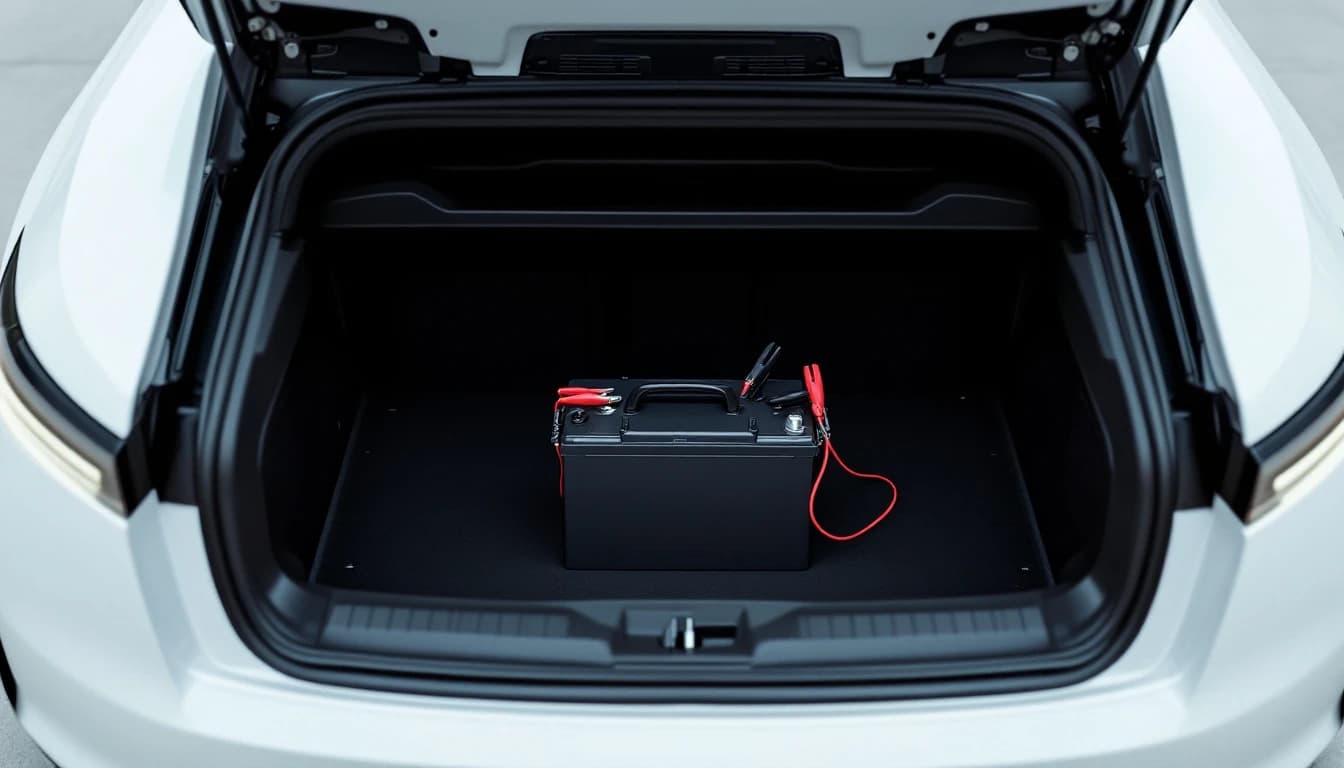
As of August 2026, the most common electric-vehicle call we take in DFW is not a lost key. It is an owner standing beside a fully charged car that will not respond to anything, because the 12-volt battery — the small conventional one almost every EV still carries to run its locks, computers and door handles — has died.
That is the headline fact about EV access, and it surprises people every time. A 77 kWh traction pack at 80% charge is completely irrelevant to whether your door will open. The locks, the body module, the key receiver and the contactors that connect the big battery are all on the 12-volt system, and when that fails the car behaves like any other car with a flat battery: dark, silent and unresponsive.
Everything else about EV key work follows from a handful of similar shifts. Here is what actually changed and what did not.
What EVs removed, and what they kept
Removed: the ignition cylinder. There is no lock to wear out, no key to break off inside it, and no column harness to fail. The entire category of ignition repair simply does not exist on these vehicles, which quietly eliminates one of the most common failure points on a conventional car.
Removed on some: the physical key entirely. Tesla ships a card and a phone key. Ford's Mustang Mach-E leads with Phone As A Key plus a door keypad. On these vehicles, a "key" is a credential rather than an object.
Kept: the 12-volt battery. Universally, and it is the single biggest change to how these cars strand people.
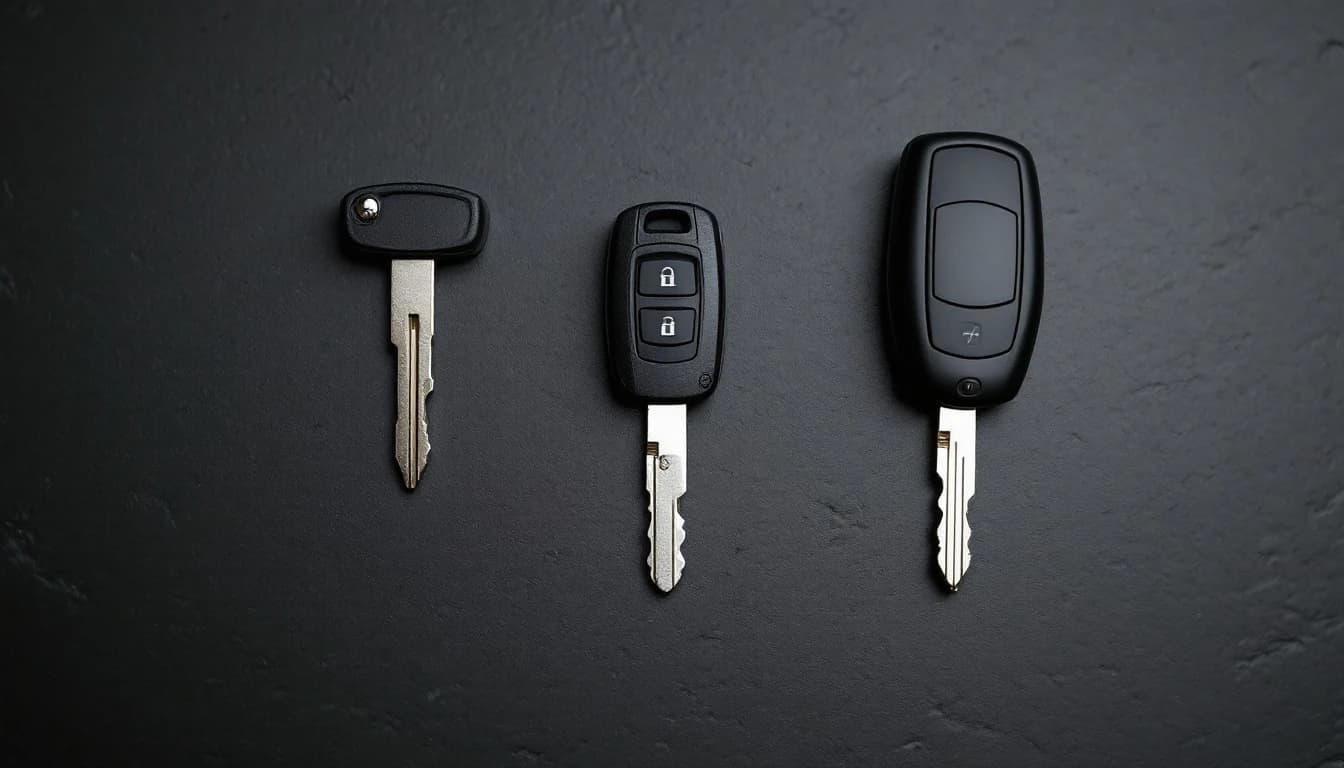
Kept: a mechanical way in. Almost every EV retains a physical route to the door — a hidden emergency blade in the fob, a concealed keyway under a cover, or a keypad. Manufacturers know the 12-volt battery can die, so the mechanical path is deliberately preserved.
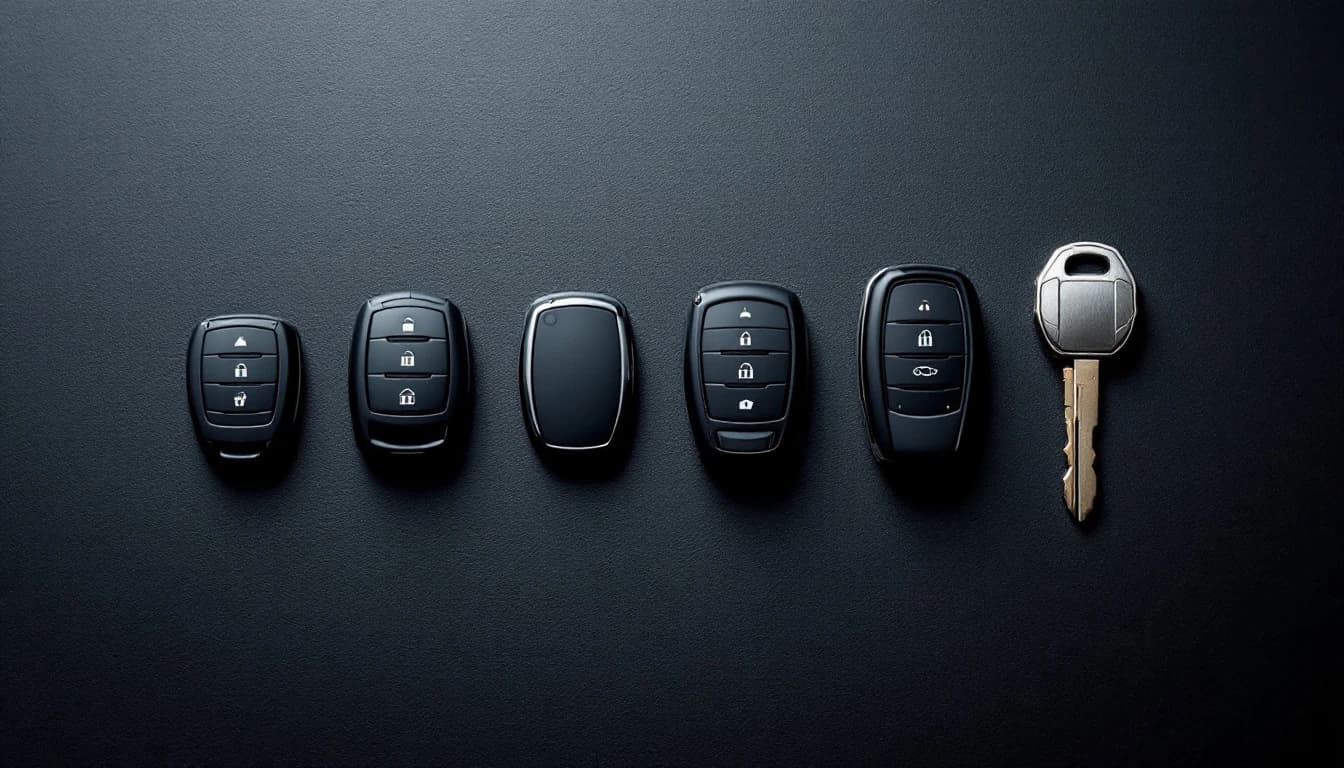
Kept: proximity smart keys. Hyundai, Kia, most of the industry outside Tesla still ships a conventional smart key alongside whatever digital option exists. The Ioniq 5 and EV6 use a normal proximity fob that is cut and programmed like any other modern smart key.
The four access architectures
| Vehicle family | Primary credential | Backup credential | Physical entry when 12V is dead |
|---|---|---|---|
| Tesla | Phone key over Bluetooth | Key card via NFC | Concealed 12V jump points to power the locks |
| Ford Mach-E / Lightning | Phone As A Key | Backup fob and door keypad | Keypad, or 12V access point |
| Hyundai Ioniq / Kia EV6 | Proximity smart key | Digital key on phone | Emergency blade in the fob, hidden keyway |
| Most other EVs and hybrids | Proximity smart key | Spare smart key | Emergency blade in the fob |
If you drive a phone-key vehicle, the ten-minute task worth doing this week is finding your backup credential, confirming it works, and putting it somewhere that is not the car.
Why EV lockouts are different
On a conventional car, a lockout is a mechanical problem with a mechanical solution: get the door open, get the key made, drive away.
On an EV with a dead 12-volt battery, opening the door is only step one. Many EVs use electronic door releases, so even with the door open the car is inert until the 12-volt system has power. Restoring it means locating the manufacturer's designated jump or access point — behind a tow-eye cover, under a frunk panel, at dedicated terminals — and applying power correctly.
Three points matter here, and the third is the important one.
The high-voltage system is not involved. All of this work is on the 12-volt side: door locks, body module, key receiver. The traction battery is isolated by contactors that are themselves 12-volt controlled, and nobody opening your door is going anywhere near it.
Access points are model-specific. They are documented, and finding them by trial and error on a customer's car is not acceptable practice. This is a case where knowing the vehicle beforehand genuinely matters.
A repeatedly dying 12-volt battery is a symptom. EVs charge their 12-volt battery from the traction pack through a converter, and that process depends on the car waking up on schedule. A 12-volt battery that keeps going flat usually means either the battery is at the end of its life or something is preventing normal top-up cycles. Replacing it without asking why buys you a few months.
What still needs a locksmith
Plenty, and it is worth being specific because the assumption that EVs need nothing is wrong in both directions.
Spare keys for conventional-fob EVs. The Ioniq 5, EV6, ID.4 and most hybrids use ordinary proximity smart keys that are programmed exactly like any other modern vehicle's. If you own one of these, everything in our spare key cost guide applies unchanged: the cheapest time to buy the second key is while the first still works.
Emergency blade cutting. Smart keys contain a hidden mechanical blade for exactly the flat-battery scenario. Owners rarely check whether theirs is present, and replacement fobs sometimes ship with an uncut blank blade — a blade that has never been cut is not a backup.
Card and credential pairing. Tesla key cards are paired rather than cut, which is a different procedure with the same purpose. Our guide to Tesla key card replacement covers what that involves and what it costs.
Module work. EVs have more modules than combustion cars, not fewer, and body control, gateway and telematics modules still fail, still get replaced and still need programming to the vehicle. That work is the same discipline described in our guide to module programming and when a dealer is genuinely required.
Hybrids, which are the larger population. A Prius, RAV4 Hybrid, Escape Hybrid or Sonata Hybrid has a conventional immobilizer, a conventional smart key and often a conventional ignition. From a key perspective these are ordinary cars, and hybrids still vastly outnumber pure EVs on DFW roads.
Where costs land, EV key work sits inside the normal ranges: as our DFW car key replacement cost index records, card-based systems run about $150–$300 and conventional EV smart keys land alongside their combustion equivalents at roughly $200–$400 for a spare.
Digital keys and the sharing problem
Phone-as-key systems introduce a genuinely new category: a credential that can be shared, revoked and left behind.
Sharing is convenient and mostly excellent. It also creates situations that did not previously exist. A digital key shared with a former partner, a departed employee or a private-sale buyer persists until somebody revokes it, and revoking it requires account access — which the person who sold the car may no longer have, or may never have set up.
If you buy a used EV, the first thing to do is not check the tyres. It is to confirm you have full account ownership and that every previously paired credential has been removed. On Tesla that means the vehicle properly transferred to your account; on other makes it means the manufacturer's app showing only your devices. A physical key you cannot account for is a nuisance. A digital key you cannot account for is somebody else's app.
The same reasoning explains why every serious shop verifies vehicle ownership before touching a credential, digital or physical, as our guide to proof of ownership in Texas sets out.
The four-item EV owner checklist
Know where your 12-volt access point is. Look it up now, in daylight, at home. Not at 10pm in a car park.
Locate your backup credential and confirm it works. Key card, backup fob, keypad code. Test it, do not assume it.
Check the emergency blade in your fob is actually cut. Slide it out and confirm it has cuts on it.
Get the spare made while the first key works. Unchanged from every other vehicle, and no less true because the car is electric.
Frequently Asked Questions
Why is my EV completely dead when the battery is fully charged?
Because the traction pack and the 12-volt battery are separate systems. Locks, door handles, body computers and the contactors that connect the high-voltage battery all run from a conventional 12-volt battery, and when that fails the car is unresponsive regardless of how much charge is in the main pack. It is the most common EV access problem there is, and it presents exactly like a flat battery on any other car.
How does a locksmith get into an EV with a dead 12-volt battery?
By using the manufacturer's designated mechanical entry route — an emergency blade, a concealed keyway or a door keypad — and then restoring 12-volt power at the model-specific access point, often behind a tow-eye cover or under a frunk panel. All of that work is on the low-voltage side; the high-voltage system stays isolated by its contactors and is not involved.
Do electric cars still need physical keys?
It depends on the make. Hyundai, Kia, Volkswagen and most manufacturers still ship a conventional proximity smart key that is programmed like any other modern key, with a hidden emergency blade inside. Tesla uses a key card and phone key with no traditional fob, and Ford's electric models lead with Phone As A Key plus a keypad and a backup fob. Even the phone-first vehicles retain a mechanical or credential-based backup by design.
How much does an EV key or key card cost in DFW?
As of August 2026, card-based credentials such as Tesla key cards run roughly $150–$300, and conventional EV smart keys sit alongside their combustion equivalents at roughly $200–$400 for a spare when you have a working key. All-keys-lost costs more on any platform. Hybrids price as ordinary vehicles because their key systems are ordinary.
Can I lose access to my car if my phone dies?
You can lose the convenient path, which is why every phone-key vehicle ships a backup — a key card, a backup fob, or a door keypad. The practical risk is not the technology failing but the backup being at home, uncharged or never tested. Locate yours, confirm it works, and keep it somewhere other than the car.
What happens to a digital key when a car is sold?
It persists until it is revoked, which requires account-level access rather than physical possession. Anyone buying a used EV should confirm the vehicle has fully transferred to their account and that no previously paired phones or credentials remain listed. This is a genuinely new risk category compared with physical keys, and it is worth ten minutes at purchase.
Do hybrids have the same key systems as EVs?
Generally no — most hybrids use entirely conventional immobilizers, smart keys and in many cases conventional ignitions, so from a key and lock perspective they behave like any other car of the same make and year. The hybrid system does not change the key procedure. Hybrids also remain far more numerous than pure EVs, so most "electrified vehicle" key calls are in fact ordinary key jobs.
Does my EV's emergency key blade need cutting?
If it has never been used, check. Replacement and aftermarket fobs sometimes ship with an uncut blank blade, and an uncut blade is not a backup — it is a piece of metal that will not open your door on the night the 12-volt battery dies. Slide it out of the fob and confirm it has cuts in it. Getting one cut is inexpensive and takes minutes.
Sort the backup before you need it
Not Your Basic Locksmith works on electric and hybrid vehicles across the DFW metroplex — Arlington, Fort Worth, Dallas, Grand Prairie, Mansfield, Irving and the surrounding cities — including proximity smart keys, emergency blade cutting, credential pairing and module programming, at the vehicle.
Call or text (682) 344-1957 with your year, make and model, whether the car currently responds to anything at all, and whether you have a backup credential to hand. If the car is dark with a full charge, say so — that tells us to arrive prepared for a 12-volt problem rather than a key one. Owner-operated, ALOA Master Automotive Locksmith credentialed, based at 1168 W Pioneer Parkway in Arlington. Texas DPS certificate #B28531501.