Volkswagen Key and Immobilizer Decoder
Two Volkswagens parked side by side can need completely different key jobs. A 2012 Jetta and a 2019 Jetta share a name and almost nothing in their security systems. A 2010 Passat does not even have a key in the usual sense. The model badge tells you very little; the immobilizer generation tells you nearly everything — how a new key is made, whether a used one can ever be reused, how long the job takes, and what it costs.
As of October 2026 in Dallas–Fort Worth, adding a key to a Volkswagen with a working key in hand runs $120–$350 depending on the key type, an all-keys-lost job runs $500–$900, and a diagnostic read when the car is rejecting a key it should accept is $90–$150. Dealer quotes for a lost-key Volkswagen typically run $800–$1,500 plus the tow.
This page is the map: find your car, find its generation, and know what you are asking for before you call anyone.
Why the generation matters more than the model
Every Volkswagen since the late 1990s has an immobilizer. A transponder chip in the key is read when you switch on. If the car recognises it, the engine computer is released. If not, the engine starts and dies within a second or two, or does not start at all.
What changed over twenty-five years is where that decision is made and how tightly the parts are tied together:
- On the earliest cars, a separate box near the steering column did the checking.
- Then the job moved into the instrument cluster.
- Then the keys themselves began to be made for one specific car before they were ever programmed.
- Then other modules were bound to the car as well, so that swapping one became a security event.
- On the newest cars, the car's diagnostic access itself is protected.
Each step made theft harder and made the key job longer. That progression is the generations.
The generations in plain terms
Immo 2 — roughly 1998 to 2001
A separate immobilizer control unit and a fixed-code transponder in the key head. Simple by modern standards. The cars are old enough now that the usual problem is not the security system but worn keys, worn ignition cylinders and brittle wiring around the reader coil.
Immo 3 — roughly 2000 to 2005, later on a few models
The immobilizer moves into the instrument cluster, and the engine computer takes part in the handshake. Adding a key requires the car's security code, which is read from the car rather than looked up. This is the Mk4 era: Golf, GTI, Jetta, the New Beetle and the later B5 Passat.
The practical point for owners: because the cluster is the immobilizer, replacing a cluster or an engine computer on these cars is a key job as well. Fit a used cluster and none of your keys will start the car until everything is adapted together.
Immo 4 — roughly 2005 to 2018
The changeover happened model by model through 2005 and 2006, so the earliest cars of this era can still behave like late Immo 3. After that comes the long middle period, and the generation most Volkswagens on DFW roads still belong to. The cluster remains the centre of the system on most models, but the keys change: a new key now has to be prepared for one specific car before it can be adapted. A blank cut to fit and programmed the old way will not work.
This covers the Mk5 and Mk6 Jetta, Golf, GTI and Rabbit, the Eos, the first-generation Tiguan, the 2012–2019 Beetle, and the American-built Passat.
One branch of this generation works differently. The 2006–2010 Passat and the CC use a fob that pushes into a slot in the dash instead of a turning key, and the immobilizer lives in a comfort module rather than the cluster. Same era, different job, and it is the Volkswagen most often quoted wrongly over the phone.
MQB — roughly 2015 onward
The modular platform that underpins the current range: the Mk7 Golf family, the second-generation Tiguan, the Atlas, the Mk7 Jetta, the Arteon and the Taos. Key data is more tightly protected, the keys use a newer transponder family, and more of the car's modules are bound to the vehicle. Within MQB there are earlier and later key generations, and the later ones are a longer procedure. The model year decides which you have.
The newest platforms — Mk8 Golf GTI and R, ID.4
The current architecture adds protection around diagnostic access itself. Some key work on these cars is possible independently and some, depending on the model year, currently is not. These are always quoted from the VIN, and we will say plainly when the dealer is the only route.
Decoder table by model
Model years are approximate. Build date and trim can move a car across a line, so treat this as the map and the VIN as the final word.
| Model | Approximate years | Generation | Key type |
|---|---|---|---|
| Golf, GTI, Jetta (Mk4) | 1999–2005 | Immo 2, then Immo 3 | Blade or flip key, turn to start |
| New Beetle | 1998–2010 | Immo 2, then Immo 3 | Blade or flip key |
| Passat (B5 / B5.5) | 1998–2005 | Immo 2, then Immo 3 | Blade or flip key |
| Jetta, Golf, GTI, Rabbit (Mk5) | 2005–2010 | Late Immo 3 on the earliest cars, then Immo 4 | Flip key |
| Golf, GTI (Mk6) | 2010–2014 | Immo 4 | Flip key |
| Jetta (Mk6) | 2011–2018 | Immo 4 | Flip key, or smart key on higher trims |
| Eos | 2007–2016 | Immo 4 | Flip key |
| Tiguan (first generation, incl. Tiguan Limited) | 2009–2018 | Immo 4 | Flip key, or smart key |
| Beetle | 2012–2019 | Immo 4 | Flip key, or smart key |
| Passat (B6) | 2006–2010 | Immo 4, comfort-module based | Slot-in fob |
| CC | 2009–2017 | Immo 4, comfort-module based | Slot-in fob, or smart key |
| Passat (American-built) | 2012–2022 | Immo 4 | Flip key, or smart key |
| Touareg | 2004–2017 | Its own keyless-module system; later cars are a newer generation | Quoted from the VIN |
| Golf, GTI, Golf R, e-Golf, SportWagen, Alltrack (Mk7) | 2015–2021 | MQB | Flip key, or smart key |
| Tiguan (second generation) | 2018–present | MQB | Smart key on most trims |
| Atlas, Atlas Cross Sport | 2018–present | MQB | Smart key on most trims |
| Jetta (Mk7) | 2019–present | MQB | Flip key, or smart key |
| Arteon | 2019–2023 | MQB | Smart key |
| Taos | 2022–present | MQB | Flip key, or smart key |
| Golf GTI, Golf R (Mk8) | 2022–present | Newest platform | Quoted from the VIN |
| ID.4 | 2021–present | Newest platform | Quoted from the VIN |
How to identify yours in two minutes
Start with the year and model. The table above settles most cars.
Look at how the car starts. A key that turns in a cylinder, a fob that pushes into the dash, or a button with the key in your pocket. The slot-in fob identifies the B6 Passat and the CC at a glance. A start button means a smart key and a keyless-access module, which changes the job on any generation.
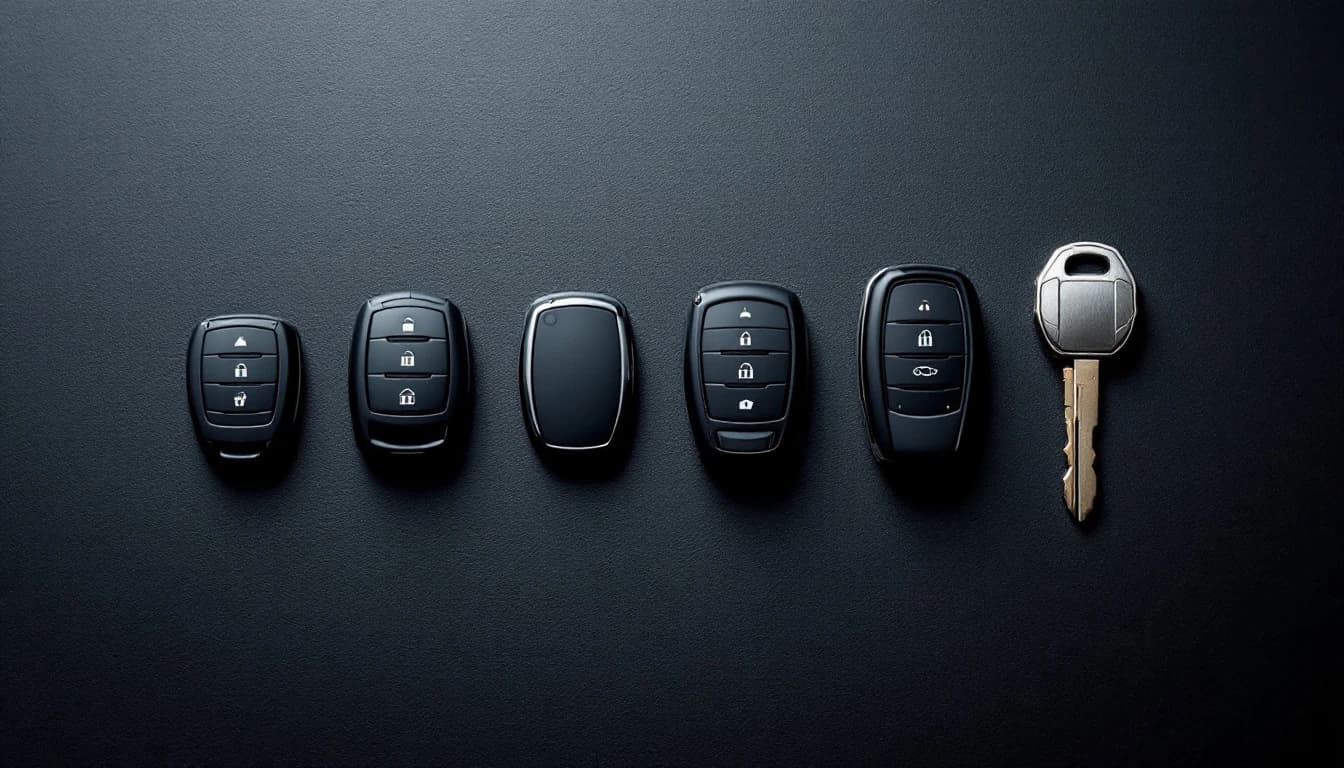
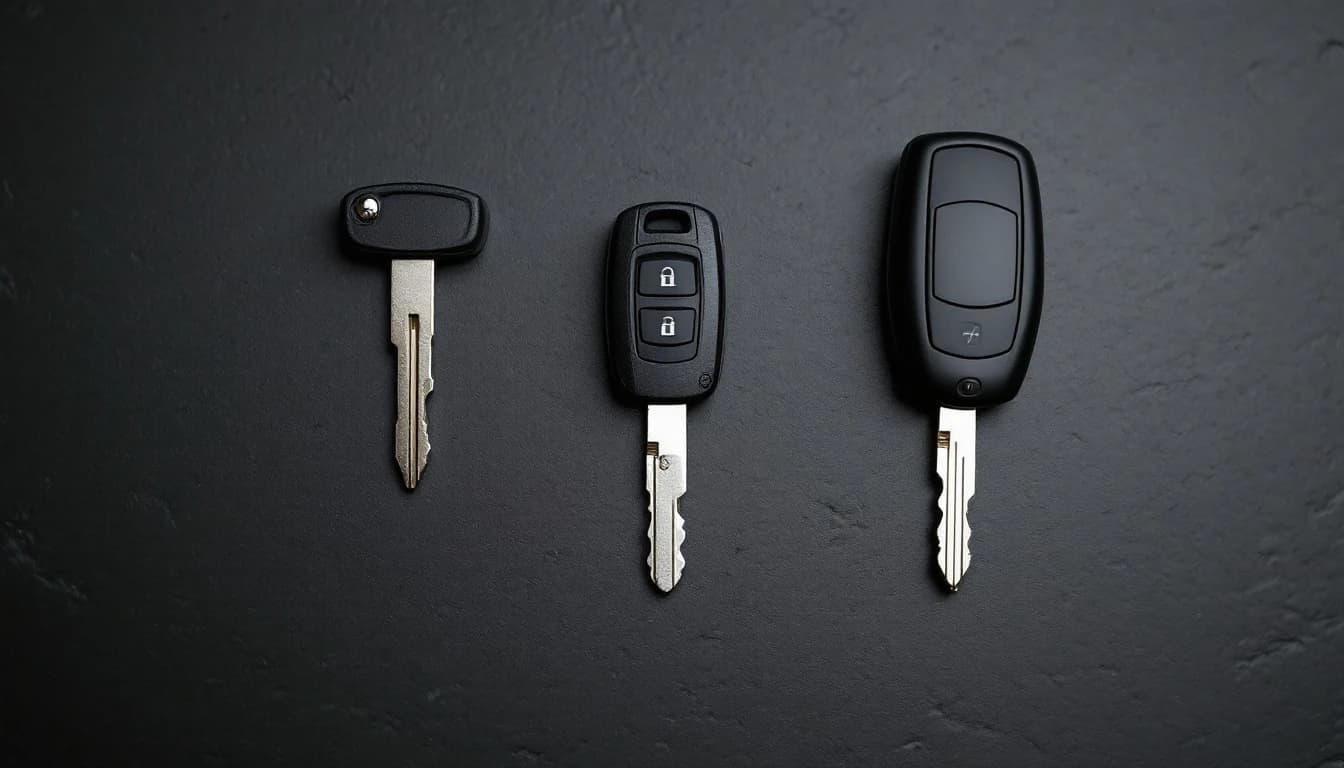
Look at the key. A plain blade with a separate remote is the oldest pattern. A flip key with the blade folding into the remote runs from the early 2000s into current cars. A smooth fob with a hidden emergency blade is a smart key.
Watch the dash when it fails. On many Immo 4 cars the display shows the word SAFE when the immobilizer has blocked the start. An engine that fires and dies after a second is the classic immobilizer shut-off on older generations.
Read the VIN. The tenth character is the model year, and with the full VIN we can confirm the platform and the key part number before anyone drives out. If you want to identify the key itself — chip family, blade profile, the numbers on the case — our guide to identifying your car key shows where to look.
What each generation means for the job
Adding a spare
With a working key, every generation here is straightforward, and it is the cheapest thing on this page. The car already trusts one key, so a second can be adapted alongside it. The differences are in the key itself: an Immo 4 key has to be prepared for your car first, and MQB keys are a newer and more expensive part.
All keys lost
With no working key the car cannot vouch for anyone, so the security data has to be obtained another way before a key can be made. On Immo 3 that is a read from the cluster. On Immo 4 and MQB it is a longer procedure and is the reason the lost-key price is more than double the spare-key price on the same car. The argument for cutting a spare while one key still works is entirely contained in that gap — it is set out in why a spare key costs a fraction of an all-keys-lost call.
Used keys
On Immo 2 and Immo 3, a used key can sometimes be reused. From Immo 4 onward a key is prepared for one car and, once adapted, is generally not transferable. Buying a used Volkswagen fob online for a 2012 or newer car is, in most cases, buying a remote case. What works and what does not across all makes is covered in aftermarket vs OEM key fobs.
Replacing a cluster, an engine computer or a comfort module
Because these modules take part in the immobilizer, swapping one is a security job on every generation from Immo 3 onward. On newer cars component protection adds a second layer: a module from another vehicle announces itself as foreign until it is released by coding. If a module has been changed and the car now rejects its keys, the keys are not the problem.
2018 and newer cars
Later cars route diagnostic access through a gateway, and the newest add protection on top. That affects what can be done at the car and with which tools. Our page on security gateway modules and key programming explains what the gateway is and is not.
What it costs in DFW
Prices as of October 2026. Ranges, not quotes — call with the VIN for a firm figure.
| Volkswagen key job | Mobile (DFW) | Typical dealer quote |
|---|---|---|
| Flip key added, Jetta or Passat 2006–2018, Beetle | $120–$200 | $200–$300 |
| Smart key added, Golf or GTI | $180–$320 | $300–$450 |
| Smart key added, Jetta or Passat 2019 and newer, Tiguan, Atlas | $200–$350 | $350–$500 |
| Programming only, key you already own and that suits the car | $60–$150 | $100–$250 |
| All keys lost | $500–$900 | $800–$1,500 + tow |
| Component-protection coding after a module swap | $350–$550 | Handled in-house |
| Diagnostic read, immobilizer chain and key data | $90–$150 | $185–$295 |
| Flatbed, when the car cannot be driven | — | $150–$300 |
Symptoms that are not a key problem
Three patterns send Volkswagen owners shopping for a key they do not need.
The remote stopped working but the car still starts. The transponder and the remote are separate circuits in the same case. A car that starts has a healthy immobilizer and a fob with a battery, button or synchronisation problem. Work through VW key fob not working before buying anything — most of those faults are fixed in the driveway for the price of a coin cell.
The key is not detected, but works held against the reader. On keyless cars that points at the fob battery or at an antenna, not at the key's identity. Our guide to key not detected when the key is fine covers the five-minute triage.
Every key stopped working at once. Two keys do not fail on the same morning. The shared component is the car: a low battery, a reader coil, or a module that has lost its data or been replaced. That is a diagnosis, not a key order.
What happens at the appointment
- The call. Year, model, VIN, how the car starts, and whether any key currently works. That fixes the generation and the price band.
- Proof of ownership. Registration or title and matching identification, checked before any key is made. The reasons and the accepted documents are in proof of ownership for car key replacement in Texas.
- The key is cut to the car's code. Not copied from a worn original, which only reproduces the wear.
- The key is prepared and adapted. On Immo 4 and MQB the preparation step comes first. Every key you want to keep has to be present, because adaptation sets the full list of accepted keys.
- Everything is tested. Start, remote lock and unlock, boot release, and on smart keys the keyless handles and the emergency start position.
A spare is typically 20 to 45 minutes on site. A lost-key job on Immo 4 or MQB is longer and is quoted with a time as well as a price.
Frequently Asked Questions
How do I know which immobilizer my Volkswagen has?
Year and model settle most cars: roughly 2000–2005 is Immo 3, roughly 2005–2018 is Immo 4, and 2015 onward on the Golf family and 2018 onward on Tiguan, Atlas and Jetta is MQB. How the car starts and what the key looks like confirm it, and the VIN is the final word.
Is a 2012 Jetta key the same job as a 2019 Jetta key?
No. A 2012 Jetta is an Immo 4 car and a 2019 Jetta is an MQB car. The keys are different parts, the preparation is different, and the lost-key procedure is longer on the newer car.
Can a used Volkswagen key be programmed to my car?
On the oldest generations, sometimes. From Immo 4 onward a key is prepared for one specific car and is generally not reusable once it has been adapted to another. For most 2006 and newer Volkswagens a used fob is not a workable key.
Why does my dash say SAFE?
On many Volkswagens the display shows SAFE when the immobilizer has blocked the start because it did not accept the key. The cause can be a key that was never adapted, a damaged transponder, a reader fault, or a module that has been replaced and not adapted.
How much is a Volkswagen spare key in DFW?
As of October 2026, roughly $120–$200 for a flip key on a 2006–2018 Jetta, Passat or Beetle, $180–$320 for a Golf or GTI smart key, and $200–$350 for a smart key on a newer Jetta, Passat, Tiguan or Atlas. All-keys-lost runs $500–$900.
Why does the Passat and CC key push into the dash?
The 2006–2010 Passat and the CC use an electronic ignition slot instead of a mechanical cylinder, with the immobilizer in a comfort module. It is the same generation as other Volkswagens of the period but a different procedure, and it should be quoted as its own job.
Do I need to tow my Volkswagen to the dealer if I lose every key?
On most models, no. The key is cut and adapted where the car sits. The exceptions are the newest platforms, where some model years currently require the dealer, and we will tell you that from the VIN before dispatch.
Book with your VIN in hand
Knowing the generation turns a vague question into a specific one, and a specific question gets a firm price. Not Your Basic Locksmith has cut and programmed European keys across Dallas–Fort Worth since 2012 and is licensed by the Texas Department of Public Safety Private Security Program, licence #B28531501. Arlington shop or mobile at your car — call (682) 344-1957 with your year, model, VIN and whether a key still starts it.