Direct answer
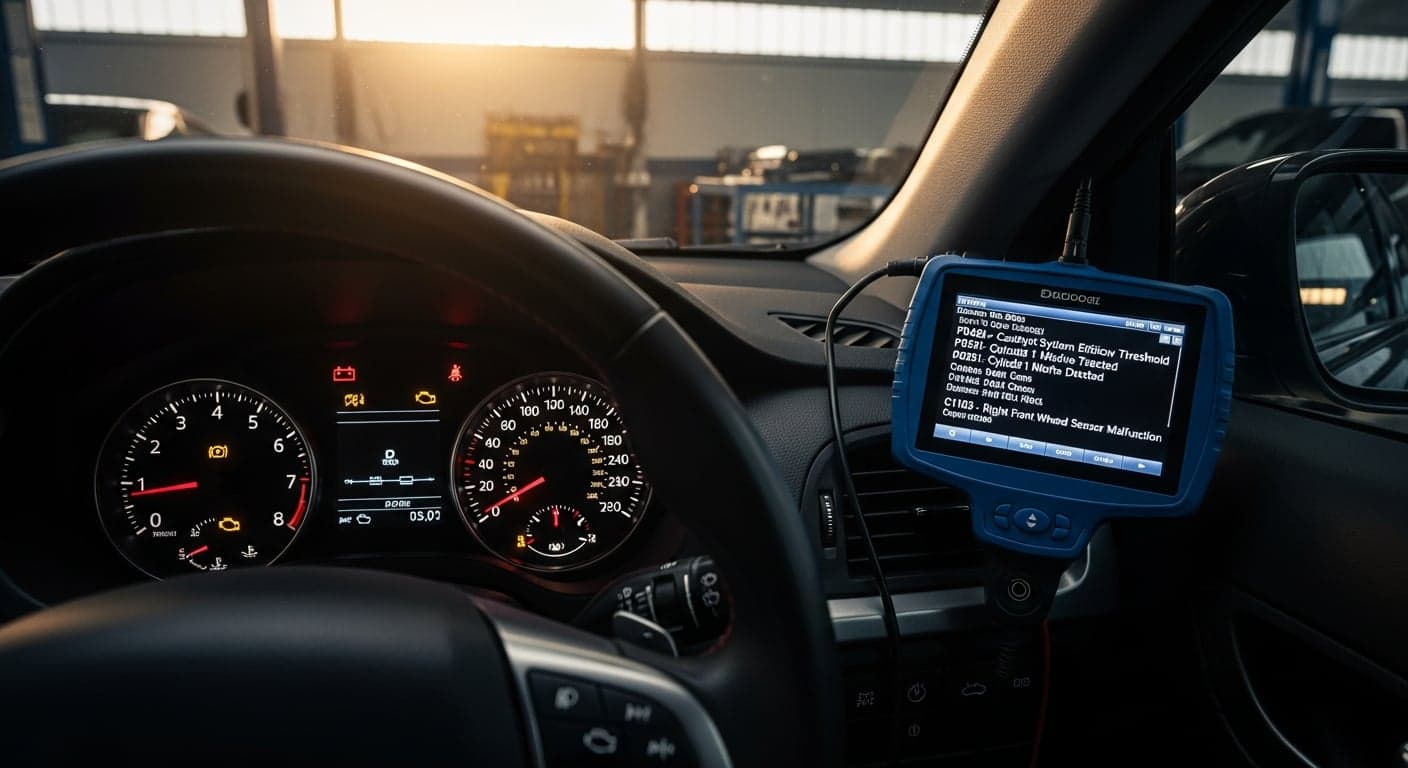
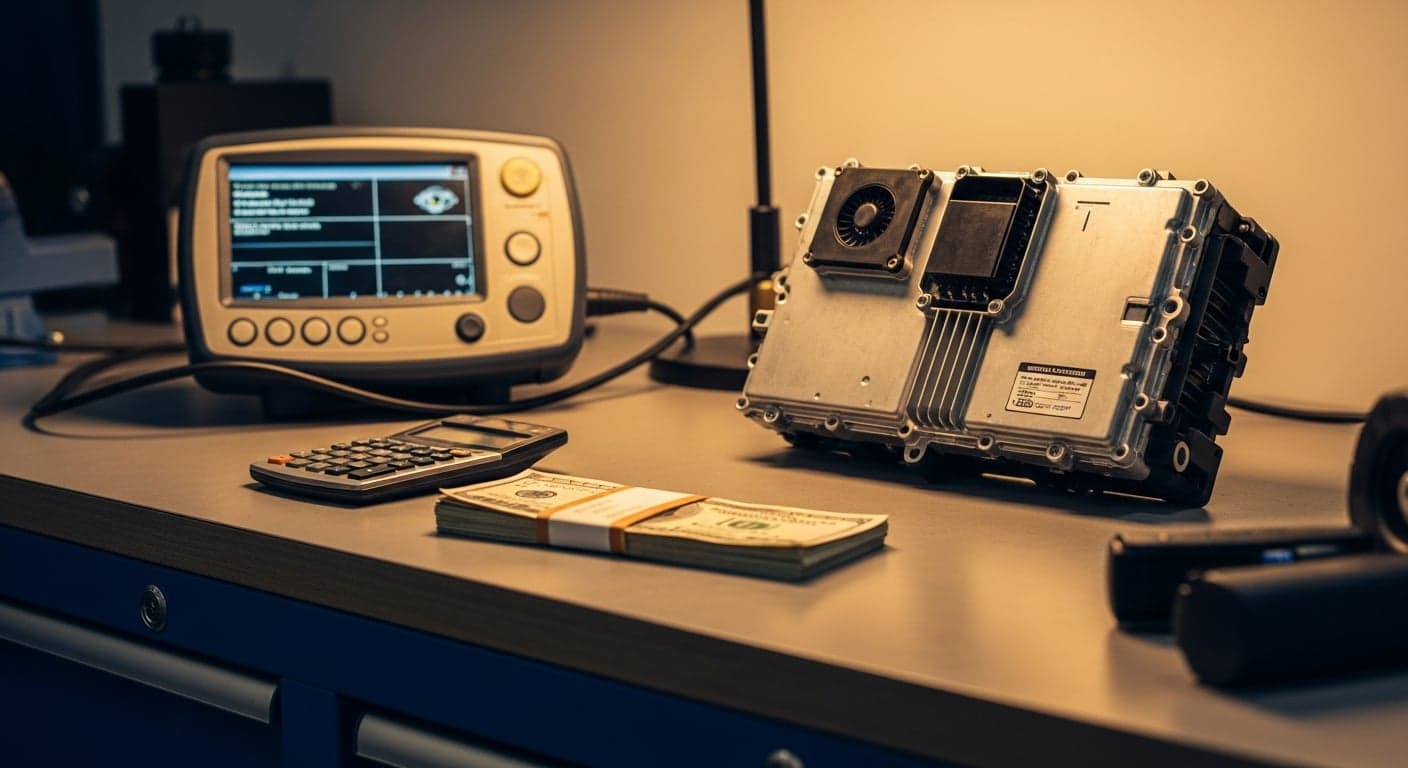
Used ECU/PCM programming works reliably for about 60% of common scenarios but fails roughly 40% of the time due to component protection, immobilizer pairing complexity, or hardware mismatches that aren't visible until programming starts. In DFW, used-module work typically runs $400–$700 mobile (including the used module sourcing, programming attempt, and full warranty if successful) vs $700–$1,200+ for new OEM-equivalent module replacement. The decision tree depends heavily on (1) make + model + year, (2) component protection status, (3) salvage source quality, and (4) operator experience with similar previous attempts. This guide walks through when used modules are the right path vs when new replacement is the safer choice.
When used ECU/PCM programming works reliably
Domestic vehicles 2008-2018: Ford, GMC, Chevrolet, Dodge — most use VIN-based coding without component protection layers. A used PCM from a matching year/engine vehicle can be VIN-coded to your vehicle via Autel IM608 in 60–75 minutes. Success rate: 85-90%.
Asian vehicles 2010+: Toyota, Honda, Subaru, Mazda, Hyundai, Kia — generally similar architecture to domestics. Used ECMs program reliably with current scan-tool licenses. Success rate: 80-85%.
Pre-2010 European luxury: Mercedes-Benz W211, BMW E60/E90, Audi B7 — older platforms without component protection. Used ECUs from salvage typically program successfully. Success rate: 75-80%.
Identical year + engine + transmission match: A used PCM from a 2017 Ford F-150 with the same 5.0L V8 and 10R80 transmission programs into your matching 2017 F-150 reliably. Success rate: 90%+.
When used programming fails or shouldn't be attempted
Post-2010 European luxury with component protection: Audi MED17.5+, VW MED17.5+, Porsche MED17.1+, BMW F-series with FEM/BDC. Component protection (or equivalent) prevents salvage modules from coding to a different vehicle. Most attempts fail. New OEM-equivalent module is the right path.
Modern Mercedes-Benz (W205, W213, W222): Daimler's three-layer security (immobilizer + component protection + Star Diagnosis cryptographic layer on 2018+ chassis) makes used Mercedes ECU work essentially impossible without dealer-level tools. Success rate: under 15%.
Brand-new chassis (2024+): Salvage market hasn't matured; matching donor vehicles are rare. Even with current scan-tool support, used-module sourcing is impractical.
Hybrid and electric vehicles: High-voltage interlock systems plus battery management module integration plus motor control coding makes salvage swaps risky. Reserve for specialty operators with hybrid-specific experience.
Mismatched engine/transmission combinations: A used PCM from a 2017 F-150 with 3.5L EcoBoost and 10R80 won't work in your 2017 F-150 with 5.0L V8 and 6R80 — different calibration files, different sensor inputs, different shift logic. Even within the same chassis/year, the engine/transmission combination must match.
Unknown salvage quality: Modules from flood vehicles, fire damage, or theft recovery have higher hidden failure rates. Reputable salvage yards disclose the source vehicle's condition; budget yards often don't.
DFW market pricing for used module work (2026)
Market data from DFW mobile operators (2026-Q1/Q2). Note that used-module pricing varies significantly based on salvage market availability for your specific chassis.
| Service | Mobile (DFW) | Comparable new module |
|---|---|---|
| Used PCM sourcing + VIN coding (domestic 2008-2018) | $400–$650 | $700–$950 new OEM-equivalent |
| Used PCM sourcing + VIN coding (Asian 2010+) | $375–$600 | $650–$900 new OEM-equivalent |
| Used ECU + immobilizer coding (pre-2010 European) | $500–$750 | $900–$1,200 new OEM-equivalent |
| Diagnostic only (determine if used vs new) | $90–$175 (waived if work booked) | n/a |
| Used module programming attempt that fails | $200–$300 (labor + sourcing time) | n/a — proceed to new module |
| Component protection coding for used post-2010 Audi/VW | Often impractical | $700–$1,000 new module |
The DFW on-site used-module process
Phone consultation (10–15 min): VIN, exact year/make/model, engine code, transmission type, intended donor vehicle source (own salvage vs operator-sourced), specific failure description. Specialist evaluates feasibility before quoting.
Donor module sourcing (variable, 24-72 hours typical): Either customer brings matching used module from salvage source, or operator coordinates with reputable salvage yards. Module must match year + engine + transmission exactly.
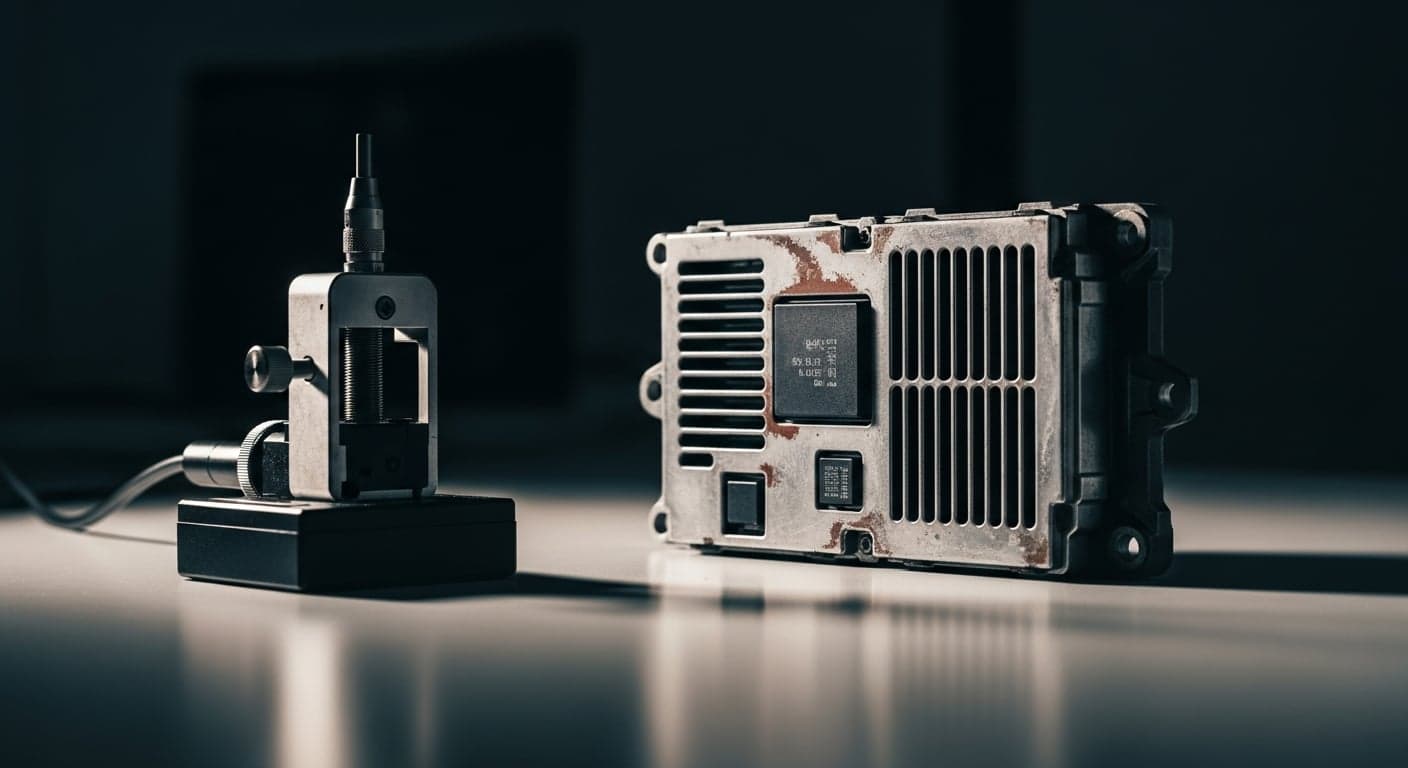
Pre-installation testing (15-25 min on-site): Used module is tested on bench before installation. Verify it powers up correctly, communicates with scan tool, has correct part number. Reject modules that show pre-existing damage.
Mobile dispatch (40–75 min in core DFW): Service van with Autel IM608, manufacturer-specific licenses, programming hardware, replacement modules backup if used module fails on bench.
Diagnostic confirmation (10–15 min): Confirm vehicle's failure mode and that root cause is module-level (not sensor or wiring).
Module swap (15–25 min): Original module removed, used module installed.
Programming attempt (30–60 min): VIN coding, immobilizer pairing, component protection if required. Success or failure becomes apparent.
If successful: Full coding, calibration, testing, warranty. Customer paid agreed price.
If failed: Original module reinstalled OR new OEM-equivalent module sourced (additional fee). Used-attempt fee applies (typically $200–$300 for labor + sourcing time).
Verification + documentation: Full driveability test, scan-tool clear, itemized invoice with module part numbers and coding data.
Anonymized DFW used-module scenarios (2026)
Profile: 2015 Ford F-150 (5.0L V8, PCM A/M), Mansfield. Used PCM sourced from salvage yard ($150 vs $450 new). Customer wanted to save money. Outcome: Used PCM coded successfully via Autel IM608 with current Ford license. Total cost $475 (used module $150 + labor/coding $325). Saved $375 vs new module path. Source: anonymized customer interview, 2026-03.
Profile: 2017 Audi A4 (B9, MED17.5.5), Plano. Customer attempted used ECU swap from salvage yard ($200 vs $700 new). Component protection prevented coding. Outcome: Used ECU failed to code (component protection lock). Original ECU reinstalled with verification. New OEM-equivalent module sourced for permanent fix. Total cost $850 (used attempt fee $250 + new module $600). Net cost was $150 more than starting with new module. Source: anonymized customer interview, 2025-11.
Profile: 2012 Honda CR-V (R20A4 ECU), Garland. Used ECM from matching donor vehicle. Outcome: Successful VIN coding and immobilizer pairing in 75 minutes. Total cost $425 (used module $125 + labor/coding $300). Source: anonymized customer interview, 2026-02.
How to evaluate used vs new ECU decisions before booking
- Verify make/model component protection status: Specialist confirms whether your chassis has component protection that prevents used-module work.
- Confirm donor vehicle match: Year, engine code, transmission type must match exactly. Specialist verifies salvage source quality.
- Calculate break-even: Used-attempt fee + cost of used module + potential new module if it fails. If break-even is close to new-module cost, just go with new.
- Verify warranty terms: Used-module success carries different warranty than new (typically 30 days vs 90 days). Worth the savings only when matters work first time.
- Insurance considerations: Some auto insurance carriers require new OEM parts for claim reimbursement. Verify before sourcing salvage.
When used ECU/PCM is the right call
Used modules work best in these scenarios:
Older vehicle out of warranty + budget-constrained: 2010-2018 domestic or Asian vehicle where new OEM-equivalent module exceeds 25% of vehicle's current market value.
Identical donor available: Salvage yard has matching year/engine/transmission donor vehicle from non-fire/non-flood source.
Customer accepts 60-85% success rate: Willingness to pay used-attempt fee if it fails and pivot to new module.
Pre-2010 European chassis: Older platforms without component protection where used-module work has higher success rates.
Specialty performance application: Sometimes a tuned ECU from a previous owner's vehicle is the only way to obtain specific performance calibrations not available from aftermarket suppliers.
When used ECU/PCM is the wrong call
New module replacement is better in these scenarios:
Post-2010 European luxury with component protection: Audi MED17.5+, VW MED17.5+, Porsche MED17.1+, Mercedes W204+, BMW F-series. Used-module success rate too low.
Modern Mercedes-Benz (W205, W213, W222): Three-layer Daimler security makes used work essentially impossible.
Hybrid and electric vehicles: High-voltage interlock + battery management + motor control integration too complex for routine salvage.
Brand-new chassis: Salvage market hasn't matured.
Vehicle still under manufacturer warranty: Dealer is free; used modules void the warranty path.
Daily driver where reliability matters more than money: New OEM-equivalent module + full 90-day warranty + 90%+ success rate is worth the premium over used.
Get help right now — owner-operator answers 24/7
When you need used ECU and PCM programming across DFW done correctly the first time, call us directly at (682) 344-1957. Owner-operated since 2012. ALOA Master Automotive Locksmith certification. Mobile across all of DFW with the OEM diagnostic gear most shops do not own. No dispatch broker; no surprise on-site pricing.
Call (682) 344-1957 or request a quote online.
Frequently asked questions
How do I know if a salvage yard module will actually work?
Three pre-installation checks: (1) verify part number matches your vehicle's exact requirement (year + engine + transmission), (2) test the module on bench before installation (powers up correctly, communicates with scan tool), (3) confirm donor vehicle wasn't in flood or fire damage. A reputable mobile specialist performs all three before attempting programming.
What if the used module fails to code?
Specialist reinstalls your original module (no harm done) and you proceed to new OEM-equivalent module replacement. Used-attempt fee typically applies ($200–$300 for labor + sourcing time). Net cost may be similar to starting with new module if the used attempt fails — that's the risk-reward tradeoff.
Will my insurance cover used module work?
Comprehensive insurance typically covers module replacement after theft, fire, flood, or vandalism — but most carriers require new OEM-equivalent parts. Verify with your specific carrier before sourcing salvage. The cost difference (used $400–$650 vs new $700–$950) may not matter if insurance is paying.
Why does component protection prevent used modules from working?
Component protection (Audi, VW, Porsche, some Mercedes) ties the ECU cryptographically to the specific VIN of its original vehicle. Even a perfectly-matching module from another A6 of the same year/engine won't function on your A6 until coded to your specific VIN through manufacturer-licensed software. Independent operators with current VAG license can sometimes code used modules; success depends on the specific component protection generation. Recent VAG license + chassis-specific experience are the requirements.
Can a locksmith program a used module from a different state?
Yes — VIN coding is state-independent. The used module was originally coded to its donor vehicle's VIN; the mobile specialist re-codes it to your VIN using current OEM-licensed software. State of origin doesn't affect the procedure.
Long-term considerations: used vs new
Resale value: New OEM-equivalent modules with documented installation/coding date support better resale value than used modules of unknown history. Worth $200-$400 premium if you plan to sell within 2-3 years.
Warranty differential: New modules carry 12-24 month warranty (parts + workmanship). Used modules carry 30-90 day workmanship warranty only (no parts warranty). Long-term reliability favors new.
Insurance claim documentation: If module fails again after used-module work, insurance claim documentation is weaker than if you'd installed new OEM-equivalent. Carriers occasionally challenge claims where used parts were used.
Diagnostic clarity: Used modules with unknown service history sometimes carry pre-existing fault codes or intermittent issues that aren't visible at installation. New modules start with clean state. For diagnosis of future issues, new is cleaner.
Future programming compatibility: Newer modules ship with current firmware revisions that work with the latest scan-tool licenses. Used modules from older donor vehicles sometimes have older firmware that doesn't accept current programming updates. Worth verifying before commitment.
What experts say about used module decisions
> "Used module work is a fair-weather option. When salvage market has good matching donors, used is sensible for budget-constrained domestic vehicles. When component protection is involved (post-2010 European luxury), used is mostly a coin flip with a long tail of expensive failure modes. The honest specialist explains both paths and lets the customer decide; the lazy specialist defaults to whichever is faster for them." > — Master Automotive Locksmith (ALOA-MAL), Arlington TX
Federal Trade Commission consumer guidance on used auto parts emphasizes that warranty terms, donor vehicle history disclosure, and pre-installation testing are the consumer's primary protections when sourcing used vehicle modules. Reputable specialty operators document all three; bargain-only operators sometimes skip steps. The cost differential between used and new should reflect a 10-20% honest savings, not 60-80% — when used pricing seems too good to be true, the donor vehicle quality is usually the hidden compromise.
Quick reference: used vs new ECU decision matrix
Domestic 2008-2018 + matching donor available: Used works 85-90% of the time. Mobile $400-$650 vs new module path $700-$950. Worth attempting.
Asian 2010+ + matching donor available: Used works 80-85%. Mobile $375-$600 vs new $650-$900. Worth attempting.
Pre-2010 European (no component protection): Used works 75-80%. Mobile $500-$750 vs new $900-$1,200. Worth attempting.
Post-2010 European luxury with component protection: Used works under 15% reliably. New OEM-equivalent recommended; component protection coding cost similar.
Modern Mercedes-Benz (W205, W213, W222): Used essentially impossible. New module path required.
Brand-new chassis (2024+): Salvage market hasn't matured. New only.
Hybrid/electric vehicles: Used too risky. New recommended.
Decision factors that change the math
Vehicle market value: Used works best when new OEM-equivalent module + labor exceeds 25% of vehicle market value.
Time pressure: If you need vehicle running today, new is faster (donor sourcing adds 24-72 hours).
Insurance: Comprehensive carriers often require new OEM parts; verify before sourcing salvage.
Warranty differential: Used module 30-day workmanship warranty vs new 30-90 day. New is more durable.
Resale considerations: Vehicles being sold within 2 years benefit from documented new-module installation.
Used module verification checklist
- Exact part number match (year + engine + transmission + market spec).
- Donor vehicle history disclosure from salvage source (no flood, no fire, no recent collision).
- Pre-installation bench testing by specialist before programming attempt.
- Operator's specific used-module-attempt experience on your chassis type.
- Honest pricing: If used attempt fails, what's the total cost?
- Used module warranty: 30 days vs new module 30-90 days; understand the trade-off.
- Donor vehicle photo / VIN verification: Reputable salvage discloses; bargain salvage often doesn't.
Long-term cost analysis (5-year horizon)
For a $400 used module that successfully codes:
- Initial saving: $300 vs new module path
- Warranty: 30 days vs 90 days
- Re-failure rate within 24 months: ~5% (used) vs ~2% (new)
- Resale impact: -$200 to $0 if buyer notices in vehicle history
- Net 5-year cost: $400 used + ~$80 re-failure risk + $0-$200 resale impact = $480-$680
- vs $700 new + $14 re-failure risk + $0 resale impact = $714
Used wins by $34-$234 over 5 years when it works first time. When it doesn't, cost differential reverses.
When salvage yard quality matters most
Premium salvage yards (with photographic documentation, donor vehicle history, return policy): Higher initial cost but lower hidden failure risk. Worth 20-30% premium over budget yards.
Specialty European salvage (focused on Audi, BMW, Mercedes): Better stocking depth for matching donors. Critical for component-protection-free older European chassis.
Online salvage networks: Variable quality. Verify photos + history before paying.
Local pull-it-yourself yards: Lowest cost but no donor history. Suitable only for extremely budget-constrained scenarios where customer accepts higher risk.
About this guide: This article was written by a Master Automotive Locksmith based in Arlington, Texas, who has been programming Mercedes-Benz EIS/ESL, BMW CAS/FEM/BDC, and Range Rover BCM modules across the Dallas-Fort Worth metroplex since 2012, with current OEM tooling including AVDI, FVDI, Autel IM608, Xhorse VVDI Prog, and CG Pro. All statistics in this article link to public sources. Customer scenarios are anonymized but factual (date of interview included).