Security Gateways: Why Newer Cars Lock Out Cheap Key Programming
As of August 2026, on most 2018-or-newer Chrysler, Dodge, Jeep and Ram vehicles — and on a growing list of GM, Ford, VW, Audi, Nissan and Toyota models — the diagnostic port no longer gives anyone who plugs into it the ability to write a key. A security gateway sits between the port and the modules that hold your immobilizer data, and it only opens for a technician who has been authenticated as a real, identified, credentialed person.
That single change explains a lot of confusing quotes. It is why one shop says "yes, $250, twenty minutes" and another says the same job cannot be done at all. It is why a tool that programmed keys perfectly on a 2016 Ram is useless on a 2019 one. And it is why the honest answer to "can you do my 2022?" sometimes depends less on the vehicle than on who is holding the laptop.
What a security gateway actually is
For roughly twenty-five years, the OBD-II port was wide open by federal design. Emissions regulations required manufacturers to expose diagnostic data to anyone, so the same port that told a mechanic why the check-engine light was on also let a tool talk to the immobilizer, the body module and the instrument cluster. Convenient for repair. Also convenient for theft.
By the mid-2010s, tools capable of adding a key through that port were available to anyone with a few hundred dollars, and vehicle theft methods followed. Manufacturers responded by splitting the port's job in two: reading stays open, writing gets gated.
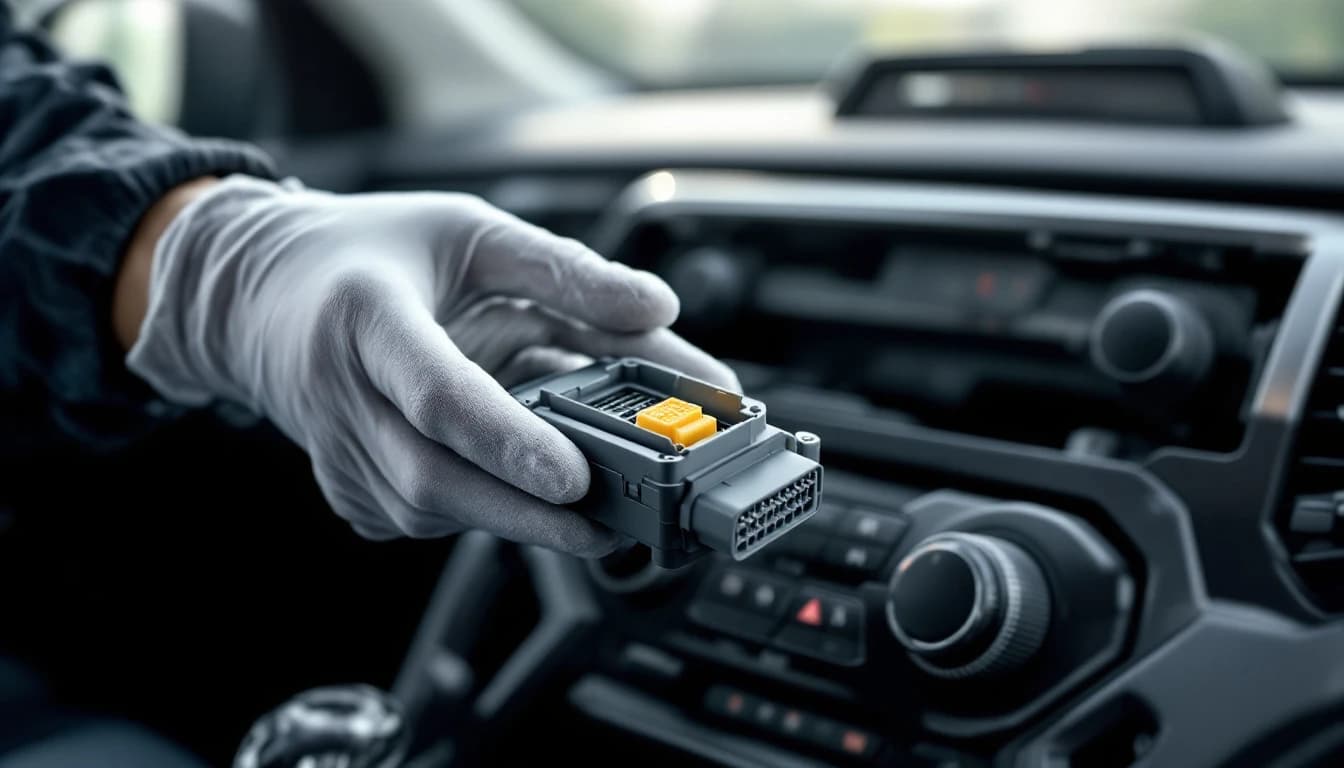
A security gateway module — physically a small module near the OBD connector on Stellantis products, a software layer on most others — passes read-only diagnostic traffic straight through. Anything that changes the vehicle's state (writing a key, coding a replacement module, clearing certain faults, running an actuator test) has to be authorised first. The tool sends credentials to the manufacturer's server, the server checks that the person behind the tool is who they say they are, and only then does the gateway unlock write access for that session.
The result is that on a gated vehicle there are now two categories of shop: those who can authenticate, and those who can only look.
Who gates what
The rollout has been uneven, make by make and sometimes model by model within the same year. The table below is a planning guide, not a specification — the only definitive answer for your car is a check against its VIN.
| Make | Scheme | Roughly when | What it gates | Effect on key work |
|---|---|---|---|---|
| Chrysler / Dodge / Jeep / Ram | Security Gateway Module (SGW) | 2018 onward | All write functions | Authentication required before any key can be added |
| GM (Chevy, GMC, Buick, Cadillac) | Global B / VIP security access | ~2019–2020 onward | Module programming, key learn | Server-side seed/key exchange per session |
| Ford / Lincoln | Secured diagnostics | ~2021 onward on selected functions | Certain programming routines | Licensed access needed for gated procedures |
| VW / Audi | Protected diagnostics (SFD) | ~2020 onward | Coding, adaptation, immobilizer | Session unlock tied to an identified technician |
| Nissan / Infiniti | Secure gateway | ~2020 onward | Immobilizer and key registration | Authorised access required |
| Toyota / Lexus | Immobilizer reset authorisation | Varies by platform | All-keys-lost registration | Credentialed request per vehicle |
| BMW / Mercedes | Online-authenticated programming | Long-standing | Coding and key writing | Account-bound access, per-session |
| Honda / Acura | Gateway on newer platforms | ~2022 onward, model dependent | Immobilizer functions | Authorised access required |
The legitimate path: NASTF, the SDRM and the VSP credential
There is a formal system behind all of this, and it is worth knowing the name of it because it is the single best question you can ask a shop.
The National Automotive Service Task Force (NASTF) is a non-profit body formed by automakers, aftermarket repairers and regulators to make sure independent shops can still get the information and access they need to fix cars. Its Secure Data Release Model is the mechanism that lets a non-dealer technician obtain security data — immobilizer codes, key registration authorisation, gateway access — without that access being available to the general public.
To use it, a technician registers as a Vehicle Security Professional, which requires a verified identity, a background check, proof of business legitimacy and, where the state requires it, proof of licensure. Every request made under that credential is logged against the technician's identity and the vehicle's VIN. That log is the entire point: if a key is made for a car, there is a named, checkable person attached to the transaction.
In Texas, the licensing half of that equation is the Department of Public Safety Private Security Program, which regulates locksmiths under Occupations Code Chapter 1702. A Texas locksmith company holds a DPS certificate; individual technicians hold registrations under it. That licence is not the same thing as gateway authorisation, but a legitimate shop will have both, and neither is difficult to verify before you hand over your car.
Ask any shop quoting a 2018-or-newer vehicle two questions: are you a registered Vehicle Security Professional, and what is your Texas DPS certificate number? An outfit that cannot answer either is not equipped for a gated car, whatever the price on the phone.
Why "just unplug the gateway" is the wrong answer
There is a workaround circulating in the trade. On Stellantis vehicles the gateway module is physically accessible, and a bypass harness that removes it from the network is sold openly. Plug the harness in, the gate disappears, the old tools work again.
It is a bad idea, for reasons that have nothing to do with rule-following.
The vehicle notices. Removing a module from a CAN network generates communication faults across every module that expected to hear from it. You may finish with a working key and a dashboard full of new lights.
Safety systems depend on that network. On many platforms the gateway is not an isolated add-on; it participates in routing between the powertrain, chassis and body networks. Advanced driver assistance features, stability control and airbag readiness can all be affected by disturbing that routing.
It leaves no record. The whole value of authenticated access is the audit trail. A key made through a bypass has no logged owner verification behind it. If that vehicle is later disputed, stolen or involved in an insurance claim, the absence of a record is a problem for the owner as much as for the shop.
It frequently does not even work. Newer platforms authenticate at the module level rather than at a single physical gateway, so pulling one module accomplishes nothing except new faults.
A shop that opens with "we just bypass the gateway" is telling you it is not authorised. That is useful information, delivered early.
What this changes about your quote
For a properly credentialed shop, gateway authentication adds a few minutes and a subscription cost, not a new pricing tier. The reason gated vehicles often quote higher is not the gate itself — it is that gated vehicles are newer, which usually means smart keys, more expensive blanks and longer procedures.
Using our own DFW car key replacement cost index as the reference, a domestic smart key on a 2018-or-newer platform sits in the $200–$350 range when you have a working key, and $400–$700 when all keys are lost. Neither number is a "gateway surcharge". They are the price of the platform.
What the gateway does change is the shape of the risk. On a gated vehicle you cannot start a job, discover a problem and hand it to somebody else halfway through, because there is no halfway. Either the session authenticates and the work completes, or nothing happens at all. That is a better failure mode than the alternative, and it is why the correct question is never "how cheap" but "are you actually able to".
Where key work and module work now overlap
The same authentication that gates key writing gates module programming, which is why these two jobs have converged into one skill set. A replacement body control module has to be VIN-written and married to the immobilizer before the vehicle accepts it, and that write passes through the same gate as a key. The same is true of an engine module, a cluster, or an RF hub.
That is why a shop equipped for gated key work is generally the same shop equipped for module programming and BCM work, and why "can you program a key on my 2020" and "can you code a used module into my 2020" have the same answer. If you are trying to work out which of your problems actually needs a dealer, our guide on which car modules need the dealer and which don't maps that out by module family.
For the specific case of an engine module that has been swapped and left the car unable to start, the diagnostic path is documented in car won't start after ECU swap — a scenario that has become considerably more common since gateways arrived, because a module that was never authenticated into the vehicle behaves exactly like a failed one.
What to do before you call
Three pieces of information turn a vague conversation into an accurate quote.
Year, make and model. This determines whether a gate exists at all.
Whether you have a working key. This is still the largest single cost variable on any vehicle, gated or not. A working key means the module already trusts a credential; no working key means the security data has to be obtained first.
Whether the car runs. A gated vehicle with a flat battery is a different job, because authentication needs stable voltage for the length of the session. If the battery is weak, say so — it is cheaper to know in advance.
With those three facts, a shop that works on gated vehicles can usually tell you on the phone whether the job is possible, roughly what it costs, and how long it will take. A shop that cannot will find out in your driveway, which is the expensive way for everyone.
Frequently Asked Questions
What is a security gateway on a car?
It is an authentication layer between the OBD-II diagnostic port and the modules that store security data such as your key registrations. Reading fault codes still works for anyone. Writing — adding a key, coding a module, running certain routines — requires the tool to authenticate with the manufacturer's server first, proving that an identified, credentialed technician is behind it. On Chrysler, Dodge, Jeep and Ram it is a physical module; on most other makes it is a software layer.
Which vehicles have a security gateway?
As of August 2026, effectively all Chrysler, Dodge, Jeep and Ram models from 2018 onward; most GM vehicles on the Global B architecture from around 2019–2020; selected Ford functions from around 2021; VW and Audi under protected diagnostics from around 2020; Nissan and Infiniti from around 2020; Honda and Acura on newer platforms from around 2022; and Toyota through per-vehicle immobilizer reset authorisation. BMW and Mercedes have required authenticated online access for far longer. Coverage varies by model within the same year, so the VIN is the only definitive check.
Can an independent locksmith program keys on a 2018 or newer vehicle?
Yes, provided the shop is properly credentialed. The legitimate route is registration as a Vehicle Security Professional under the National Automotive Service Task Force's Secure Data Release Model, which requires verified identity, a background check and proof of business legitimacy and licensure. A credentialed independent has the same write access as a dealer for key work on most platforms. An uncredentialed shop does not, regardless of what tools it owns.
Is bypassing the security gateway safe?
No, and it often does not work. Removing a gateway module from the vehicle network generates communication faults across other modules, can interfere with systems that depend on network routing including driver assistance and stability control, and leaves no logged record of who authorised the key. Newer platforms authenticate at module level rather than through a single physical gateway, so the bypass accomplishes nothing except new faults. A shop that proposes it is telling you it is not authorised.
Does the security gateway make key replacement more expensive?
Not directly. For a credentialed shop, authentication adds minutes and a subscription cost, not a pricing tier. Gated vehicles do tend to cost more because they are newer, which usually means a smart key rather than a blade key, a more expensive blank and a longer procedure. As of August 2026 in DFW, a domestic smart key runs roughly $200–$350 with a working key in hand and $400–$700 for all-keys-lost, which is platform pricing rather than a gateway charge.
How do I check whether a locksmith is authorised to work on my car?
Ask two questions. First, are you a registered Vehicle Security Professional — the credential that grants authenticated access under the industry's secure data release system. Second, what is your Texas DPS certificate number, since locksmith companies in Texas are licensed by the Department of Public Safety under the Private Security Program. Both are verifiable. A shop that can answer neither is not equipped for a gated vehicle.
Why can a shop read my codes but not program my key?
Because reading and writing are gated differently by design. Emissions regulations keep diagnostic reading open to everyone, so any scan tool can pull fault codes from a gated vehicle. Writing changes the vehicle's state and is what the gateway protects. A shop with a capable scan tool but no authentication credential will genuinely be able to tell you what is wrong and genuinely be unable to fix it.
Does a gateway affect used or replacement modules?
Yes, and this is where most surprises happen. A replacement body control, engine or cluster module has to be VIN-written and married to the immobilizer before the vehicle will accept it, and that write passes through the same gate as a key. A module installed without that step behaves like a failed one — the car may crank and refuse to start with no obvious fault. If a vehicle stopped starting immediately after a module was replaced, that is the first thing to check.
Tell us the year before you tell us the problem
Not Your Basic Locksmith works on gated and ungated vehicles across the DFW metroplex — Arlington, Fort Worth, Dallas, Grand Prairie, Mansfield, Irving and the surrounding cities — at the vehicle, including module programming and EEPROM-level work when the platform requires it.
Call or text (682) 344-1957 with your year, make and model, whether you have a working key, and whether the car currently starts. That is enough to tell you on the phone whether your vehicle is gated, whether the job can be done where it sits, and what it costs. Owner-operated, ALOA Master Automotive Locksmith credentialed, based at 1168 W Pioneer Parkway in Arlington. Texas DPS certificate #B28531501.