SRS Crash Data: When an Airbag Module Can Be Reset and When It Can't
As of October 2026, clearing crash data from an airbag control module in the DFW area is a bench-level electronics job that typically runs $120–$250, versus $400–$1,200 for a new dealer module that then has to be VIN-programmed to the vehicle. Both are legitimate. Which one your car needs depends on the module's design, not on your budget.
And there is a condition attached to both that matters more than the price: neither is a repair. A crash-data reset restores a module to a state where it can supervise a restraint system. It does nothing whatsoever to the restraint system itself. If the deployed airbags, the pretensioners, the clockspring and the impact sensors have not been physically replaced first, a cleared module is a car with a dark warning light and no functioning safety system — which is considerably more dangerous than a car with the light on, because at least the light tells the truth.
That is the whole subject in one paragraph. The rest is detail worth having.
If you came here for the numbers rather than the mechanics, every price line — diagnostic scan, bench reset, mobile reset, replacement with and without programming — is set out in airbag module reset and replacement cost.
What actually happens inside the module at deployment
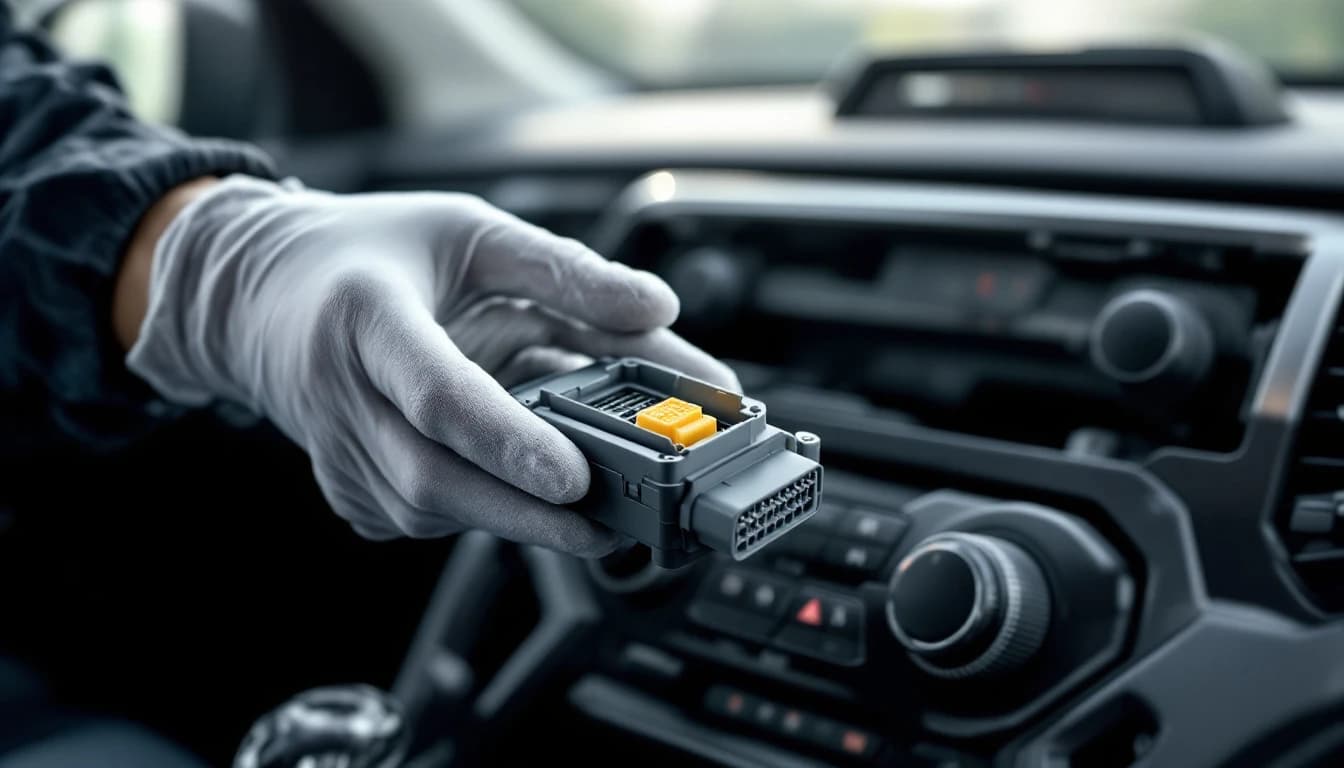
The supplemental restraint system control module — SRS module, airbag control unit, ACU, ORC on Chrysler products, SDM on GM, RCM on Ford — spends its life watching accelerometers and deciding, in milliseconds, whether an impact warrants firing anything.
When it fires, it does three things at once. It sends the deployment current to the relevant squibs. It records the event: crash pulse data, which circuits fired, the state of the seatbelt switches, occupant-classification data on vehicles that have it. And it sets a hard code — a fault that, unlike an ordinary diagnostic trouble code, is written to non-volatile memory and cannot be cleared with a scan tool.
That last part is deliberate and it is a safety feature. The module has just used its one-shot pyrotechnic devices. Until a human confirms those devices have been replaced, the module refuses to pretend it is ready. The dashboard light stays on. On most vehicles the system stays inhibited, which means a second impact deploys nothing at all.
Deployment also frequently damages the module's own firing circuits. The squib drivers pass substantial current briefly, and it is common to find open or shorted outputs afterwards. That distinction — a module that logged an event versus a module that logged an event and cooked a circuit doing it — is exactly what decides whether a reset is even an option.
Reset, repair, or replace
There are three genuinely different outcomes, and shops that describe them all as "airbag reset" cause most of the confusion in this subject.
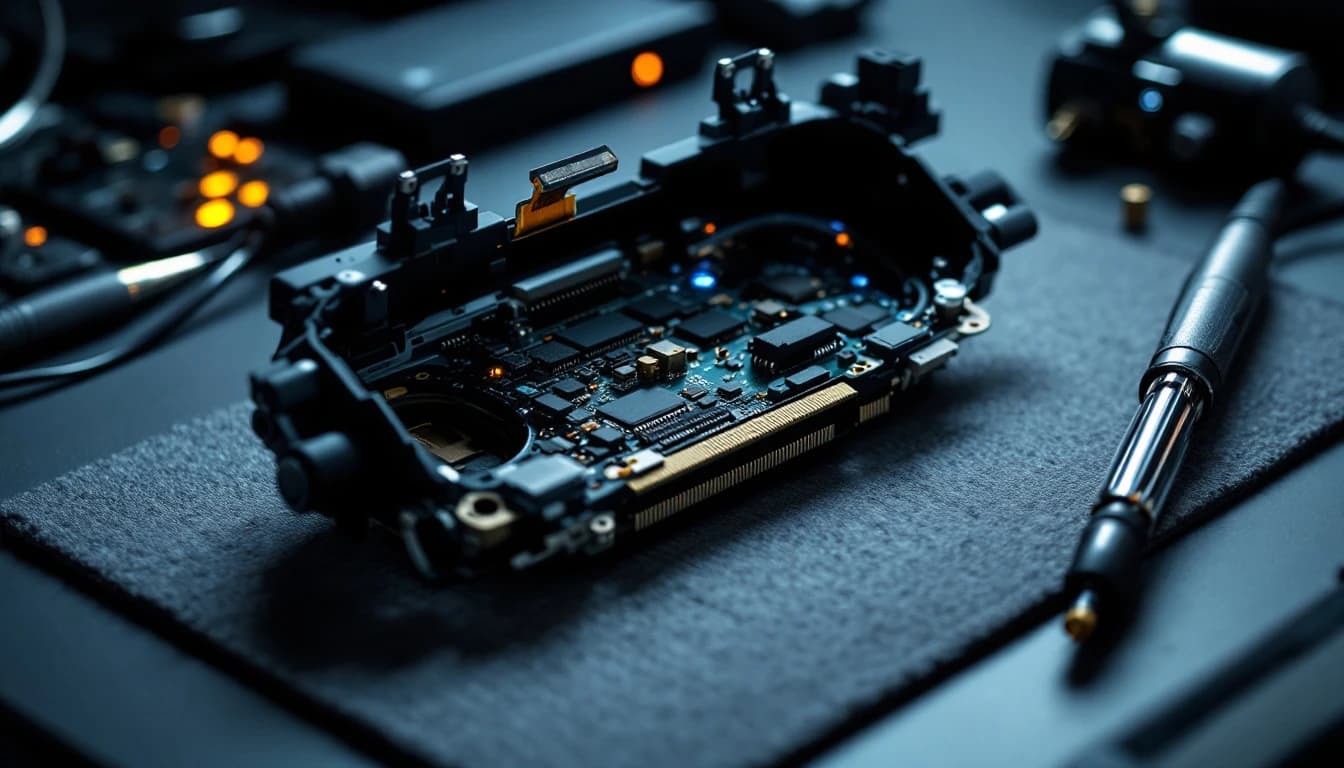
Crash-data reset. The stored event and hard codes are erased from the module's EEPROM, returning it to its factory-clean state. The module is otherwise healthy. This is a data operation, done on the bench with a programmer reading and rewriting the memory directly.
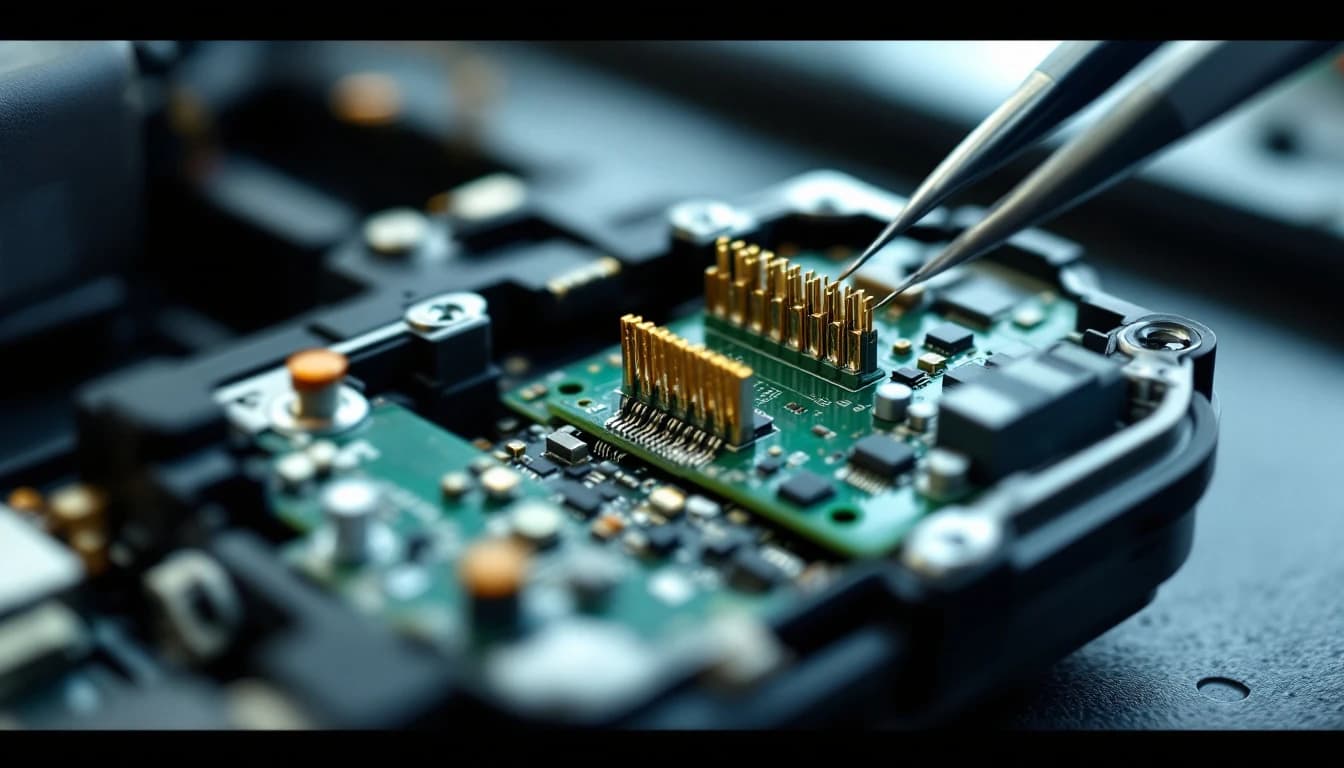
Component-level repair plus reset. The module took damage in the deployment — a blown squib driver, a failed supply, a cracked solder joint. The board is repaired first, then the data is cleared. Turnaround is longer and the cost sits at the higher end.
Replacement and programming. The module is beyond repair, or the platform stores crash data in a way that makes clearing it impractical or unsafe. A replacement unit — new or a matched used one — is fitted and then VIN-written and configured to the vehicle. On modern platforms that configuration step is not optional; an unprogrammed module will not supervise the system correctly and will usually set its own faults immediately.
The honest sequence is always: diagnose, repair the physical restraint system, then decide which of the three the module needs. Any shop that quotes a reset before anyone has looked at what deployed is selling a number, not a service.
What determines which path your car takes
| Factor | Points toward reset | Points toward replacement |
|---|---|---|
| Firing circuits | All squib outputs test healthy | Open or shorted driver circuits |
| Physical condition | No impact damage, connectors intact | Case damage, water intrusion, corrosion |
| Platform design | Crash data in accessible EEPROM | Data written to protected or one-time memory |
| Model year | Older and mid-age platforms more often clearable | Newest platforms increasingly replacement-only |
| Occupant classification | Separate module, unaffected | Integrated and damaged |
| Insurance requirement | Owner-paid repair, no restriction | Carrier or shop policy requires new part |
Platform design is not negotiable and varies by manufacturer and year. Some modules store their event data in a straightforwardly readable EEPROM. Others write to memory regions that are protected, checksummed against the rest of the configuration, or genuinely one-time. On the second group, the correct answer is a replacement module and a programming session — and a shop telling you otherwise is guessing.
Insurance requirement is a policy question rather than a technical one. If a carrier is paying for a collision repair, its guidelines usually specify a new module, and the body shop will follow them. A reset generally belongs to owner-paid repairs, older vehicles, and cases where the module is confirmed healthy.
The thing people actually want to know
The question behind most calls on this subject is: my car drives fine, the light is on, can I just make the light go away?
The literal answer is that on many vehicles, yes, the data can be cleared and the light will go out. The useful answer is that doing so on a car whose airbags have not been replaced converts a visible problem into an invisible one, and the invisible version is what hurts somebody.
There is also a resale dimension. A vehicle with a cleared module and unreplaced restraints presents as roadworthy and is not. That is the situation buyers use pre-purchase inspections to find, and it is why a serious shop documents what was replaced alongside what was cleared. If you are buying a used car in DFW that has obviously been repaired, ask specifically what happened to the SRS system — a straight answer is a good sign and a vague one is a very informative answer of its own.
Why a locksmith shop does this work at all
It surprises people that this sits next to key programming, but the overlap is total. Crash-data clearing is an EEPROM read-modify-write on a small automotive module, performed on a bench, followed in the replacement case by a VIN-write so the vehicle accepts the new unit. That is the identical skill set used to read an immobilizer's security data off a body module, or to marry a replacement engine controller to a car.
The same equipment, the same bench, the same programming access. Which is why shops that do serious module and BCM programming work generally handle SRS modules, and why looking for module programming near you and looking for airbag module work turns up the same short list of names.
It is also why the same caution applies. On 2018-or-newer vehicles, writing a replacement SRS module to the VIN passes through the manufacturer's authentication gate exactly as key programming does — the subject covered in our guide to security gateways on newer vehicles. And the failure mode of an unprogrammed replacement module is the same one described in car won't start after ECU swap: a physically correct part that the vehicle refuses to accept because nobody completed the configuration step.
For a broader map of which module families you can legitimately have done outside a dealership, our guide on ECM, BCM and TCM computer programming covers the rest of the list.
What to have ready when you call
What deployed and what has been replaced. Driver bag, passenger bag, curtains, seat bags, pretensioners, clockspring. This is the first question any competent shop asks, and "I'm not sure" is a legitimate answer — it just means diagnosis comes first.
Current fault codes if you have them. A scan tool read of the SRS module tells us immediately whether we are looking at stored crash data alone or at circuit faults alongside it.
Year, make and model. This determines whether the platform is a reset candidate at all.
Whether an insurance claim is involved. If a carrier is paying, its part guidelines usually decide the path before the technical assessment does.
With those four, most cases resolve on the phone to one of three sentences: bring the module and we will clear it, send it in and we will repair and clear it, or this platform needs a replacement unit programmed to the car.
Frequently Asked Questions
What does an airbag module reset actually do?
It erases the crash event and the associated hard codes from the module's non-volatile memory, returning it to a factory-clean state so it can supervise the restraint system again and the SRS warning light goes out. It is a data operation performed on the bench with a memory programmer, not a scan-tool function. Critically, it changes nothing about the physical restraint system — the airbags, pretensioners, clockspring and sensors must already have been replaced for the result to be safe.
Why can't a scan tool clear airbag crash codes?
Because the codes are written as hard codes to non-volatile memory rather than as ordinary diagnostic trouble codes, and that is deliberate. The module has fired one-shot pyrotechnic devices and has no way to confirm they have been replaced. Making the fault unclearable by normal means forces a human to physically intervene, which is exactly the safety behaviour intended. Clearing it requires direct access to the module's memory.
Is it legal to reset an airbag module instead of replacing it?
Clearing crash data as part of a properly completed restraint repair is a normal repair operation. What is neither legal nor defensible is representing a vehicle as repaired when deployed components have not been replaced — the reset makes the warning light go out, which conceals a non-functional safety system from the next driver or buyer. Insurance-funded collision repairs commonly specify a new module under carrier guidelines regardless of technical feasibility.
How much does airbag module work cost in DFW?
As of October 2026, a bench crash-data reset on a healthy module typically runs $120–$250. If the module also needs component-level board repair from deployment damage, expect the upper end of that range or somewhat above, with a longer turnaround. A replacement module from a dealer generally runs $400–$1,200 depending on the vehicle, plus the VIN-programming session needed before the car will accept it. Diagnosis comes first in every case.
Can every airbag module be reset?
No. Some platforms store crash data in memory regions that are protected, checksummed against the module's wider configuration, or genuinely one-time-writable, and on those the correct answer is a replacement module programmed to the vehicle. Modules that suffered circuit damage during deployment — blown squib drivers are common — need board repair before any data operation, and some are beyond economic repair. A shop that promises a reset on any module sight-unseen is guessing.
Will the SRS light stay off after the module is cleared?
Only if the underlying faults were genuinely fixed. A cleared module immediately re-scans the system on the next ignition cycle, and if a squib circuit is still open because an airbag was never replaced, or a connector under a seat was left disconnected, the light returns within seconds. A light that comes back after a reset is the system doing its job and telling you the repair is incomplete.
Does a replacement airbag module need programming?
On modern vehicles, yes. A replacement unit has to be VIN-written and configured to the specific vehicle — its restraint configuration, occupant-classification setup and options all have to match. An unconfigured module usually sets its own faults immediately and does not supervise the system correctly. On 2018-or-newer platforms that configuration write also passes through the manufacturer's authentication gate, so the shop needs credentialed access as well as the right equipment.
What is occupant classification and does it affect this?
It is the system that decides whether the passenger airbag should be enabled based on who or what is in the seat, usually via a sensor mat or weight sensors reporting to its own module. On some vehicles it is separate from the SRS module and unaffected by a deployment; on others it is integrated or was damaged in the impact and needs its own calibration afterwards. If the passenger airbag status light behaves oddly after a repair, this is normally where the problem is.
Diagnose first, clear last
Not Your Basic Locksmith performs bench-level SRS crash-data clearing, module board repair and replacement-module VIN programming across the DFW metroplex — Arlington, Fort Worth, Dallas, Grand Prairie, Mansfield, Irving and the surrounding cities — as part of the same EEPROM and module work behind our key and immobilizer services.
Call or text (682) 344-1957 and tell us the year, make and model, what deployed, what has already been replaced, and any SRS codes you have. We will tell you honestly whether your module is a reset candidate, a repair candidate, or a replacement — and we will not clear a module for a car whose restraints have not been put right. Owner-operated, ALOA Master Automotive Locksmith credentialed, based at 1168 W Pioneer Parkway in Arlington. Texas DPS certificate #B28531501.