Do You Have to Bring All Your Keys? Spare-Key Relearn by Brand
The universal answer is yes — bring every key you own to a spare-key appointment, and the reason is that on a large share of push-to-start vehicles, adding a key clears the immobilizer's authorised key list and rewrites it from scratch. Any fob not present during that session stops working. As of August 2026 a spare smart key runs roughly $200–$450 in the DFW market; having a forgotten fob reprogrammed afterwards is a second call-out you did not need to pay for.
But "bring them all" is a rule, not an explanation, and the explanation is genuinely useful — because it tells you what your car does, why the technician is asking how many keys you have, and what it means when you buy a used vehicle and are handed exactly one.
Two behaviours, one appointment
Every immobilizer keeps a list of the transponder credentials it will accept. When a technician adds a key, the system does one of two things.
Additive. The new credential is written into a free slot. Existing keys are untouched and keep working whether they were present or not.
Erase-and-rewrite. The list is cleared and rebuilt from whichever keys are presented, in sequence, during the session. Anything not presented is simply not in the new list.
Neither is a flaw. Erase-and-rewrite is a deliberate security design: it guarantees that after a change of ownership or a stolen key, no previously authorised credential can linger in the system. That property is genuinely valuable — it is the mechanism behind the single best thing a used-car buyer can do in their first week.
Brand by brand
The table below reflects the typical behaviour of each brand's mainstream push-to-start systems. Read it as a planning guide, not a guarantee: manufacturers change procedures across model years and platforms, and the same badge can behave differently on a 2014 and a 2024.
| Brand | Typical spare-key behaviour | Practical consequence |
|---|---|---|
| Toyota / Lexus | Erase and rewrite on most smart-key models | Every key must be present, in sequence |
| Honda / Acura | Session-based re-registration on many platforms | Bring all keys |
| Nissan / Infiniti | Re-registration of the full set on many platforms | Bring all keys |
| Hyundai / Kia / Genesis | Commonly rewrites the set; PIN by VIN required | Bring all keys; allow lead time on newer years |
| Subaru | Re-registration of the full set typical | Bring all keys |
| Mazda | Varies by platform; several rewrite the set | Bring all keys |
| Ford / Lincoln | Additive with professional tooling on most; some platforms reset the set | Bring all keys to be safe |
| GM (Chevrolet, GMC, Cadillac, Buick) | Usually additive when adding; all-keys-lost resets the set | Existing keys usually survive |
| Chrysler / Dodge / Jeep / Ram | Usually additive with the security PIN | Existing keys usually survive |
| Volkswagen / Audi | Key list commonly rewritten | Bring all keys |
| BMW | Additive — keys occupy slots | Existing keys survive |
| Mercedes-Benz | Keys written individually | Existing keys survive |
| Tesla | Cards and phone keys added individually | Existing credentials survive |
Two rows deserve a footnote. Toyota and Lexus are the clearest and most consistent case of erase-and-rewrite, which is why they generate the most "my other key stopped working" calls — the detail is in our Toyota Camry, RAV4 and Highlander spare smart key guide. And Tesla is barely on the same page as the rest: there is no blade to cut and no traditional immobilizer, so Tesla key replacement in Arlington TX is a card-pairing job rather than a cutting-and-programming one.
Why "bring them all" is the right rule even on additive systems
Three reasons that hold regardless of which column your car is in.
1. You find out what you actually have. A technician who registers every fob you own can tell you exactly how many credentials the car recognises when the job is finished. If the car reports more keys than you brought, keys exist that you do not hold — which is worth knowing on any used vehicle.
2. Every fob gets tested. A spare that has lived in a drawer for four years may have a flat battery, corroded contacts or a cracked blade. Finding that out during a paid appointment is free; finding it out on a night you need it is not.
3. The behaviour is not always what the table says. Manufacturers revise procedures mid-generation. A shop that plans for the worst case and finds the best case has lost nothing. A shop that assumed additive on a car that rewrites has just cost you a second visit.
What this means when you buy a used car
This is where the erase-and-rewrite behaviour turns from an inconvenience into the most useful security feature on the vehicle.
When you buy a used car with push-button start, you have no reliable way to know how many working fobs exist. The seller may have handed you one of three. The other two open the doors and start the engine, from wherever they are.
On any vehicle whose system rewrites the key list, having that rewrite performed with only the fobs in your possession locks out every key you were not given. It costs the same as a normal spare-key appointment, and combined with cutting your spare in the same visit, you pay for one session rather than two.
The same reasoning applies after a break-in where a fob was taken, after a divorce or a business-vehicle handover, and after any situation where a key left your control and did not come back.
On additive platforms — BMW, Mercedes, most GM and FCA — the equivalent is asking the technician to review the stored key list and, where the platform supports it, remove credentials you cannot account for. Ask specifically; it is not automatic.
What to have ready before the appointment
Four things make the difference between a smooth 40 minutes and a frustrating two hours.
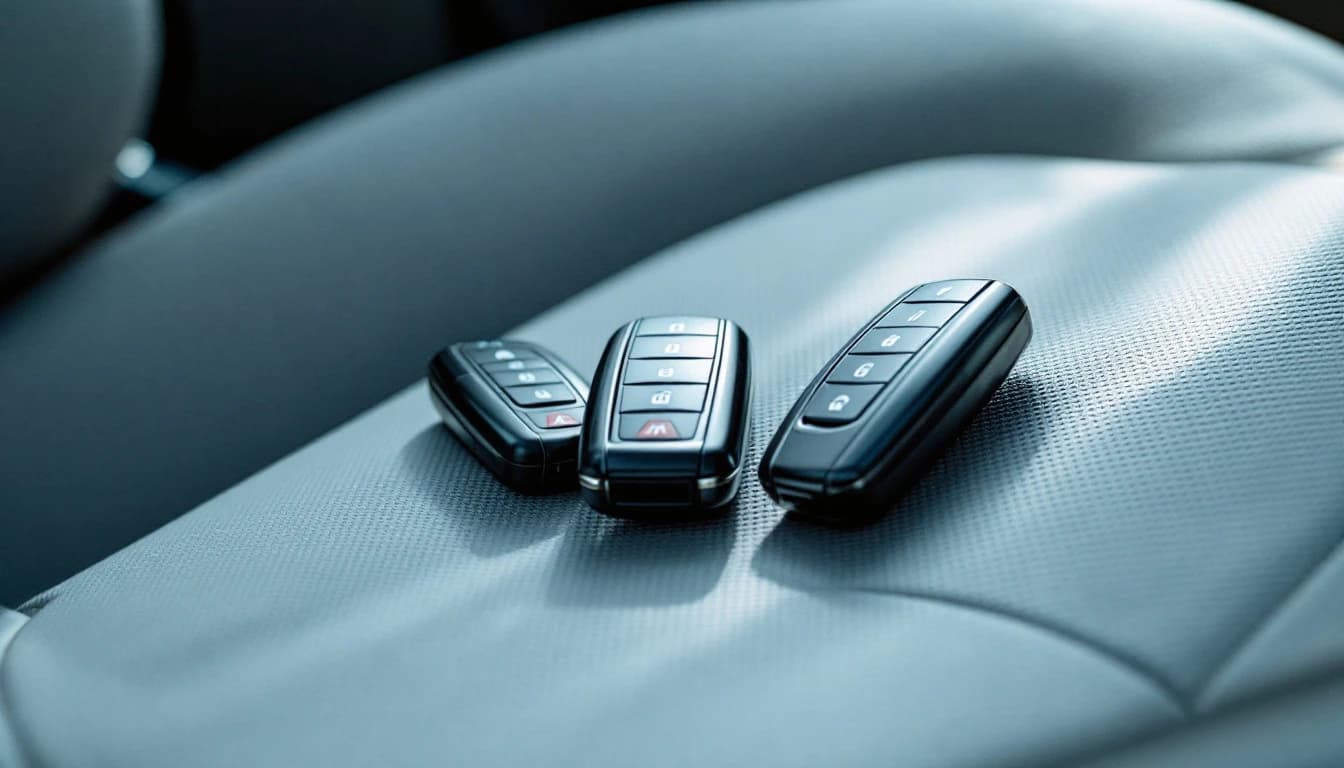
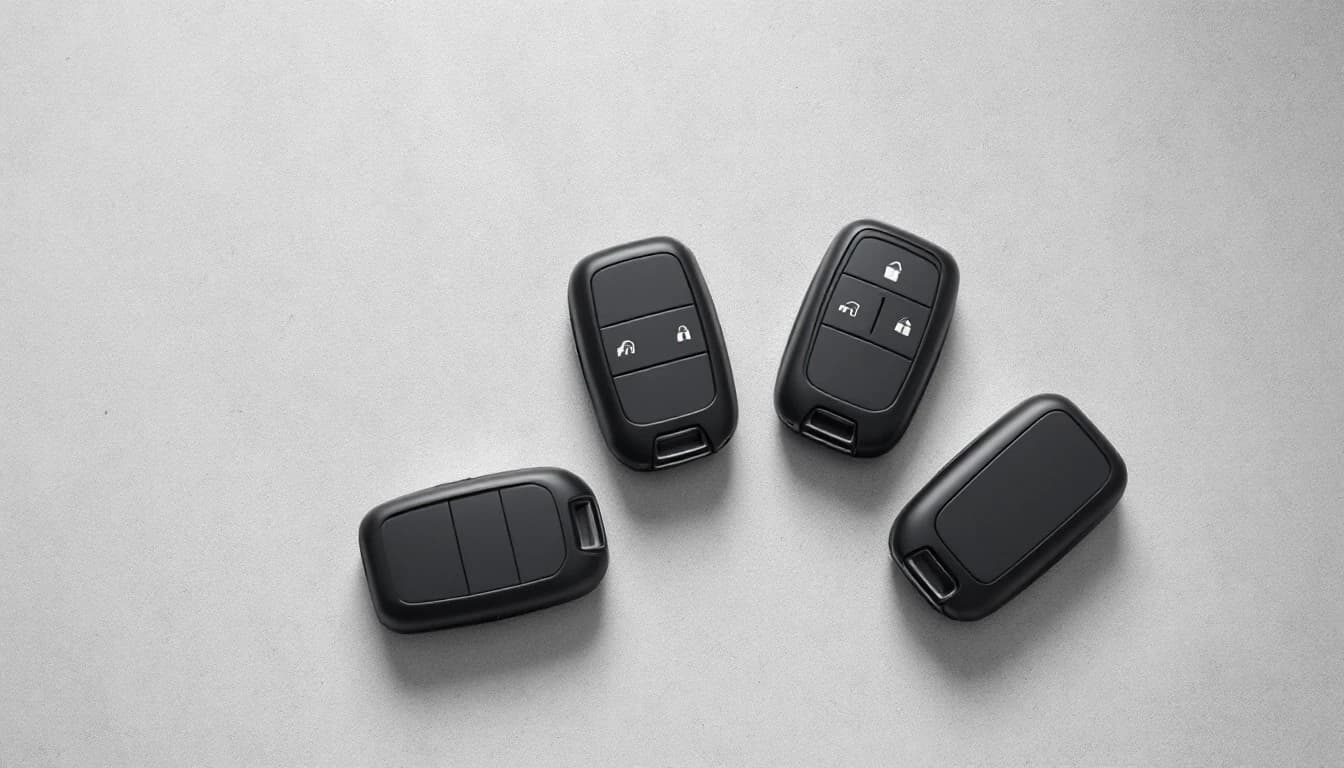
- Every key you own. The one in the drawer, the valet key, the one your partner carries, the one in the glovebox of the other car.
- A count you have verified, not estimated. "I think there are two" and "there are two" are different statements.
- Proof of ownership — photo ID plus registration, title or insurance in your name. Any legitimate shop will ask.
- Year, model and trim. Trim matters more than people expect: lower trims on several of the models in that table ship with a conventional transponder key and a mechanical barrel rather than push-button start, which is a simpler and cheaper job entirely.
Costs as of August 2026
| Job | Typical DFW mobile price | Typical dealer quote |
|---|---|---|
| Spare smart key, mainstream brand | $200–$400 | $500–$1,100 |
| Spare smart key, European luxury | $250–$600 | $800–$1,800 |
| Second spare added in the same session | Reduced per-key rate | Usually full rate again |
| Reprogramming a forgotten fob afterwards | $150–$300 | $300–$500 |
| All keys lost, mainstream push-to-start | $400–$750 | $500–$1,200 + tow |
And the fourth row is the cost of forgetting a fob. It is not a catastrophe, but it is entirely avoidable. Wider pricing context is in the DFW car key replacement cost index and the Arlington-specific picture is in how much car key replacement costs in Arlington TX.
The economics nobody explains on the phone
A spare key is not a convenience purchase. It is the difference between two jobs with very different prices.
With one working key present, the immobilizer already trusts a credential. A technician authenticates with it and writes a second one in — twenty to forty-five minutes, no disassembly, at your car.
With no working key, the security data has to be recovered before anything can be written: a PIN pulled by VIN, a value read off a module, or on some platforms a module removed and read on the bench. The labour multiplies and so does the risk. That is why all-keys-lost commonly runs two to three times a spare.
The uncomfortable conclusion is that the cheapest possible moment to buy your second key is while your first one still works — a point made at length in why a spare key costs a fraction of an all-keys-lost call.
Brand-specific reading
If you want the detail for your own car rather than the cross-brand view:
- Ford and Lincoln — Ford key fob programming guide
- Chevrolet, GMC and Cadillac — Chevy key fob programming guide
- GMC trucks and SUVs specifically — GMC Sierra and Terrain key fob programming
- Chrysler, Dodge, Jeep and Ram — SKIM, SKREEM, WIN and RF hub guide
- Hyundai, Kia and Genesis — Hyundai immobilizer reset guide
- Subaru — Subaru key fob programming guide
- Mercedes-Benz — Mercedes key replacement cost
And if your fob unlocks the doors but the car will not start when you press the button, that is a different fault entirely and not a programming problem — the sequence is in our push-button start diagnostic guide.
Frequently Asked Questions
Do I have to bring all my keys when getting a spare car key programmed?
Bring every key you own. On many push-to-start vehicles — Toyota and Lexus most consistently, along with much of the Japanese and Korean mainstream and the Volkswagen Group — adding a key clears the immobilizer's authorised list and rewrites it from whichever fobs are presented during the session. Any key not present stops working and needs a separate paid appointment to restore.
Which car brands erase existing keys when a spare is added?
Toyota and Lexus most consistently, along with Honda and Acura, Nissan and Infiniti, Hyundai, Kia and Genesis, Subaru, several Mazda platforms and much of the Volkswagen Group. BMW, Mercedes-Benz, most GM and most Chrysler group vehicles are additive — existing keys survive. Behaviour varies across model years, so bringing all keys is the safe rule on any vehicle.
Is it cheaper to have two spare keys made at once?
Yes, noticeably. The programming session is the same session whether one new key or two is registered, so the second key is charged at a reduced per-key rate rather than as a second full job. If you expect to want two spares eventually, doing both in one visit is the cheaper path by a clear margin.
I bought a used car and only got one key. What should I do?
On any vehicle whose system rewrites the key list, have that rewrite performed with only the fobs you actually hold — it locks out any key the previous owner kept, whether they mentioned it or not. Combine it with cutting your spare in the same appointment and you pay for one session. On additive platforms, ask the technician to review the stored key list and remove credentials you cannot account for where the platform allows it.
What happens if I forget a key at home during the appointment?
On an additive platform, nothing — the forgotten key keeps working. On an erase-and-rewrite platform, the forgotten key stops working and has to be reprogrammed later, typically $150–$300 as a separate visit. This is the entire reason technicians ask how many keys you have before booking rather than after arriving.
Does a spare key have to be programmed at the dealership?
No. Cutting and programming happen through the diagnostic port at the vehicle, wherever it is parked — a driveway, an apartment garage, a workplace lot. The dealer is genuinely required only when the vehicle is under a factory warranty covering the immobilizer, when an open recall touches the security system, or on a narrow band of newest-platform vehicles whose security gateway has no independent access path yet.
How long does spare-key programming take?
Typically 20–45 minutes at the vehicle for a spare with one working key present, and up to an hour on a keyless car with several existing fobs to re-register. All-keys-lost is a different job — commonly 90 minutes to three hours depending on the platform.
Should the emergency blade inside the fob be cut too?
Yes, and it frequently is not. The hidden blade is your entry route when the fob battery dies, and on a spare it is often left uncut or cut inaccurately. A properly finished spare-key job cuts it to the vehicle's code and verifies it turns in the driver's door lock before the technician leaves.
Count your keys, then call
Not Your Basic Locksmith programs smart keys and transponder keys across the DFW metroplex — Arlington, Fort Worth, Dallas, Grand Prairie, Mansfield, Irving and beyond — at the vehicle, typically inside an hour.
Call or text (682) 344-1957 with your year, model, trim, and how many keys you currently hold. That last number decides how the appointment is planned. Owner-operated, ALOA Master Automotive Locksmith credentialed, based at 1168 W Pioneer Parkway in Arlington. Texas DPS certificate #B28531501.