The Honda Two-Key Rule: Bring Every Key You Own to a Spare Appointment
As of August 2026, a spare key for a Honda or Acura in the DFW area runs roughly $150–$250 for an older transponder key and $200–$400 for a smart key on a push-button-start model. Those are ordinary numbers. What is not ordinary — and what catches out more Honda owners than any other make we work on — is a procedural detail:
On most Honda and Acura platforms, programming a key rewrites the vehicle's entire key table. Any key that is not physically present during the session is erased from the vehicle's memory and stops starting the car.
So if your partner has the second key at work, and you have a spare cut and programmed while they are out, they come home to a key that opens the doors and will not start the engine. That is not a fault, and nothing was done wrong. It is how the system was designed. It is also entirely avoidable if you know about it before the appointment, which is the reason for this article.
Why the key table gets rewritten
Most manufacturers treat key programming as an addition: the immobilizer has a table of authorised credentials, and a new key is appended to it. Honda's approach across most of its immobilizer generations is a replacement: the procedure clears the table and writes the set of keys presented during the session.
There is a defensible security logic to it. A key table that can only ever be added to accumulates credentials indefinitely — including any key a previous owner kept, or one that went missing years ago. A system that rewrites the whole table means the set of keys that start the car is always exactly the set someone physically presented, which makes an owner's key inventory self-cleaning.
That is genuinely useful in one situation. If you have just bought a used Honda and cannot be sure how many keys exist in the world, programming a set of keys removes every key you did not present. The previous owner's spare, wherever it is, stops working. Very few makes give you that guarantee this cleanly.
The cost of that design is the trap in the opening paragraph, and it is the reason the first question a Honda-literate shop asks is not "what year" but "how many keys do you have, and can you bring all of them?"
The two-key procedure, and what changes with one
The distinction between having two working keys and one is the single largest cost variable on Honda immobilizer work.
With two working keys, older Honda systems support an on-board procedure — a defined sequence of ignition cycles using both existing keys, after which a third key can be introduced. It is the reason Honda owners with two keys often report a surprisingly cheap and quick appointment.
With one working key, that on-board path is unavailable on the platforms that require two. Adding a key becomes a tool-based operation: the technician connects to the vehicle, authenticates, obtains or uses the security code, and writes the new key set directly. That is entirely routine work for an equipped shop, but it is a different job with different equipment behind it, and it prices accordingly.
With no working keys — all-keys-lost — the security data has to be obtained before anything is written. As our DFW car key replacement cost index records, that typically runs two to four times the cost of adding a spare across every make, and Honda is no exception.
The practical conclusion writes itself. The cheapest possible moment to buy a Honda key is while you still have two, and the second cheapest is while you still have one. Our spare key cost guide makes the same case with the numbers across all makes.
By generation, roughly
| Era | System | Key type | Typical procedure | Notes |
|---|---|---|---|---|
| Late 1990s–mid 2000s | Early immobilizer | Transponder blade key | Two-key on-board or tool | Red key symbol on the dash |
| Mid 2000s–mid 2010s | Immobilizer with remote | Remote head key | Two-key on-board or tool | Remote and transponder programme separately |
| Mid 2010s onward | Smart entry | Proximity smart key | Tool-based, security code | Push-button start |
| Newest platforms | Gateway-protected | Proximity smart key | Authenticated tool access | Credentialed access required |
On the newest Honda and Acura platforms, key writes pass through the manufacturer's authentication layer in the same way described in our guide to security gateways on newer vehicles — which means the shop needs credentialed access, not merely a capable tool.
The remote and the transponder are separate
A recurring Honda service call: a key that starts the car perfectly but no longer locks the doors, or the reverse.
Those are two different systems sharing one plastic case. The transponder chip authorises the engine over a very short-range exchange at the ignition or start button. The remote is a radio transmitter talking to a receiver elsewhere in the car. They are programmed by different procedures and fail independently.
The practical consequence is that "my key stopped working" needs one clarifying question — does it fail to start the car, or fail to lock the doors? — and the answers point at completely different repairs. A dead coin cell kills the remote and leaves the transponder working, which is why a Honda with a flat key battery usually still starts when you hold the key against the marked spot on the column or the start button.
For the wider symptom map across makes, what the immobilizer security light means is the quickest way to work out whether you are looking at a key problem or a vehicle problem before anyone is called.
What to do before your appointment
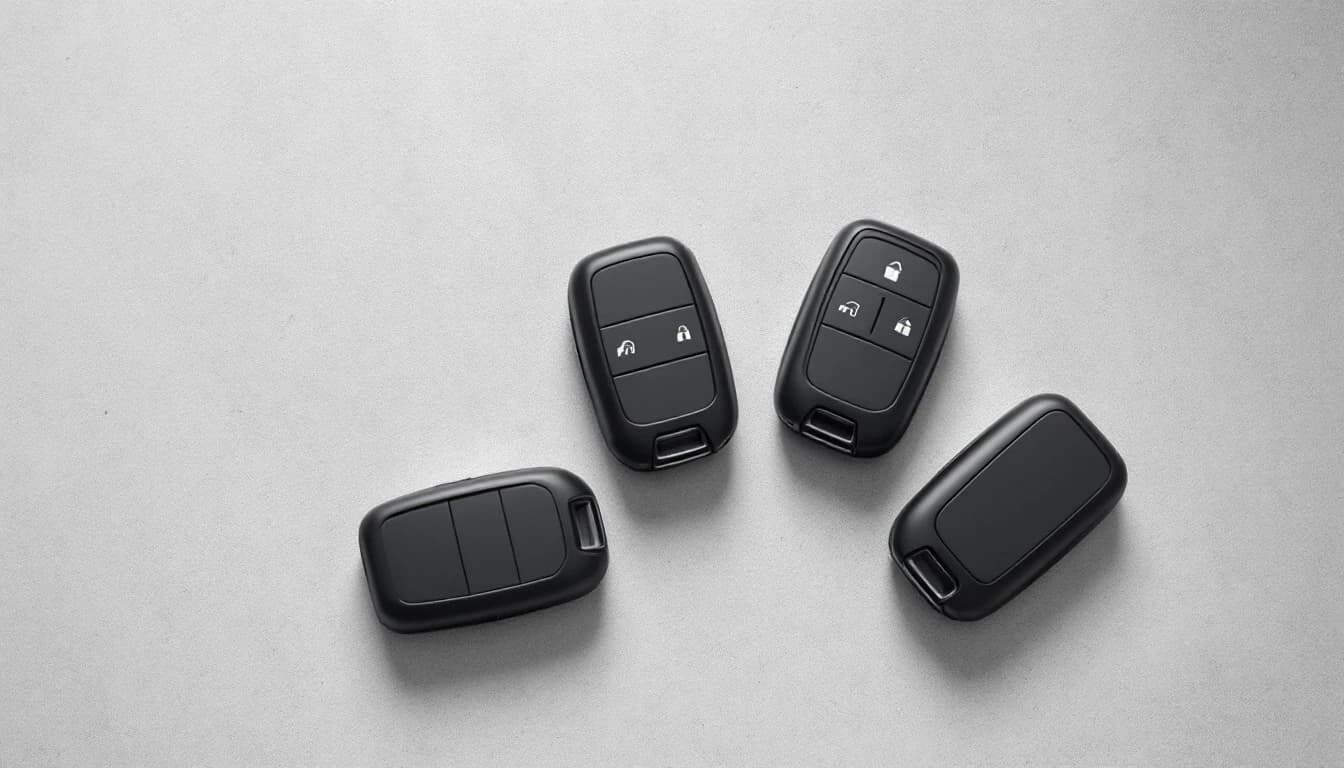
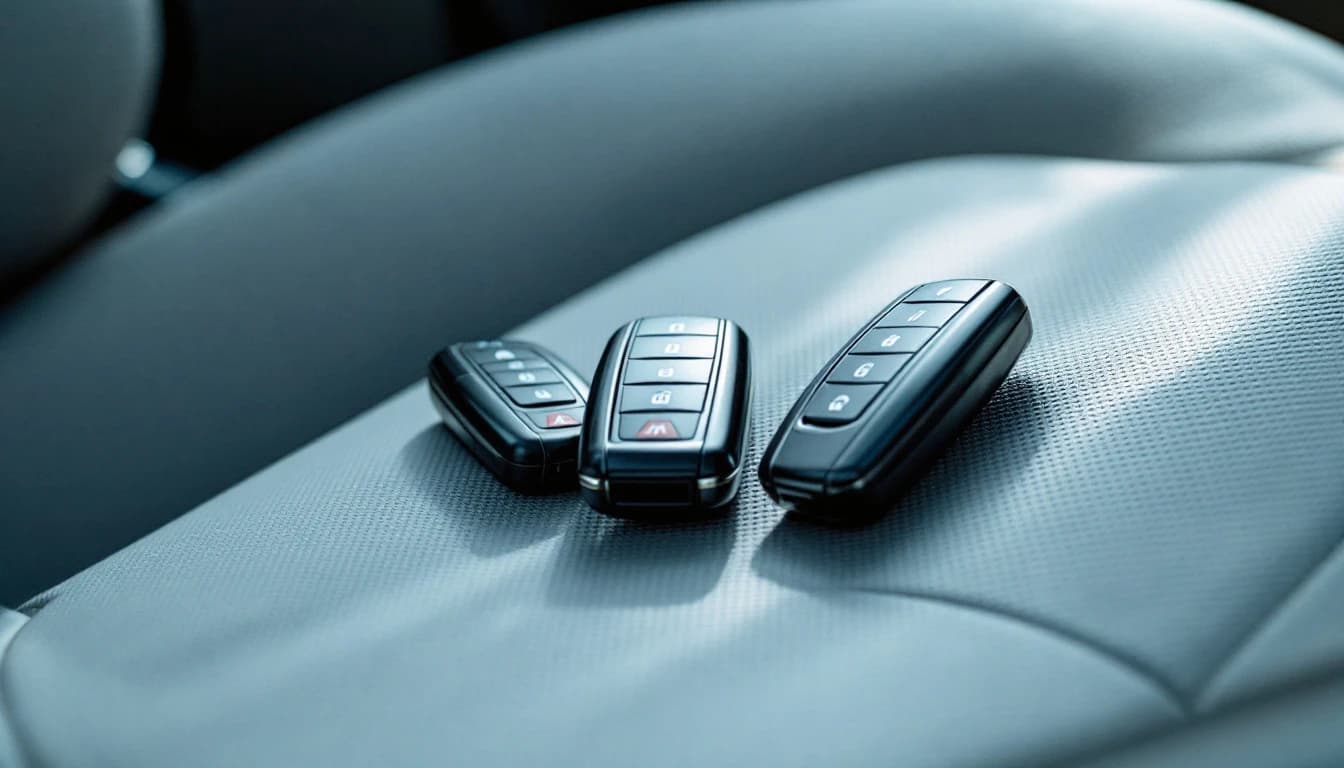
Gather every key. Yours, your partner's, the one in the kitchen drawer, the one the previous owner handed over. All of them. This is the entire point of the article.
Count what actually works. A key that opens the doors but will not start the car is not a working key for programming purposes — it is a key with a failed transponder, and it needs saying out loud.
Check the battery. Not the key's — the vehicle's. Programming sessions need stable voltage, and a marginal battery causes procedures to fail partway through, which on a system that rewrites the key table is the worst possible moment for an interruption.
Have your documents ready. Photo ID plus registration or insurance showing the VIN. Every legitimate Texas shop verifies ownership before making a key, for the reasons set out in our guide to proof of ownership requirements.
Decide how many keys you want. Because the table is rewritten anyway, adding two keys in one session usually costs less than adding one twice. If you have been meaning to get a second spare, this is the appointment to do it in.
That last point is the one that turns the Honda quirk into an advantage. On makes that append keys one at a time, a second spare is a second job. On Honda, the session is already writing the whole set — so the marginal cost of one more key in it is just the blank and a few minutes.
Frequently Asked Questions
Why do I need to bring all my Honda keys to a programming appointment?
Because on most Honda and Acura platforms the programming procedure rewrites the vehicle's entire key table rather than appending to it. Any key not physically present during the session is erased from the immobilizer's memory and will no longer start the car — it will still open the doors, which makes the failure confusing when it is discovered later. Bringing every key means every key is rewritten into the new set.
What is the Honda two-key programming procedure?
On older Honda immobilizer systems, having two working keys enables an on-board sequence of ignition cycles that lets a third key be introduced without dealer-level equipment. It is why Honda owners with two keys often report a fast, inexpensive appointment. Platforms and model years vary in whether the on-board path is supported, and smart-key vehicles generally require tool-based programming regardless.
Can I get a Honda key made with only one working key?
Yes. The on-board two-key path is unavailable, so the technician connects to the vehicle, authenticates and writes the new key set directly using the security code. It is routine work for an equipped shop — it simply requires proper tooling rather than a key-cycling procedure, and prices accordingly. As of August 2026 in DFW, expect roughly $150–$250 for an older transponder key and $200–$400 for a smart key.
What happens to the previous owner's key when I programme new ones?
It stops starting the car. Because the procedure rewrites the whole key table, any key not present during the session is erased. For anyone who has just bought a used Honda this is a genuine security benefit — you get a definitive guarantee that only the keys in your hand can start the vehicle, which most makes do not offer this cleanly.
My Honda key starts the car but won't lock the doors. Is the key dead?
No — the transponder side is working and the remote side is not. They are separate systems in the same case, programmed separately and failing independently. Start with the coin battery, then the button membranes if the key is old. A dead battery kills only the remote, which is why a Honda with a flat key battery still starts when you hold the key against the marked spot on the column or against the start button.
Is it cheaper to programme two spare keys at once?
Usually yes, and on Honda specifically the saving is structural rather than a discount. Because the session rewrites the entire key table regardless of how many keys are being added, the marginal cost of a second key in the same appointment is essentially the blank plus a few minutes. Adding one key now and another next year means paying for two sessions.
Do Acura keys work the same way as Honda keys?
Broadly yes — Acura is Honda's luxury division and shares the immobilizer architecture, including the key-table rewrite behaviour and the same generational progression from transponder blade keys to smart keys. Acura models tend to have adopted smart entry earlier and use more expensive blanks, so the prices sit toward the upper end of the Honda ranges, but the procedures and the bring-every-key rule are the same.
What if I've already lost a key and can't bring it?
Then it is erased when the new set is programmed, which is generally the outcome you want — a lost key that no longer starts the vehicle is a lost key that no longer matters. Tell the shop it is missing rather than leaving it uncounted, so the session is planned around the keys that genuinely exist and you are not left wondering later whether it still works.
Bring the whole set and it takes one appointment
Not Your Basic Locksmith cuts and programmes Honda and Acura keys — transponder, remote head and proximity smart keys — at your vehicle across the DFW metroplex, including Arlington, Fort Worth, Dallas, Grand Prairie, Mansfield, Irving and the surrounding cities.
Call or text (682) 344-1957 with your year and model, how many keys you currently have, whether each one starts the car or only opens the doors, and whether the vehicle has a push-button start. Bring every key you own to the appointment — that one habit prevents the most common Honda key surprise there is. Owner-operated, ALOA Master Automotive Locksmith credentialed, based at 1168 W Pioneer Parkway in Arlington. Texas DPS certificate #B28531501.