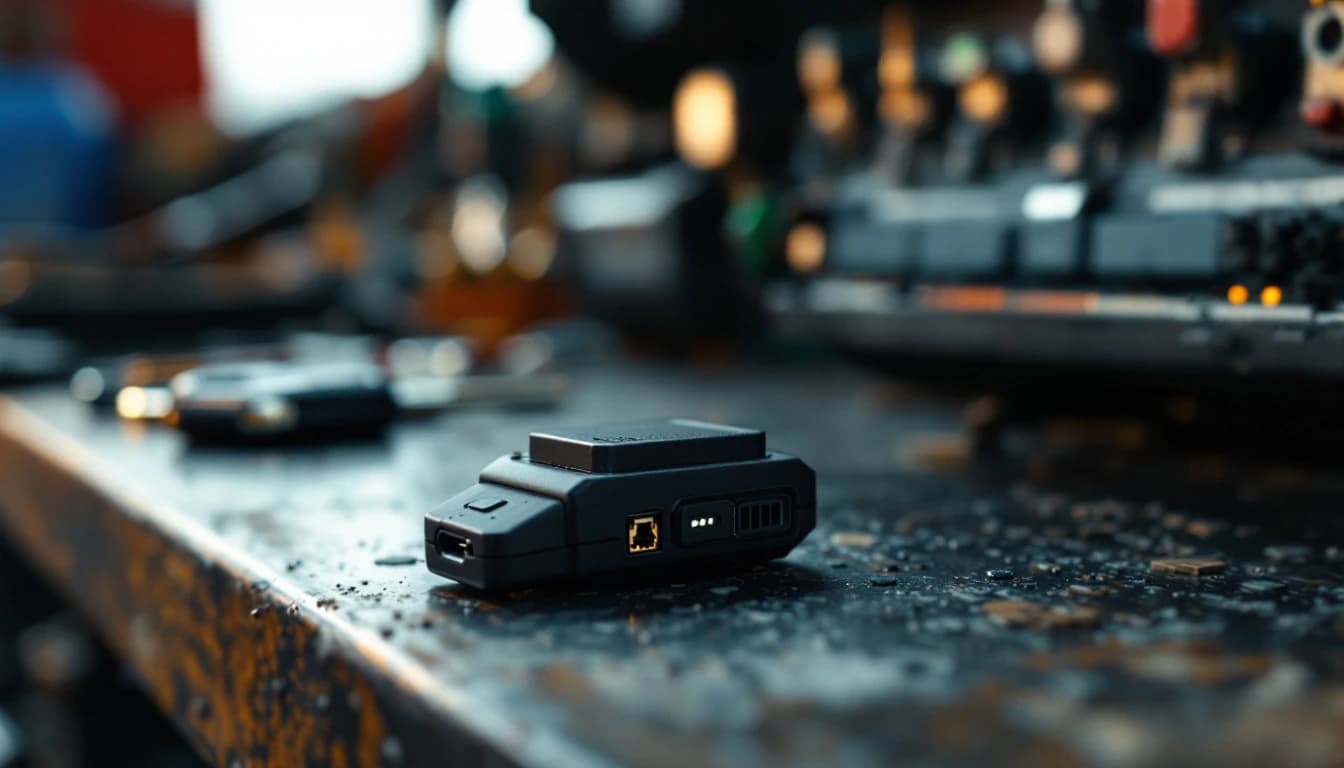
Chrysler SKIM, SKREEM, WIN & RF Hub
Chrysler group vehicles — Chrysler, Dodge, Jeep and Ram — have run four distinct immobilizer architectures since the late 1990s, and the acronyms overlap confusingly. SKIM, SKREEM, WIN, RF Hub. Which one your vehicle has determines what a key costs, what fails, and whether a no-start is a key problem or a module problem.
As of July 2026 in the DFW market, module programming on these platforms runs $200–$300 for programming an existing module and $350–$500 with a replacement. A WIN module — the one that most commonly fails outright — runs $400–$600 replaced and programmed, or $600–$800 with new keys included.
This is a decoder guide. Identify your platform, understand its known failure, then have an informed conversation with whoever you call.
The four generations
SKIM — Sentry Key Immobilizer Module (1998–2004)
Chrysler's first transponder system. A standalone module reads a chip in the key blade through an antenna ring around the ignition cylinder and authorises the engine controller.
Found on: Grand Cherokee WJ, Wrangler TJ, Ram 1500/2500 (2002–2005), Caravan, Neon, PT Cruiser, Sebring, Durango (first generation) Key format: Blade key with a transponder chip, sometimes with a separate remote Programming: Requires a PIN. On these years the PIN can generally be retrieved electronically or read from the module. Known failures: Antenna ring failure around the ignition — the module is healthy but cannot read the key. Presents as an intermittent no-start with the security light illuminated, often worse in cold or when the key ring is heavy.
SKREEM — Sentry Key Remote Entry Module (2004–2008)
SKIM's successor, merging immobilizer and remote keyless entry into one module. This is where the "my remote stopped working and now it will not start" symptom becomes possible, because both functions now share hardware.
Found on: Grand Cherokee WK, Commander XK, Wrangler JK (early), 300, Magnum, Charger (LX), Durango (second generation), Ram (2006–2008) Key format: Blade key with integrated remote head on most models Programming: PIN-based, generally retrievable. Known failures: Module failure taking out both remote functions and immobilizer authorisation simultaneously — which is diagnostically useful, because a car that lost its remote and will not start points at the module rather than the key.
WIN — Wireless Ignition Node (2008–2018)
The one that matters most, because it is the most common outright failure in the whole Mopar range.
WIN combines the immobilizer receiver and the ignition itself into a single assembly. On models with the twist-knob FOBIK arrangement, you insert a fob-shaped key into a slot and turn. There is no conventional lock cylinder.
Found on: Grand Cherokee WK2, Wrangler JK, Ram 1500/2500/3500 (2009–2018), 300 (2011+), Charger, Challenger, Journey, Durango (third generation), Town & Country, Caravan Key format: FOBIK — an integrated fob-and-key unit Programming: PIN-based; both the module and the keys need writing. Known failures: This is the headline. WIN module failure produces a key that will not turn at all, or turns and produces nothing. It is routinely misdiagnosed as a mechanical ignition cylinder problem, and people pay for a cylinder that does not exist on their vehicle. Our ignition switch and lock cylinder repair guide covers how to distinguish the two symptom sets.
Because the WIN sits in the ignition position and takes constant physical handling, it wears in ways a purely electronic module does not — which is precisely why a heavy key ring shortens its life. See our dedicated WIN module repair service.
RF Hub — Radio Frequency Hub (2015–2026)
The current generation, consolidating keyless entry, immobilizer, and tyre-pressure monitoring into one networked module on the modern FCA and Stellantis electrical architecture.
Found on: Grand Cherokee WL, Wrangler JL, Gladiator JT, Ram 1500 DT, Compass, Cherokee KL, Renegade, Pacifica, Durango (current) Key format: Proximity fob with push-button start on most trims Programming: Secure gateway involved on later years — access is more restricted than any previous generation. Known failures: Fewer mechanical failures than the WIN by design, but the security gateway makes some operations meaningfully harder for independents on the newest model years.
Quick-reference by model and year
| Model | Years | Module |
|---|---|---|
| Jeep Wrangler TJ | 1998–2006 | SKIM |
| Jeep Wrangler JK | 2007–2018 | SKREEM / WIN |
| Jeep Wrangler JL | 2018–2026 | RF Hub |
| Jeep Grand Cherokee WJ | 1999–2004 | SKIM |
| Jeep Grand Cherokee WK | 2005–2010 | SKREEM |
| Jeep Grand Cherokee WK2 | 2011–2021 | WIN |
| Jeep Grand Cherokee WL | 2021–2026 | RF Hub |
| Ram 1500 | 2002–2008 | SKIM / SKREEM |
| Ram 1500 | 2009–2018 | WIN |
| Ram 1500 DT | 2019–2026 | RF Hub |
| Dodge Charger / Challenger | 2006–2010 | SKREEM |
| Dodge Charger / Challenger | 2011–2023 | WIN |
| Chrysler 300 | 2005–2010 | SKREEM |
| Chrysler 300 | 2011–2023 | WIN |
| Dodge Durango | 2011–2026 | WIN / RF Hub |
| Chrysler Pacifica | 2017–2026 | RF Hub |
| Jeep Cherokee KL | 2014–2023 | RF Hub |
The diagnostic that saves the most money
The single most valuable distinction on these vehicles: does the key turn?
Key will not turn at all, WIN-era vehicle. Strongly suggests the WIN module rather than a cylinder, because most WIN vehicles do not have a conventional lock cylinder to fail. Anyone quoting you a cylinder rebuild on a 2013 Grand Cherokee has not identified the platform.
Key turns, dash lights come on, engine does not crank. Could be the module, the starter circuit, or the transmission range sensor. Needs codes read.
Engine cranks, will not fire, security light on or flashing. Immobilizer rejection. Either the key credential is bad or the module has lost its key data. This is genuinely key-and-module territory.
Remote stopped working, then the car stopped starting. On SKREEM and WIN vehicles this combination points hard at the module, because both functions share it. On SKIM vehicles it does not, because the remote is separate.
Intermittent no-start, worse in cold, security light flickers. Classic antenna ring failure on SKIM-era vehicles. The module is fine. The read coil is not.
What it costs in DFW as of July 2026
| Work | Independent specialist | Notes |
|---|---|---|
| Spare FOBIK or transponder key, working key present | $150–$300 | Depends on generation |
| All keys lost, SKIM / SKREEM | $250–$500 | PIN retrieval required |
| All keys lost, WIN | $400–$700 | Module and keys both written |
| All keys lost, RF Hub | Quoted per VIN | Gateway access dependent |
| Module programming only | $200–$300 | Existing module retained |
| Module replacement plus programming | $350–$500 | General case |
| WIN module replacement | $400–$600 | The common Mopar failure |
| WIN module plus additional keys | $600–$800 | Bundled |
| VIN programming to a replacement module | $200–$400 | Donor module scenarios |
| Antenna ring replacement, SKIM era | Quoted per job | Frequently the real fix |
Related reading on the same platforms: our Dodge Charger key replacement guide, Dodge and Ram key replacement in Arlington, Chrysler key replacement in Arlington, and the Jeep key replacement guide.
The used-module trap
A common suggestion on Mopar forums: buy a WIN or RF Hub from a breaker's yard and have it programmed. Sometimes this works. Frequently it does not, for two reasons.
VIN locking. Many of these modules bind to a VIN on first programming and cannot be cleanly rebound to a different vehicle. A module that has already lived in another car may be permanently unusable in yours.
Unknown history. A module pulled from a wrecked vehicle may have been damaged by the same event that wrote it off, or by water sitting in a salvage yard.
The honest position is that used modules are viable on some platforms and dead ends on others, and the difference is knowable in advance. Our guide on when used ECU and PCM programming works covers the general case, and if a swap has already happened and left you stranded, the diagnostic for a car that will not start after an ECU swap walks the sequence. Ask before buying the part — a shop that knows the platform will tell you whether to spend the money.
If you are still choosing who does the work, our guide to BCM programming near me covers what separates a shop that can finish these jobs from one that will get halfway.
What to have ready when you call
Four things get you a firm quote:
- Year, make, model — and for Ram, whether it is 1500, 2500 or 3500, because the platforms diverge
- Whether the key turns, and what the dashboard does when it does
- Whether you have a working key — the largest single price driver
- Whether the security light is on, off, or flashing
That fourth one is genuinely diagnostic. A steady security light, a flashing one, and no light at all mean three different things on these platforms.
Locksmith companies operating in Texas are regulated by the Texas Department of Public Safety Private Security Program under Occupations Code Chapter 1702 — not TDLR. Ask for the licence number before booking.
Frequently Asked Questions
What is the difference between SKIM, SKREEM, WIN and RF Hub?
They are four generations of Chrysler group immobilizer module. SKIM (1998–2004) was a standalone immobilizer. SKREEM (2004–2008) merged immobilizer with remote keyless entry. WIN (2008–2018) combined the immobilizer receiver with the ignition itself in a twist-knob FOBIK arrangement. RF Hub (2015–2026) consolidates keyless entry, immobilizer and tyre-pressure monitoring on the current architecture.
My Jeep key will not turn at all. Is that the ignition cylinder?
On a WIN-era vehicle — roughly 2008 to 2018 — probably not, because most of those do not have a conventional lock cylinder. The Wireless Ignition Node performs both the ignition and receiver functions, and its failure produces exactly that symptom. It is a very commonly misdiagnosed fault, so confirm the platform before paying for a cylinder rebuild.
How much does a WIN module replacement cost in DFW?
As of July 2026, roughly $400–$600 for the module replaced and programmed to the vehicle, or $600–$800 with new keys included. That compares favourably with the dealer path, which adds parts at list price, shop-rate labour, and typically a flatbed if the vehicle cannot be started.
My remote stopped working and now the car will not start. What does that mean?
On SKREEM and WIN vehicles, that combination points strongly at the module, because both functions share the same hardware. On earlier SKIM vehicles the remote is separate, so the same symptom pair would suggest two unrelated problems. Which generation your vehicle uses changes the diagnosis.
Can I use a second-hand WIN module from a breaker's yard?
Sometimes, but check first. Many of these modules bind to a VIN on initial programming and cannot be cleanly rebound to a different vehicle, and a module pulled from a wrecked car may carry damage from that event. Ask a specialist about your specific platform before buying the part.
My older Ram has an intermittent no-start with the security light flickering. What is that?
On SKIM-era vehicles that pattern typically points at the antenna ring around the ignition cylinder rather than the module or the key. The coil that reads the transponder degrades, so the module simply cannot see a perfectly healthy key. Replacing the ring is far cheaper than replacing the module.
Do the newest Jeep and Ram models need a dealer for key work?
Some operations on later RF Hub vehicles do, because the security gateway restricts diagnostic access more than any previous generation. It depends on model year and the specific job. A straight shop will check your VIN and tell you before dispatch rather than discovering it at the vehicle.
Identify the module before you buy a part
Not Your Basic Locksmith programs Chrysler, Dodge, Jeep and Ram immobilizer modules and keys across the DFW metroplex — SKIM, SKREEM, WIN and RF Hub — at the vehicle, using Chrysler wiTECH alongside professional aftermarket platforms.
Call or text (682) 344-1957 with your year, model, and whether the key turns. Owner-operated ALOA Master Automotive Locksmith since 2012, 1168 W Pioneer Parkway, Arlington. Texas DPS licence #B28531501.


