Ignition Switch & Lock Cylinder Repair in Arlington TX
Three completely different faults produce symptoms drivers describe identically. The key will not turn. The key turns but the car does nothing. The key is stuck and will not come out.
Each of those has multiple causes across three separate systems — the mechanical lock cylinder, the electrical ignition switch behind it, and the immobilizer that decides whether the engine is allowed to start. They fail differently, they cost different amounts, and the most expensive mistake in this whole category is paying to replace the wrong one.
This guide is a diagnostic sequence. Work through it and you will know which of the three you are dealing with before anyone quotes you.
The three systems behind your ignition
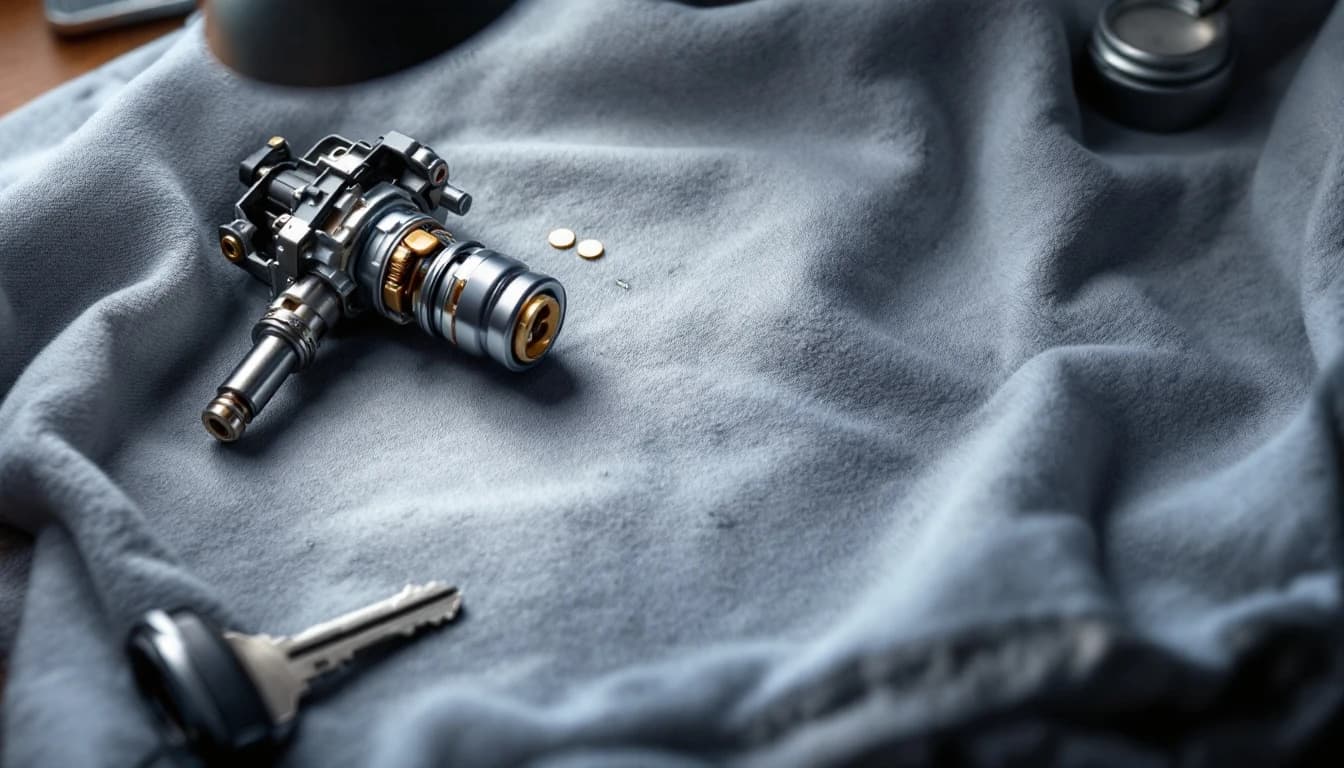
The lock cylinder. The mechanical part your key enters. Inside are spring-loaded wafers or tumblers that must all align before the cylinder can rotate. It wears out — this is the single most common failure in older vehicles and it is a purely mechanical problem.
The ignition switch. Bolted behind the cylinder, usually on the steering column. It is electrical: a set of contacts that close in sequence as the cylinder rotates through accessory, on, and start. The switch can fail while the cylinder turns perfectly. When it does, the key rotates normally and the car does nothing.
The immobilizer. The security system. An antenna ring around the cylinder reads a transponder in your key and reports to a control module. If the module does not get the credential it expects, the starter may crank but the engine will not run — or nothing happens at all. This is a code-and-data problem, not a hardware-wear problem.
On push-button-start cars the first two collapse into one electronic assembly, but the three-way logic still holds: mechanical release, electrical authority, and security authorisation.
Symptom 1: the key will not turn at all
Work these in order. The first three are free.
Steering wheel lock binding. By far the most common cause and it is not a fault. If the wheel was turned after the car was switched off, the steering lock pin loads against the cylinder and holds it. Apply firm pressure to the steering wheel left and right while gently turning the key. It will release. This resolves a large share of "my ignition is broken" calls at no cost.
Wrong gear position. Automatics will not release the ignition unless the selector is fully in Park. A shifter resting near Park is not in Park. Move it firmly into Park, then Neutral, then back to Park.
Worn or damaged key. Compare your key against a spare if you have one, or against the profile of a new one. A blade worn round on the peaks no longer lifts the wafers to their shear line. If a spare turns and the daily key does not, the key is the fault and cutting a fresh one from the vehicle's code is the fix — not replacing the cylinder.
Debris or a foreign object in the cylinder. Coins, broken key tips, pocket lint compressed over years. Sometimes visible with a torch.
Genuinely worn cylinder. Wafers worn, springs weak, or the cylinder housing itself deformed. This is repair or replacement territory.
A broken key tip inside. Do not attempt this with tweezers or glue — both routinely push the fragment deeper and turn a straightforward extraction into a cylinder replacement. Extraction with the right tool is quick and inexpensive. Our guide on what to do if your key breaks inside the ignition walks the procedure.
Symptom 2: the key turns but nothing happens
This is where diagnosis earns its money, because at least five different failures live here.
Complete silence — no dash lights, no click. Look at battery and main power first. A dead battery, corroded terminal, or failed main fuse produces exactly this. Check that headlights and interior lights work before blaming the ignition.
Dash lights come on, nothing on start. Now you are likely in the ignition switch itself. The accessory and on contacts are closing — hence the lights — but the start contact is not. The cylinder is fine; the electrical switch behind it has failed. This is a very common failure on high-mileage vehicles and it is not solved by a new key or a new cylinder.
A single click, then nothing. Usually a starter solenoid or a starter motor problem, not an ignition problem at all. That is a mechanic's job.
Engine cranks but will not start. The starter is being commanded, so the ignition switch is doing its job. This is fuel, spark, or immobilizer. If the security light on the dash is on or flashing, you are in immobilizer territory.
Nothing at all, security light illuminated. The immobilizer has rejected the credential. Causes range from a failed transponder in the key, to an antenna ring around the cylinder that has failed, to a control module that has lost its key data. Our overview of immobilizer repair covers the diagnostic path.
The push-button-start version. No crank at all on a keyless car can be the brake switch, the transmission range sensor, a fob the car cannot detect, or the start button assembly itself. Our push-button start diagnostic guide sequences those properly.
Symptom 3: the key is stuck and will not come out
Not fully in Park. Same cause as symptom 1. Most vehicles will not release the key unless Park is fully engaged. Shift firmly through the gears and back to Park.
Steering lock engaged with tension. Rock the wheel while pulling gently on the key.
Cylinder wear. A worn cylinder can fail to return to the retract position that releases the key.
Bent or damaged key. A bent blade can hook a wafer. Do not force it — a key that snaps inside a cylinder converts a cheap repair into an expensive one.
Battery-related electronic lock. Some vehicles use a solenoid to physically hold the key. If the battery is flat, the solenoid does not release.
Repair or replace? What each path costs
Once diagnosed, the decision is usually straightforward. Ranges below are for the Arlington and wider DFW service area as of July 2026; final pricing depends on vehicle, column design, and access.
| Fault | Typical fix | What drives the cost |
|---|---|---|
| Steering-lock bind or Park position | Technique, no parts | Free — do it yourself |
| Worn key against a good cylinder | Cut a fresh key to code | $150–$250 for most transponder keys |
| Broken key tip in cylinder | Extraction | Quoted per job; fast if done properly |
| Worn lock cylinder | Rebuild or replace, re-key to existing key | Column design and access |
| Failed ignition switch (electrical) | Replace switch behind cylinder | Column disassembly required |
| Failed antenna ring / immobilizer | Diagnose then program or replace module | $200–$300 programming only, $350–$500 with module |
| Mercedes electronic steering lock | ESL / ELV bypass or repair | $400–$700 |
| Chrysler WIN module | Replace and program | $400–$600, or $600–$800 with keys |
| GM VATS-era resistor fault | VATS bypass module | $250–$450 |
Vehicles with known ignition weak points
Some platforms fail predictably enough that an experienced technician suspects them before opening anything.
GM full-size trucks and SUVs (mid-2000s onward). Lock cylinder wear and PassLock-related faults are both common, and they present similarly. Distinguishing them matters because one is mechanical and one is electrical.
Chrysler, Dodge, Jeep and Ram with the WIN module. The Wireless Ignition Node combines the ignition and receiver functions. When it fails the key may not turn at all. It is a module replacement plus programming, not a cylinder job — our Chrysler SKIM, SKREEM, WIN and RF Hub guide covers the family.
Mercedes W204 era. The electronic steering lock. Steering will not release and the car will not start — a signature that looks exactly like an immobilizer fault but is not. See our ELV and ESL repair guide.
Nissan and Infiniti push-button models. Electronic steering column lock faults and start-button assembly failures. Detailed in our Nissan Altima and Infiniti Q50 ignition and steering lock guide.
Volkswagen and Audi. Two separate issues get conflated here. The mechanical ignition switch carrier is a known wear item on several platforms, and separately the remote side of the fob degrades early — a VW Tiguan key fob not working is usually a fob or receiver problem rather than anything in the ignition, and diagnosing which one you have first avoids a column strip you did not need.
High-mileage vehicles of any make with a heavy keyring. This is under-appreciated. A heavy bunch of keys hanging from the ignition applies constant downward load to the cylinder and the switch behind it. It is a genuine, documented wear accelerator. Take the house keys off the car ring.
Why a locksmith rather than a general mechanic
For ignition faults specifically, the toolset overlaps but does not match.
A mechanic replaces the assembly. A locksmith can rebuild the cylinder and re-key it to your existing key, extract a broken blade without destroying the cylinder, cut a fresh key to the vehicle's code when the old one is simply worn out, and — crucially — program the immobilizer side afterward if a module was involved. That last capability is what stops an ignition repair from ending in a car that turns over and will not start.
An automotive locksmith with OEM diagnostic platforms — Ford FDRS and FJDS, GM ACDelco GDS2, Chrysler wiTECH, Toyota Techstream, BMW ISTA, Volvo VIDA — can complete the security side without referring the vehicle onward. That is the difference between one appointment and three.
Locksmith companies operating in Texas are regulated by the Texas Department of Public Safety Private Security Program under Occupations Code Chapter 1702 — not by TDLR. Ask for the licence number before booking anyone.
Frequently Asked Questions
My key will not turn in the ignition. What should I try first?
Apply firm pressure to the steering wheel left and right while gently turning the key — a steering lock loaded against the cylinder is the most common cause and costs nothing to release. Then confirm the shifter is fully in Park. If a spare key turns and your daily key does not, the key is worn, not the cylinder.
The key turns but the car does nothing. Is that the ignition switch?
Often, yes. If the dashboard lights come on when you turn the key but nothing happens at the start position, the accessory and on contacts are working while the start contact has failed — a classic electrical ignition switch failure. Complete silence with no dash lights points at battery or main power instead, and a security light on the dash points at the immobilizer.
How much does ignition repair cost in Arlington TX?
It depends entirely on which of the three systems failed. Cutting a fresh key against a good cylinder runs $150–$250 for most transponder keys. Immobilizer programming runs $200–$300, or $350–$500 with a replacement module. Specific platform repairs — a Mercedes steering lock at $400–$700 or a Chrysler WIN module at $400–$600 — sit higher. Diagnosis first, then a firm number.
Can a locksmith repair an ignition, or do I need a mechanic?
For lock cylinder wear, broken key extraction, worn-key issues, and immobilizer faults, an automotive locksmith is the correct call — and can re-key a replacement cylinder to your existing key so you do not end up carrying two. A single click or a cranking engine that will not fire points at starter or fuel and belongs with a mechanic.
My key is stuck in the ignition and will not come out. What now?
Confirm the shifter is fully in Park, then rock the steering wheel while pulling gently on the key. If the battery is flat, some vehicles use a solenoid that will not release the key until power is restored. Do not force a bent key — snapping it inside the cylinder turns a cheap job into an expensive one.
Will replacing the ignition mean I need a new key?
Not if it is done properly. A good technician re-keys the replacement cylinder to your existing key so one key continues to work the doors, boot, and ignition. If the immobilizer or a control module was also replaced, key programming is required as part of the same visit.
Does a heavy keyring really damage the ignition?
Yes, and it is a genuine wear accelerator rather than a myth. Constant downward load from a heavy bunch of keys stresses the cylinder wafers and the electrical switch behind them over years of use. Keeping the car key separate from house and work keys measurably extends the life of both parts.
Get it diagnosed before you buy parts
Not Your Basic Locksmith handles ignition cylinder repair, broken key extraction, ignition switch replacement, and the immobilizer programming that often follows — at your vehicle, across Arlington and the wider DFW metroplex. Typical response inside Arlington is 12–22 minutes.
Call or text (682) 344-1957 and describe the symptom exactly: does the key turn, do the dash lights come on, is the security light lit. That is usually enough to name the fault before anyone is dispatched. Owner-operated ALOA Master Automotive Locksmith since 2012, 1168 W Pioneer Parkway, Arlington. Texas DPS licence #B28531501.