The Security Light Decoder: What It Means on Every Major Make
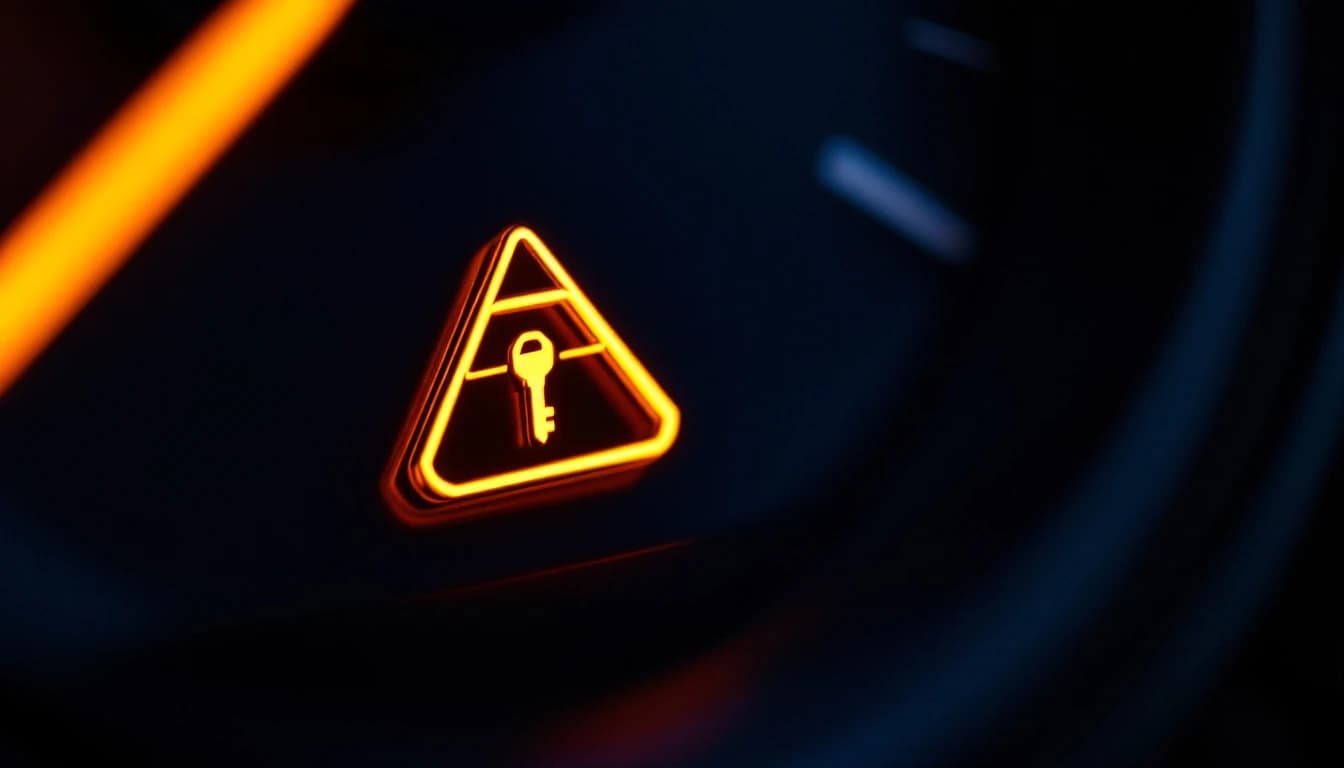
A car that cranks strongly and refuses to fire, with a small key or padlock symbol lit on the dash, is not telling you the engine is broken. It is telling you the security handshake failed — the immobilizer did not recognise an authorised key, so fuel or spark was withheld deliberately.
As of August 2026 in the DFW market, the fixes behind that one symptom span $0 to $650: a free relearn after a flat battery at one end, a failed module at the other, with a $150–$450 key or antenna repair in between. Which one you are looking at depends on the make, the flash pattern, and one or two checks you can do in the driveway before calling anyone.
First: steady, flashing, or only-when-you-try?
Before the make matters, the behaviour does.
Light on steadily with the ignition on, engine will not start. The system is actively rejecting the key. Something in the chain — key, antenna, module — is failing right now.
Light flashing rapidly, engine will not start. On most makes, an active rejection with a stored fault. Same family of causes, usually with a diagnostic code waiting to be read.
Light flashing slowly with the car parked and off. Normal. That is the armed indicator on the majority of vehicles, and it means the system is working.
Light comes on only occasionally and the car starts anyway. An intermittent fault, most often a weak transponder, a marginal antenna connection, or a module with a supply issue. Worth diagnosing before it becomes a stranding.
That last one is the case people ignore and then regret. Intermittent immobilizer faults do not improve on their own.
The two free checks
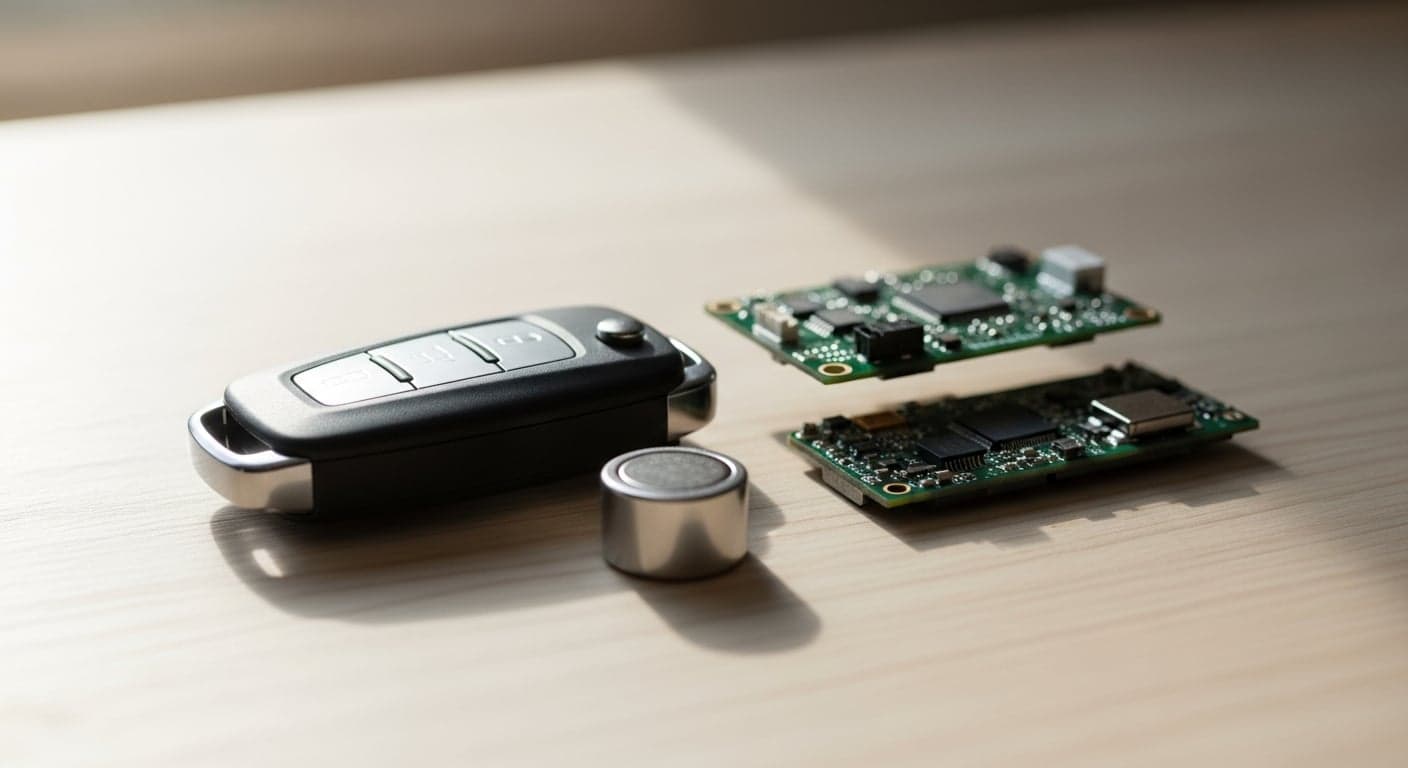
1. Try your spare key. If the spare starts the car, your daily key is the fault — a dead transponder, a cracked circuit board or physical damage. That is the cheapest outcome available and it costs nothing to establish.
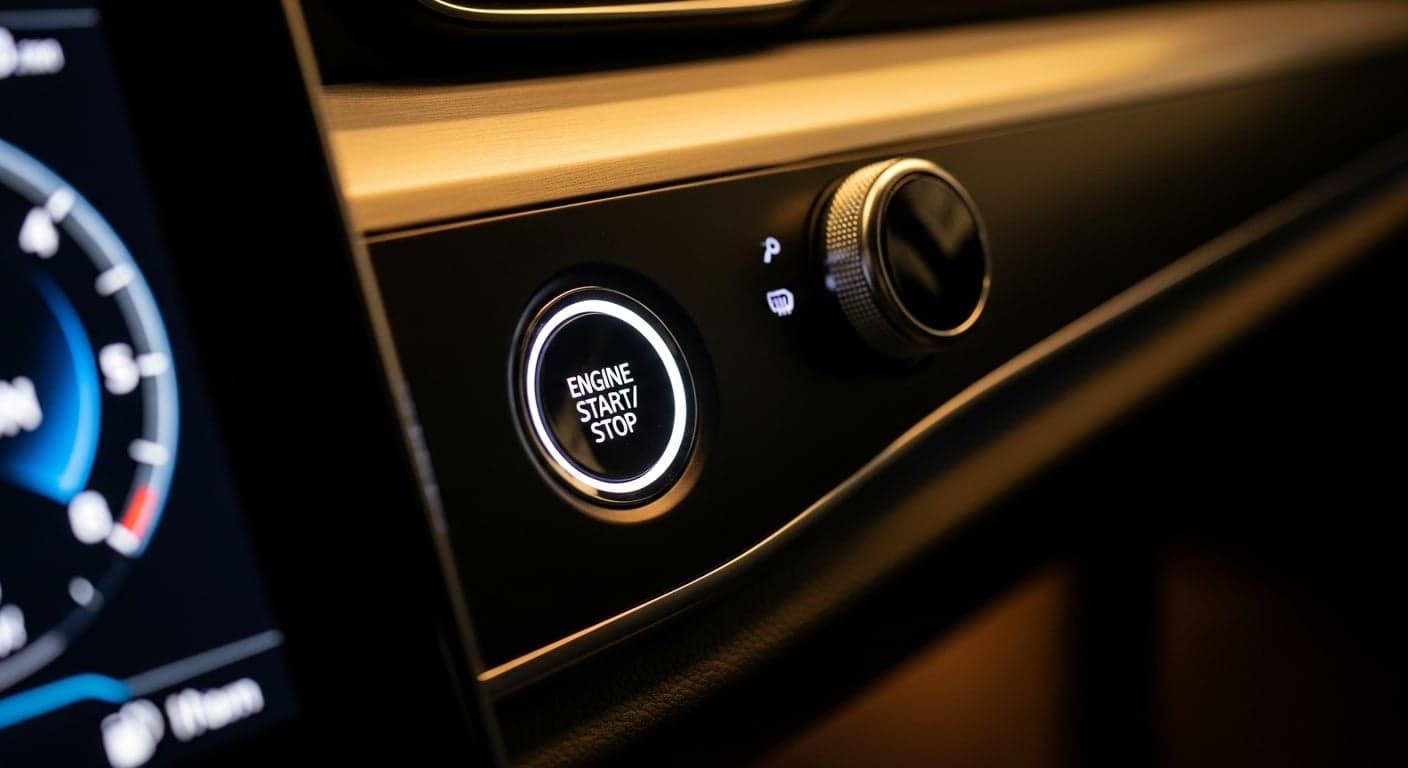
2. Move the key away from other keys and electronics. A transponder sitting against a second transponder, or against a phone, can be enough to prevent a clean read on marginal systems. Take the key off the ring, hold it alone at the ignition or the start button, and try again.
Between them, those two checks resolve or diagnose a meaningful share of these calls before anyone is dispatched.
Make by make
| Make | What the system is called | What the light looks like | Most common cause we see |
|---|---|---|---|
| Ford / Lincoln | PATS | Theft indicator; distinctive flash codes | Transponder or antenna ring |
| GM (Chevy, GMC, Buick, Cadillac) | PassLock / Passkey / VATS | Security light, steady or flashing | Passlock sensor or wiring in the column |
| Toyota / Lexus | Immobilizer indicator | Key-with-car symbol | Transponder or a lost registration |
| Honda / Acura | Immobilizer system | Key symbol | Key transponder or immobilizer control unit |
| Nissan / Infiniti | NATS | Key or security symbol | BCM or antenna; steering-lock faults overlap |
| Hyundai / Kia / Genesis | Immobilizer | Key symbol | Key registration or module after a power event |
| VW / Audi | Immobilizer | Key symbol in cluster | Cluster/ECU pairing, antenna ring |
| BMW | EWS / CAS / FEM-BDC | Car-with-key or start message | Module or key credential |
| Mercedes-Benz | DAS / FBS | Message rather than a symbol | EIS/EZS or steering-lock involvement |
| Chrysler / Dodge / Jeep / Ram | SKIM, SKREEM, WIN, RF Hub | Key symbol | RF Hub or WIN module |
Ford and Lincoln — PATS
Ford's system flashes the theft indicator in patterns that correspond to specific faults, which makes it one of the more diagnosable systems on the road. The most frequent real causes are a transponder that has failed inside an ageing key and an antenna ring around the ignition barrel whose wiring has fatigued.
GM — PassLock, Passkey and VATS
GM's various generations share a weakness: the sensing element and its wiring live in the steering column, where they move constantly. A security light on a GM vehicle of a certain age is a column-wiring suspicion until proven otherwise. Older VATS systems used a resistor pellet in the key blade itself, and a worn or dirty pellet contact produces exactly this symptom — the VATS delete and bypass service page covers the options where the original system is beyond economic repair.
Toyota and Lexus
Generally reliable systems, and when the light appears the cause is usually either a genuinely failed transponder or a registration that was lost — sometimes after module work, sometimes after a deeply flat battery. Because many Toyota smart-key platforms rewrite their entire key list when a key is added, a partially completed programming session in the past can also leave a key that no longer registers.
Honda and Acura
The immobilizer control unit is the component to suspect once the key has been ruled out with a spare. Honda systems are otherwise unremarkable and the diagnostic path is short.
Nissan and Infiniti
The complication here is overlap: Nissan's electronic steering lock fails often enough that a no-start with a warning is as likely to be a steering-lock fault as an immobilizer one. The two need separating before parts are ordered, and the detail is in our guide on Nissan Altima and Infiniti Q50 ignition and steering lock.
Hyundai, Kia and Genesis
Key registration loss after a battery replacement or a long flat-battery period is unusually common across this group, and the fix is a re-registration rather than a part. The procedure and its prerequisites are in the Hyundai immobilizer reset guide.
Volkswagen and Audi
The immobilizer function is shared across the cluster, the engine module and, on keyless cars, the keyless-entry module. A light here often means those modules have fallen out of agreement rather than that anything has physically failed — frequently after a battery event or module work. Symptom-side troubleshooting is in Volkswagen key fob issues, including the 2020 Passat, and the repair side in VW immobilizer repair in Arlington.
BMW
BMW usually delivers a message rather than a bare symbol, and the underlying architecture differs sharply between older and newer platforms. Which one you have determines the entire cost of any fix — the BMW chassis-code key system decoder resolves it from your chassis code.
Mercedes-Benz
Mercedes tends to announce the problem in text, and the two components most often behind it are the ignition switch module and the electronic steering lock. Both are specialist repairs rather than parts swaps, and both are why Mercedes key replacement cost sits at the top of the European range.
Chrysler, Dodge, Jeep and Ram
The authorising component has changed names across the generations — SKIM, then SKREEM, then WIN, and on modern vehicles the RF Hub. A security light here is very often the module rather than the key; which module depends on the era, mapped in our SKIM, SKREEM, WIN and RF hub guide.
What each cause costs to fix in DFW
| Cause | What it means | Typical DFW fix |
|---|---|---|
| Key transponder failed | The chip inside the key has died | $150–$300 (new key, cut and programmed) |
| Registration lost after a flat battery | Nothing broken; pairing lost | $0–$200 (relearn) |
| Antenna ring / coil failure | Car cannot read a healthy key | $200–$400 |
| Column wiring (GM in particular) | Flex fatigue in the harness | $200–$400 |
| Electronic steering lock fault | Overlapping symptom, different part | $400–$800 |
| Immobilizer or body module failure | The authorising module itself | $350–$650 |
| Module pairing mismatch after a repair | Modules disagree about the vehicle | $200–$400 |
The diagnostic order that avoids wasted spend
- Spare key test. Free, decisive if it works.
- Key isolated from other transponders. Free.
- Battery and charging health. A weak battery causes an enormous share of intermittent immobilizer complaints, because low voltage during cranking produces marginal module behaviour. Check this before anything is replaced.
- Fault codes across modules, not just the one being blamed. Faults cluster, and the cluster names the culprit.
- Live data on key detection — does the car report seeing a fob presented at the antenna?
- Antenna and column wiring inspection on domestic vehicles especially.
- Module communication and pairing checks on European vehicles especially.
That sequence takes 20–40 minutes and separates a $0 relearn from a $650 module. Anyone who skips to selling a key has not done the work — the same trap covered in our guide on when it looks like a dead key but it is the body control module.
If the key will not even turn
A security light with a key that will not physically rotate is a different problem wearing similar clothes. Mechanical faults — a loaded steering lock, a worn key, a worn cylinder — have their own ladder, and two of the causes cost nothing to clear. Start with why a key will not turn in the ignition instead.
And if you are simply trying to understand what a transponder is and why your car needs one at all, transponder key programming explained is the primer.
Frequently Asked Questions
What does the security light on my dash mean?
Lit steadily or flashing rapidly with the ignition on and the engine refusing to start, it means the immobilizer rejected the key — the security handshake failed, so fuel or spark was withheld deliberately. Flashing slowly while the car is parked and off is normal on most vehicles; that is the armed indicator, not a fault.
Why does my car crank but not start with the key symbol lit?
Because the engine is mechanically fine and the security system is refusing to allow it to run. The cause is one of about six: a failed transponder in the key, an antenna that cannot read a healthy key, column wiring damage, a lost registration after a flat battery, a module pairing mismatch, or a failed immobilizer module. They cost between nothing and $650 to fix, which is why diagnosis comes before parts.
How do I know if it is my key or my car?
Try your spare. If the spare starts the car, the daily key is the fault and a replacement fixes it for $150–$300. If neither key works, the fault is on the vehicle side — antenna, wiring or module. Also try the key isolated from other transponders and electronics, since a crowded keyring can prevent a clean read on marginal systems.
Can a dead or weak car battery cause an immobilizer fault?
Yes, in two ways. A weak battery produces low voltage during cranking, which makes modules behave marginally and can trigger intermittent rejections. And a fully flat battery or a jump start can cause some platforms to lose a stored registration entirely, which then needs a relearn. Check battery health before replacing anything — it is the cheapest thing on the list.
How much does it cost to fix an immobilizer problem in DFW?
As of August 2026, roughly $0–$200 for a relearn after a power event, $150–$300 for a new key when the transponder has failed, $200–$400 for an antenna ring or column wiring repair, $350–$650 for a failed immobilizer or body module, and $400–$800 when an electronic steering lock is involved. Diagnosis first typically takes 20–40 minutes and decides which of those you are actually buying.
Is the security light the same as the check engine light?
No. The check engine light reports emissions and powertrain faults. The security or immobilizer light reports the anti-theft system's status and can prevent the engine running entirely, which the check engine light generally does not. They can appear together after module work, in which case both need reading.
Can the immobilizer be disabled or removed?
On some older platforms a bypass is technically possible and occasionally the economic answer when the original system is beyond repair and parts are unavailable — GM's older VATS being the common example. On modern vehicles it is neither practical nor advisable: the immobilizer is integrated with the engine module, and removing it damages security and resale value while frequently breaking other functions. Repair is almost always the better path.
My security light flashes when the car is parked. Is something wrong?
Almost certainly not. A slow flash with the vehicle off and locked is the armed indicator on the majority of makes — the system telling you it is active. The fault condition is a light that stays on or flashes rapidly with the ignition on while the engine refuses to start.
Describe the light, not just the symptom
Not Your Basic Locksmith diagnoses and repairs immobilizer faults across every major make in the DFW metroplex — Arlington, Fort Worth, Dallas, Grand Prairie, Mansfield, Irving and beyond — at the vehicle, including antenna, module and EEPROM-level work.
Call or text (682) 344-1957 and tell us three things: the make and year, whether your spare key starts the car, and whether the light is steady, flashing fast, or flashing slowly. That is usually enough to name the likely cause before anyone is dispatched. Owner-operated, ALOA Master Automotive Locksmith credentialed, based at 1168 W Pioneer Parkway in Arlington. Texas DPS certificate #B28531501.