Key In, Nothing Happens
You put the key in and turn it, or press the button, and the car does nothing. No crank, no click, sometimes no dash. On a twenty-year-old truck that is a short list of mechanical suspects and a manageable bill. On a European car built in the last two decades it is frequently something else entirely — because on those cars the part you are calling "the ignition" is often not a switch at all. It is a module, and it is doing a security job rather than a mechanical one.
That distinction is worth real money. An ignition quote built on the assumption of a mechanical failure, applied to an electronic one, is wrong in both directions: sometimes it is hundreds too high, sometimes it is hundreds too low and the car comes back. This page explains how to tell which one you have, what each version costs in Dallas–Fort Worth as of September 2026, and where the line sits between something you can check yourself and something that needs a read.
A diagnostic runs $90–$150 and is usually credited toward the repair. Call (682) 344-1957.
Four different things owners call "the ignition"
1. The lock cylinder
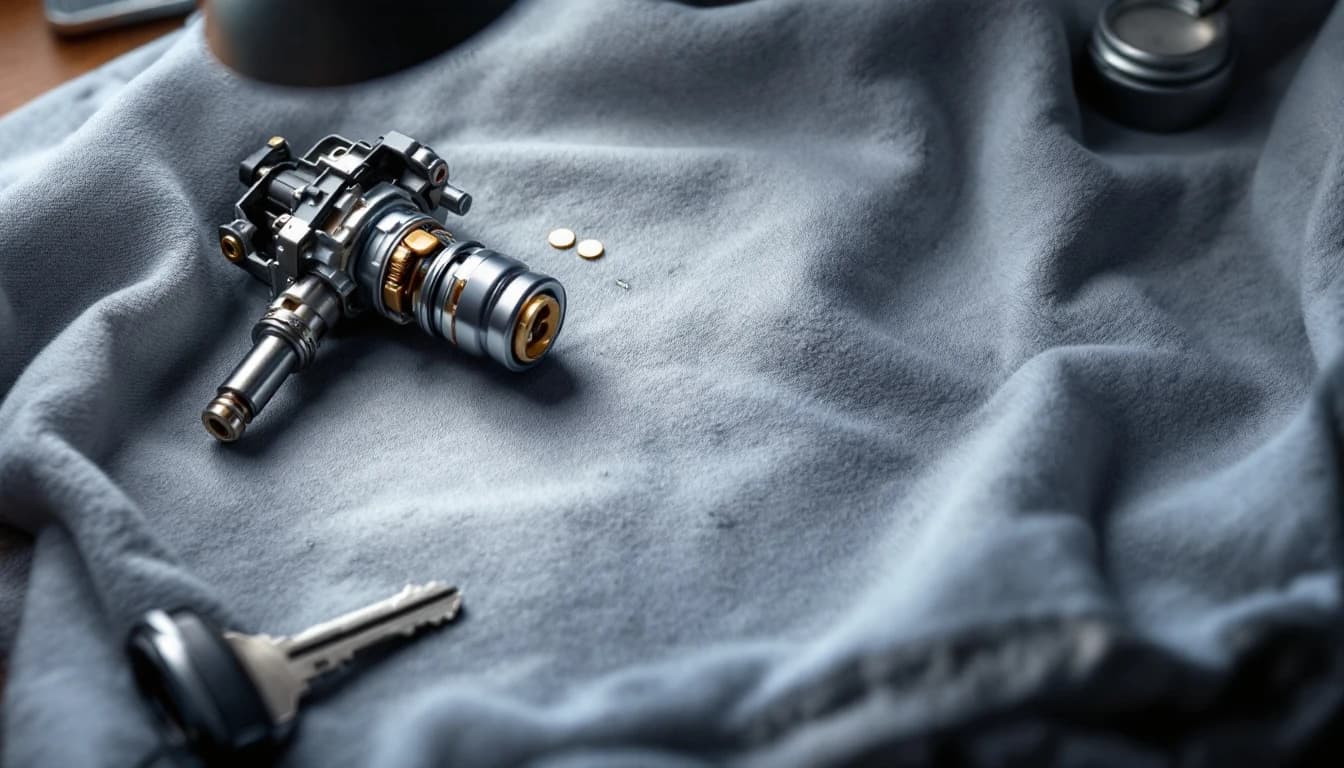
The mechanical barrel the key physically enters and turns. It has wafers and springs, it wears, and it can be worn out by a worn key just as easily as by age. Its failure is tactile: the key goes in stiffly, needs jiggling, will not turn, or turns and spins without engaging.
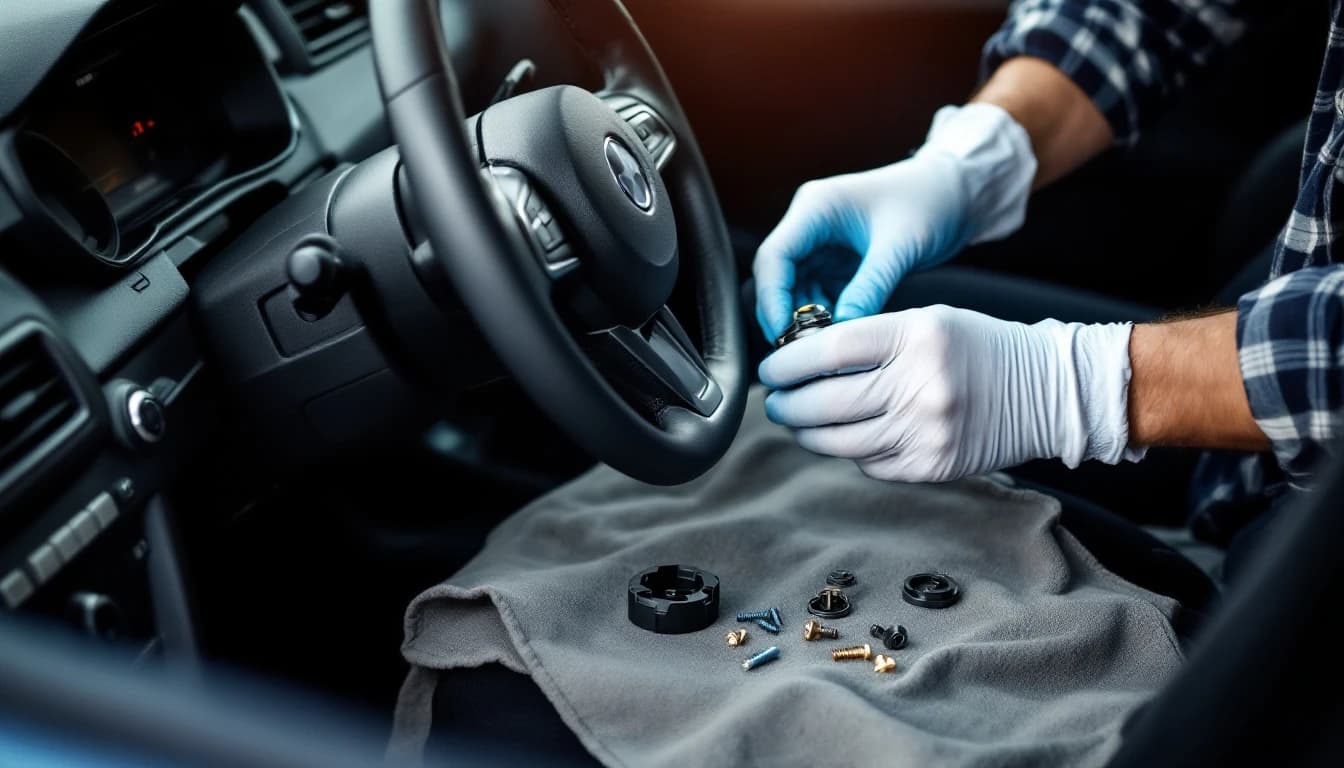
This is the version most people picture, and on European cars it is the minority case. When it is the answer, it is genuinely repairable — our ignition switch and lock cylinder repair page covers that work.
2. The electrical switch behind the cylinder
A separate component that translates the barrel's rotation into electrical positions — accessory, run, crank. It fails independently of the cylinder, and its signature is different: the key turns perfectly, everything feels normal, and one position stops working. Dash lights but no crank is the classic.
3. The security module the key talks to
This is the European-specific case, and the one this page exists for. On a Mercedes the EIS or EZS — the electronic ignition switch — is a module that reads the key, decides whether it is legitimate, and authorises the rest of the car. On a BMW, CAS on E-series cars and FEM or BDC on F and G-series cars do the same job. On Audi and VW the immobilizer function sits in a chain across more than one controller. On Land Rover it is body-module-centred.
None of those are mechanical. When they fail, nothing about the key feels wrong. The key goes in, turns or the button presses, and the car simply does not authorise a start.
4. The steering lock
A motorised mechanism, separate from all of the above, that has to physically release before the car will start. On Mercedes this is the ESL or ELV, and its failure is one of the most common European no-starts in this metro. The tell is a steering wheel that stays locked, a key that will not turn because the column has not released, or an explicit steering-lock message on the dash.
Read your own symptom
Match what your car is doing to the list below. This narrows it further than any code reader will.
The key will not go in, or goes in badly. Mechanical. Lock cylinder, or a worn key, or debris. Try your spare key — if the spare goes in cleanly, the problem is your key, and that is the cheapest outcome on this page.
The key goes in and will not turn. Could be the cylinder, could be the steering lock refusing to release, and on cars with a shift interlock could be the transmission not fully in Park. Rock the steering wheel firmly while turning the key: if it suddenly frees, you have a binding column, which is mechanical. If nothing changes and the dash says anything about the steering lock, you are on the ESL branch. Our key will not turn in the ignition diagnostic ladder walks that fork in more detail.
The key turns normally and nothing electrical happens. Electrical switch, or a power problem. Check the battery first — a flat or marginal battery produces exactly this and is the single most common cause on European cars.
The key turns, the dash lights up fully, and the engine will not crank. Now you are likely on the security branch. The car has power, it has decided something, and what it decided was no. Look at the dash for an immobilizer icon, a key symbol, or a written message.
The push button does nothing at all. Check the brake switch and the fob battery first, then the same branch as above. Keyless cars have their own failure sequence — comfort access and Keyless Go not working covers it for BMW and Mercedes.
It is intermittent. Read our intermittent no-start diagnostic ladder — intermittent faults have their own order of investigation and the impulse to replace the cylinder is usually wrong.
What each version costs in DFW
As of September 2026, across Dallas–Fort Worth, mobile service. These are ranges, and the specific car sets the number.
- Diagnostic read — $90–$150, against a dealer's $185–$295, usually credited if you book the repair. On this particular fault it is not an upsell; it is the thing that stops you buying the wrong component.
- Mercedes ESL/ELV steering lock — motor swap plus EIS re-personalisation — $400–$700, against a dealer's $1,500–$2,500 plus a tow. This gap is the largest on the page and it exists because the dealer replaces assemblies where a specialist repairs and re-marries them.
- Mercedes EIS/EZS data repair — $300–$500, against a dealer's $800–$1,400. The intermittent-no-start and "Start Error" case.
- Mercedes EIS module replacement plus key re-pairing — $1,200–$1,800, against a dealer's $2,500–$4,000 plus a tow. Rare, and reserved for genuinely unrecoverable modules — usually water or fire damage. Where the module is healthy and the job really is a key, our Mercedes-Benz key replacement options page covers the routes and what each one costs.
- BMW module work — depends on which module and which chassis; the BMW module repair cost page breaks FRM, CAS, FEM, BDC and DME out individually.
- Audi and VW immobilizer chain work — see the Audi and VW immobilizer repair cost page; component protection is the variable that catches people out.
- Flatbed, if you go a route that needs one — $150–$300, and avoidable entirely with mobile service.
The full cross-marque picture lives on our European module programming cost pillar.
Why general shops get this wrong
Not through incompetence. Through category error.
A good general mechanic's mental model of "ignition problem" is built on decades of cars where the ignition was a switch. That model is correct for most of the vehicles that come through the door. Applied to a W204 Mercedes whose steering lock motor has seized, it produces a quote for a part that is not broken, and when the new part does not fix the car, the next guess is a key.
The reverse error is just as expensive. A car with a genuinely worn lock cylinder gets sent for module diagnostics because the make is German, and the owner pays for a read that was never going to find anything — the fault was mechanical and it was sitting in the barrel.
The way out is not brand loyalty, it is sequence. Establish whether the car is failing to authorise or failing to actuate before anyone buys a part. Those are the only two categories, and a read answers the question in twenty minutes. Our page on finding local car module programming services covers what to ask a shop to establish whether they can actually make that distinction, and what we get asked most often in Arlington covers the rest of the vetting.
Things worth trying before you call anyone
None of these cost anything and all of them are worth five minutes.
Try the spare key. If it works, your key is the problem and you have just saved yourself a diagnostic.
Rock the steering wheel while turning. Firm pressure left and right. A bound column frees; an electronic steering lock does not.
Confirm the transmission is fully in Park, then try Neutral. A shift-interlock or range-sensor problem imitates an ignition fault convincingly.
Check the battery properly. Not "the lights come on" — that proves very little. A battery can light a dash and still be unable to support a crank or hold system voltage high enough for modules to authorise. If the car has been jump-started recently, or the battery was replaced without being registered to the vehicle, that is a live lead all by itself.
Take everything else off the key ring. A second transponder, a transit card or a phone wallet against the reader can block the read on some cars.
Look at the dash and write down exactly what it says. "Start Error — See Operator's Manual" on a Mercedes is a specific, meaningful message with its own diagnosis. A key icon, an immobilizer icon and a steering-lock message point three different directions. The immobilizer security light by make guide decodes them.
When it is time to stop guessing
Stop and call when the car will not start at all and none of the free checks changed anything; when you have already replaced one part without fixing it; when the dash is showing a steering-lock or immobilizer message; or when a shop has quoted you a module without having read the car.
We come to you across Dallas–Fort Worth. Mechanical ignition repairs, security-module diagnosis, EIS and steering-lock work, key programming — all of it is the same visit, which is the practical advantage of a specialist who covers both halves of the word "ignition". Board-level work goes to the bench at the Arlington shop at 1168 W Pioneer Parkway; you still do not tow.
Adrian Torres has worked European ignition and immobilizer systems in this metro since 2012, under Texas Department of Public Safety Private Security licence B28531501. Texas locksmith companies are licensed by DPS — not TDLR — and any shop should hand you that number without being pressed. Broader module work across all makes is covered on our ECM, BCM and TCM programming page.
Frequently Asked Questions
Is my Mercedes ignition problem the cylinder or the EIS?
Judge it by feel. If the key is stiff, needs jiggling, or spins without engaging, that is mechanical — the cylinder. If the key turns normally, the dash lights up and nothing happens, the fault is on the security side, which on a Mercedes means the EIS or EZS, or the ESL steering lock. A read confirms it for $90–$150.
What does Mercedes ESL steering lock repair cost in DFW?
A steering lock motor swap with EIS re-personalisation runs $400–$700 as of September 2026. The dealership route for the same failure typically runs $1,500–$2,500 plus a tow, because the dealer replaces assemblies where a specialist repairs the mechanism and re-marries it to the car.
My key turns but the car will not crank. What is it?
Most often one of three things: a battery that cannot support a crank, an electrical ignition switch that has lost its crank position, or the security system declining to authorise the start. Check the dash — a fully lit cluster with no crank and an immobilizer or key icon points at the security branch; a dimming cluster points at voltage.
Why will my key not turn in the ignition?
Either the lock cylinder is worn or obstructed, the steering column is bound and the lock has not released, the car is not fully in Park, or an electronic steering lock has failed. Rocking the steering wheel firmly while turning the key frees a bound column; if that changes nothing and the dash mentions the steering lock, it is the electronic version.
Can a locksmith fix a European ignition, or is that a mechanic's job?
An automotive locksmith who does module work covers both halves — the mechanical cylinder and switch, and the security module that authorises the start. That combination matters on European cars precisely because the two are so easily confused. Where the fault turns out to be a starter, fuel or engine-management problem, the honest answer is a referral to a mechanic, and you should expect to be given one.
Should I just replace the ignition cylinder to be safe?
No. On a European car the cylinder is the least likely of the four components described above to be the failure, and replacing it does not touch the security module or the steering lock. A wrong part fitted to a car that did not need it is the single most common way owners overspend on this fault.
Do I need to tow the car to you?
Almost never. Diagnosis, cylinder and switch work, steering-lock repair and key programming all happen where the car sits, anywhere in Dallas–Fort Worth. Only board-level module repair goes to the bench, and in that case the module travels rather than the car — so the $150–$300 flatbed the dealer route usually needs does not appear on your bill.
Key in, nothing happening? Call (682) 344-1957. Mobile European ignition, immobilizer and module specialists across Dallas–Fort Worth, licensed by the Texas Department of Public Safety (B28531501). We establish whether your car is failing to authorise or failing to actuate before anyone buys a part.
Written by the Not Your Basic Locksmith team. Prices reflect Dallas–Fort Worth service as of September 2026 and are ranges, not quotes.