Key Won't Turn in the Ignition? Work Down This Ladder First
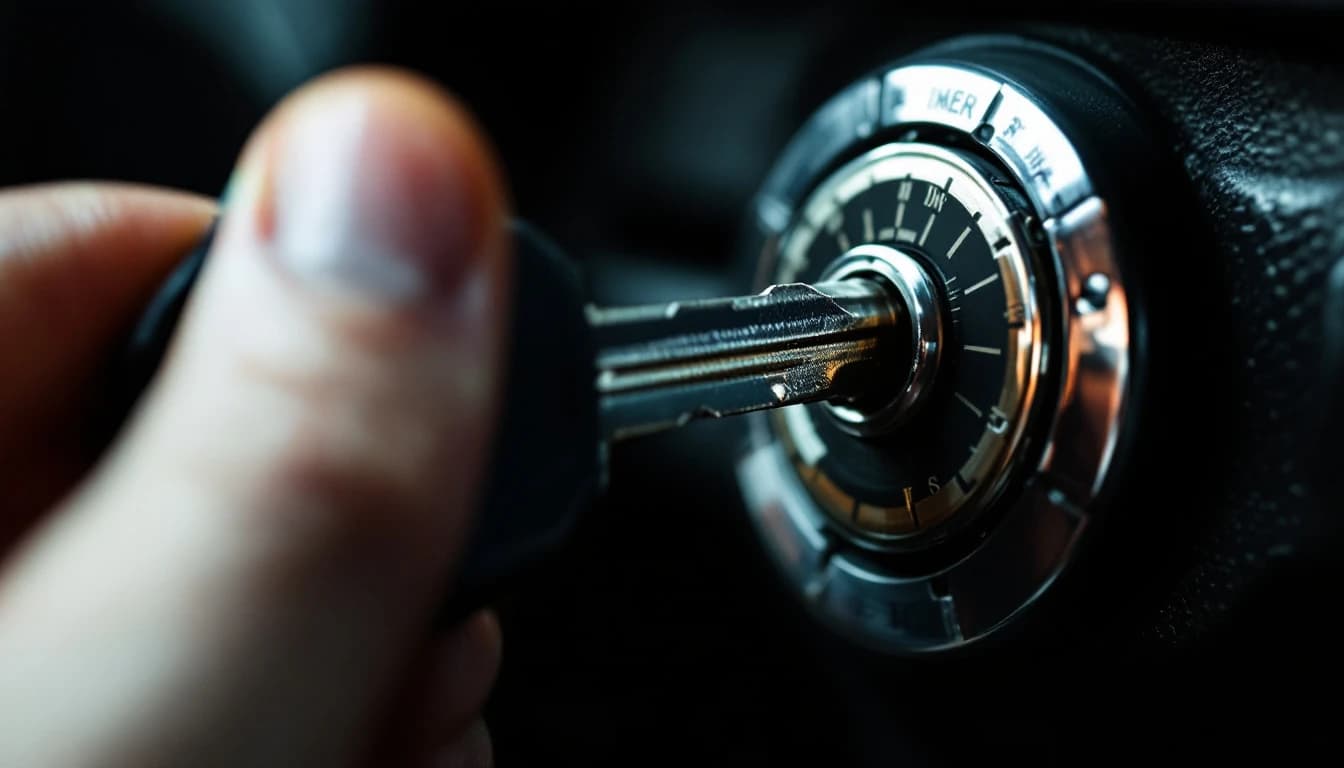
Before you call anyone: turn the steering wheel firmly left and right while applying steady turning pressure to the key, and if the car is an automatic, shift into Neutral and try again. Those two checks clear a meaningful share of "my key will not turn" calls at no cost, because the two most common causes are not faults at all — they are the steering lock loaded against the ignition and a shifter that is not quite home in Park.
If neither works, you have an actual fault, and it is one of six. As of August 2026 in the DFW market they range from a $150–$250 key recut to a $400–$800 steering-lock repair, and telling them apart before dispatch saves both time and money. This is the order a technician works them in.
Step 0 — the two free checks
The steering lock bind. When you park with the front wheels turned, or bump a kerb on the way in, the steering lock pin can end up under load against the cylinder. The lock cannot release while it is loaded. The fix is to take the load off: hold light, steady turning pressure on the key — not force — while rocking the steering wheel firmly left and right. It usually frees with a small click.
The shifter. Automatic transmissions have an interlock that refuses to release the key, or refuses to let it turn, unless the selector is fully in Park. A selector that looks like Park but is a few millimetres short is enough. Shift firmly into Neutral, try the key, then back to Park.
Do both before anything else. They are free, they take thirty seconds, and they resolve more of these calls than any repair on this page.
The six real faults, in diagnostic order
1. A worn key, not a worn ignition
The single most under-diagnosed cause. Keys wear. A key that has been in a pocket with coins for eight years has rounded cuts, and rounded cuts stop lifting the wafers inside the cylinder to their correct heights.
The tell: a spare key that has lived in a drawer works fine while the daily key does not. Or the daily key works if you jiggle it, lift it slightly, or pull it back a millimetre — all of which are ways of compensating for worn cuts.
The fix: a new key cut to the vehicle's code rather than copied from the worn one. This matters — copying a worn key reproduces the wear. As of August 2026 that is roughly $150–$250 including the transponder programming on most vehicles.
Why it gets missed: it is the cheapest possible outcome, so a shop selling ignition replacements has no incentive to check it first. Always ask for the spare key to be tried before anyone quotes a cylinder.
2. Debris or a foreign object in the cylinder
Lint, a snapped-off toothpick, a bent key tip from a previous owner, or the residue of someone's attempt at lubricating with the wrong product. The keyway is a narrow slot facing upward in a car interior; things get into it.
The tell: the key will not seat fully, or seats but feels gritty and stops short of its normal depth.
The fix: cleaning and, where needed, extraction. Cheap and quick if that really is all it is.
The warning: do not spray oil or general-purpose lubricant into an ignition. Oil attracts and holds dust, and turns an occasional stick into a permanent one. Lock cylinders take dry graphite or a proper lock lubricant, and even then sparingly.
3. A worn ignition lock cylinder
The cylinder is a mechanical wear part with wafers and springs, and after enough cycles the tolerances open up.
The tell: every key you own is equally reluctant. The key turns but feels loose or vague. Sometimes it turns without the key fully inserted — a sure sign of severe wear, and one worth acting on because it eventually turns into a car anyone can start.
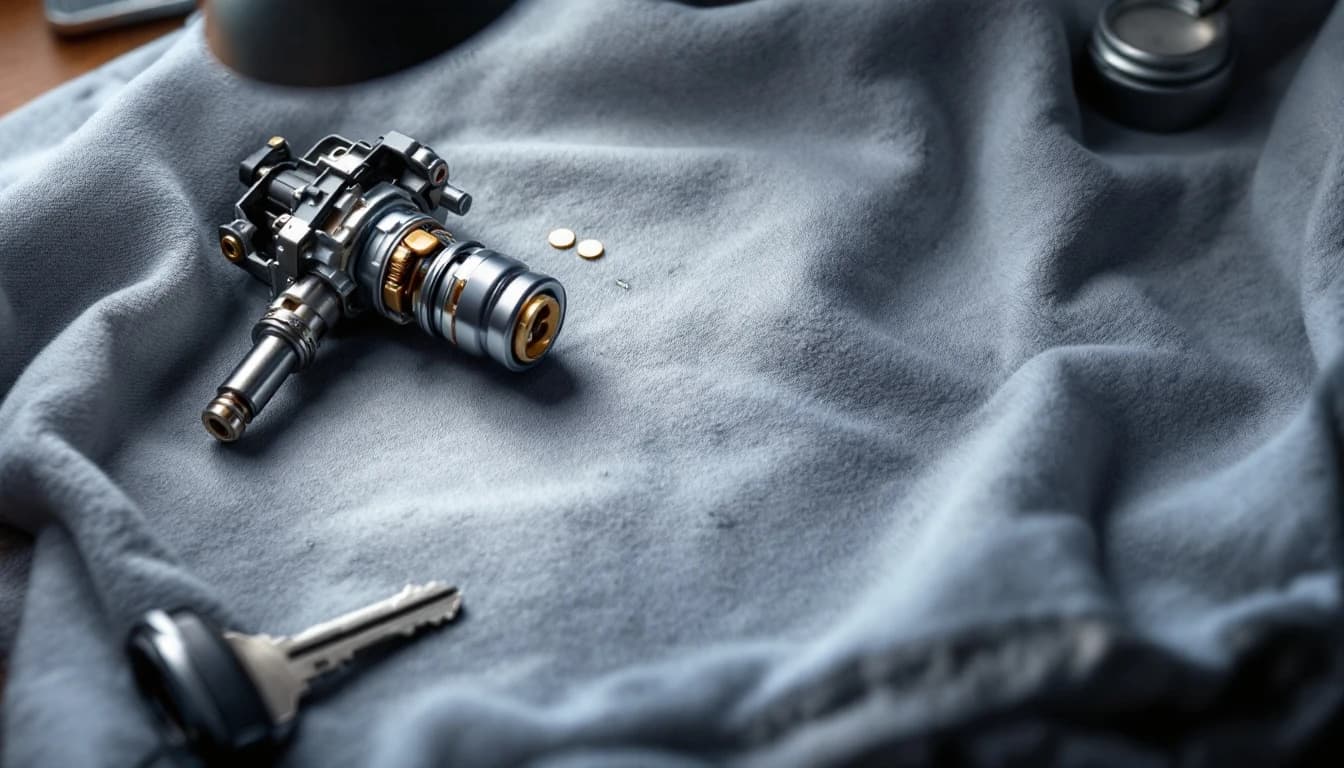
The fix: rebuild or replace the cylinder, then key it to your existing key so you do not end up carrying two keys. Cost varies by column design more than by make — some cylinders come out in fifteen minutes and some require the column to be partly dismantled.
The full breakdown of cylinder versus switch work is in our ignition switch and lock cylinder repair guide.
4. A failed ignition switch (the electrical half)
People say "ignition" for two different parts. The lock cylinder is the mechanical piece the key goes into. The ignition switch is the electrical piece behind it that actually tells the car what position you have selected. They fail differently and cost differently.
The tell: the key turns freely through every position and nothing happens electrically — no dash lights, no crank, or dash lights that come on and then drop out when you turn to start. The mechanical action feels completely normal.
The fix: replace the switch. On most vehicles this does not require touching the cylinder or the keys at all.
5. Steering lock actuator failure (ELV / ESL)
On many European cars from roughly 2000 onward the steering lock is not a mechanical pin at all — it is an electronic actuator that the car commands to unlock. When the actuator fails, the steering stays locked, and on several platforms the car refuses to start as a consequence.
The tell: a warning message about the steering lock, a distinct absence of the usual click when you insert the key or press start, or a car that was fine one day and completely immobile the next with no warning.
The fix: repair or replace the actuator and, on many platforms, re-pair it to the vehicle. This is the most expensive item on this page — commonly $400–$800 — and it is genuinely specialist work rather than a parts swap. Mercedes owners will find the detail in Mercedes ELV and ESL steering lock repair; the equivalent Nissan and Infiniti fault is covered in Nissan Altima and Infiniti Q50 ignition and steering lock.
6. The key broke off in the cylinder
Not a diagnosis so much as an event, but it belongs on the ladder because it is frequently the end state of causes 1 and 3 — a worn key in a worn cylinder eventually snaps.
What not to do: superglue. It bonds the fragment to the wafers and converts a fifteen-minute extraction into a cylinder replacement. Also avoid needle-nose pliers unless a substantial piece is protruding, since pushing the fragment deeper is easy and unhelpful.
The fix: proper extraction tools, then a new key cut to code — never copied from the surviving half. Our guide to a key breaking inside the ignition covers the procedure and what it costs.
The symptom-to-cause table
| What you are experiencing | Most likely cause | Typical DFW fix cost |
|---|---|---|
| Won't turn, wheels turned when parked | Steering lock bind | Free — rock the wheel |
| Won't turn or won't release, automatic | Shifter not fully in Park | Free — cycle to Neutral |
| Daily key sticks, spare key works fine | Worn key | $150–$250 (recut to code) |
| Key won't seat fully, feels gritty | Debris in cylinder | $85–$175 (clean/extract) |
| Every key is loose or vague; turns partly inserted | Worn lock cylinder | $200–$450 |
| Turns normally, nothing happens electrically | Ignition switch failure | $200–$400 |
| Steering stays locked; warning message; no click | ELV / ESL actuator | $400–$800 |
| Key snapped off in the barrel | Extraction + recut | $175–$350 |
Push-button cars: the same problem, different parts
If your car has a start button rather than a key barrel, causes 1, 3 and 6 do not apply — there is no cylinder to wear and no key to snap. What replaces them:
- The fob is not being detected, which is an antenna or module issue rather than a mechanical one.
- The brake pedal switch has failed, so the car does not believe the brake is pressed and refuses to start.
- The electronic steering lock has failed, which behaves much like cause 5 above.
- The start button itself has failed, which is uncommon but not rare on high-mileage cars.
The order to work those in is in our push-button start diagnostic guide.
What we do on arrival
A proper ignition call is diagnostic before it is commercial:
- Try your spare key. If it works, the fault is the key and you have just avoided the expensive outcome.
- Check the interlock and steering lock under controlled pressure — cause 1 and 2, verified rather than assumed.
- Inspect the keyway for debris and check the key's cuts against the vehicle's code.
- Assess cylinder wear by feel and by how the key seats and rotates.
- Test the electrical positions to separate cylinder faults from switch faults.
- Scan for steering-lock and immobilizer faults on platforms where those exist.
Then, and only then, a price for the specific repair — with the cheapest viable option named first even when it is a $180 recut rather than a $500 cylinder job.
Preventing the next one
Three habits genuinely extend an ignition's life:
Take weight off the key. A heavy keyring hanging off the ignition applies constant leverage to the cylinder and the switch behind it. This is a real wear mechanism, not folklore.
Replace a worn key before it snaps. If your key needs jiggling, it is telling you. A recut is under $250; a broken key in a worn cylinder at midnight is not.
Never oil the ignition. Dry graphite or a purpose-made lock lubricant, used sparingly. Oil-based sprays turn dust into paste.
Frequently Asked Questions
Why won't my key turn in the ignition?
Most often because the steering lock is loaded against the cylinder — turn the wheel firmly left and right while applying steady pressure to the key — or because an automatic transmission's selector is not fully in Park. If neither clears it, the likely causes in order are a worn key, debris in the keyway, a worn lock cylinder, a failed ignition switch, or on many European cars a failed electronic steering-lock actuator.
How do I tell a worn key from a worn ignition cylinder?
Try your spare. If the spare turns normally and the daily key does not, the key is worn and a recut to the vehicle's code fixes it for $150–$250. If every key you own is equally reluctant, or the cylinder turns while the key is only partly inserted, the cylinder is worn and needs rebuilding or replacing.
How much does ignition repair cost in DFW?
As of August 2026, roughly $85–$175 to clean or clear debris, $150–$250 for a key recut to code, $200–$450 for lock cylinder repair or replacement, $200–$400 for an ignition switch, $175–$350 to extract a broken key and recut, and $400–$800 for an electronic steering-lock actuator on European platforms. Column design drives the labour more than the make does.
Is the ignition switch the same thing as the ignition lock cylinder?
No, and confusing them is the main reason quotes vary so widely. The lock cylinder is the mechanical part the key enters; the switch is the electrical part behind it that tells the car which position you selected. A key that turns freely while nothing happens electrically points at the switch. A key that will not turn at all points at the cylinder or the key.
Can a locksmith fix an ignition without replacing the whole steering column?
In the great majority of cases, yes. Lock cylinders and ignition switches are serviceable parts that come out of the column, and on most vehicles the work happens at the car in under two hours. Full column replacement is reserved for physical damage — an impact, or a forced-entry attempt that broke the housing.
My key broke off in the ignition. What should I do right now?
Do not apply superglue, and do not push at the fragment with pliers unless a substantial piece is protruding. Both routinely turn a straightforward extraction into a cylinder replacement. Leave it, and have it extracted with proper tools. The replacement key should be cut to the vehicle's code rather than copied from the surviving half, because the half you are holding is the worn one that caused the break.
Should I spray lubricant into my ignition?
Not general-purpose oil-based spray — it attracts dust and turns an occasional stick into a permanent one. Lock cylinders take dry graphite or a purpose-made lock lubricant, used sparingly. If a cylinder needs lubricating repeatedly to work, lubrication is not the fix; wear is the problem.
Why does my car start but the steering wheel stays locked?
On vehicles with an electronic steering lock, the actuator is commanded to release independently of the ignition, and it can fail while the rest of the system works. On vehicles with a mechanical lock, the pin can bind under load. The electronic version usually announces itself with a warning message and is the more expensive repair — commonly $400–$800 including re-pairing the actuator to the vehicle where the platform requires it.
Try the spare key first, then call
Not Your Basic Locksmith repairs ignition lock cylinders, ignition switches and electronic steering locks across the DFW metroplex — Arlington, Fort Worth, Dallas, Grand Prairie, Mansfield, Irving and beyond — at the vehicle, typically without removing the column.
Call or text (682) 344-1957 and tell us whether your spare key works. That one detail decides between the cheapest repair on the list and the most expensive one. Owner-operated, ALOA Master Automotive Locksmith credentialed, based at 1168 W Pioneer Parkway in Arlington. Texas DPS certificate #B28531501.