European ECU and DME Replacement Cost in DFW (2026)
Direct answer. As of October 2026, replacing and programming the engine computer on a European car in Dallas–Fort Worth runs $600–$1,500 with a mobile specialist, depending on the marque and the controller generation, against $1,100–$2,800 plus a tow at a dealership. A reflash with no hardware change is $300–$500. A diagnostic read that confirms the computer is really the fault costs $90–$150 and is usually credited when you book the repair.
That is the short version, and for a lot of readers it is enough. The longer version matters because "the ECU" is the single most over-diagnosed part on a European car, the most expensive one to guess at, and the only component on this page where the part itself is the smaller half of the job. On a BMW, a Mercedes or an Audi, an engine computer is not installed. It is introduced to the car's security system, and until that introduction succeeds the engine will not run no matter how new the box is.
This page is the price map. Call (682) 344-1957 if you would rather have the number for your specific car.
The price table
Dallas–Fort Worth mobile and bench bands, current as of October 2026. These are ranges rather than quotes: the controller variant, the model year and the condition of the data on the old unit decide where inside a band a specific car lands. Dealer figures are typical quotes for the same job in this metro and do not include the flatbed.
| Marque and controller family | Mobile / bench (DFW) | Typical dealer quote |
|---|---|---|
| BMW MSV70/80/90, E-series petrol | $700–$950 | $1,300–$1,800 + tow |
| BMW MSD80/81/85/87, E-series turbo and M cars | $850–$1,200 | $1,600–$2,300 + tow |
| BMW MEVD17.2/17.4, F-series | $750–$1,050 | $1,400–$2,100 + tow |
| BMW B58-era and G-series | $900–$1,200 | $1,650–$2,400 + tow |
| Mercedes ME9.7 (W203, W211) | $750–$950 | $1,300–$1,800 + tow |
| Mercedes MED17.7 (W204, early W212) | $800–$1,050 | $1,400–$2,000 + tow |
| Mercedes MED17.9 (W205, W213, W222) | $850–$1,150 | $1,500–$2,200 + tow |
| Mercedes AMG MED40 | $1,100–$1,500 | $2,000–$2,800 + tow |
| Mercedes EDC17 diesel | $900–$1,200 | $1,600–$2,300 + tow |
| Audi MED17.1, 2006–2010 chassis | $650–$850 | $1,300–$1,700 + tow |
| Audi MED17.5 / 17.5.2 with component-protection coding | $750–$950 | $1,400–$1,800 + tow |
| Audi S-model MED17.5.5 | $850–$1,100 | $1,600–$2,000 + tow |
| Audi RS-model MED17.9.5 | $1,000–$1,400 | $1,900–$2,500 + tow |
| Porsche ME9 (997, 957, older Boxster and Cayman) | $750–$1,000 | $1,500–$2,000 + tow |
| Porsche MED17.5 (991, 970, 95B) | $950–$1,300 | $1,800–$2,400 + tow |
| Porsche MG1 (992, 9YA, 971) | $1,100–$1,500 | $2,000–$2,800 + tow |
| MINI R-series, 2007–2013 | $600–$850 | $1,100–$1,550 + tow |
| MINI F-series, 2014–2020 | $700–$950 | $1,300–$1,800 + tow |
| Range Rover Sport, Bosch engine controller | $750–$1,050 | $1,500–$2,000 + tow |
| ECU reflash / firmware update, no hardware change | $300–$500 | $585–$895 |
| VIN coding after a dealer-supplied module is fitted | $250–$400 | Handled in-house |
| Audi/VW component-protection coding only | $350–$550 | Handled in-house |
| Mercedes MED17.7 voltage-regulator bench repair, where feasible | $200–$400 | n/a — dealer replaces the unit |
| Diagnostic read only | $90–$150 | $185–$295 |
| Flatbed, when the car cannot be driven | — | $150–$300 |
The spread between marques is small. The lowest replacement row and the highest sit roughly $900 apart, and most of the common cars cluster between $700 and $1,150. The badge is not what makes this job expensive. The security procedure is, and it is broadly similar in length across the German makes.
The spread between a specialist and a dealer is large. On almost every row the dealer quote is close to double, and that is before the tow. The reason is structural and is explained further down; it is not that one side is cutting corners.
The cheapest rows are the ones people skip. A reflash, a coding session, or a bench repair costs a fraction of a replacement. A meaningful share of the engine computers we are asked to replace turn out to need one of those instead, or to need nothing at all because the fault was never in the computer.
For how engine controllers sit against every other European module job — steering locks, ignition modules, footwell modules, body controllers — see the full European module programming cost pillar.
What you are actually paying for
An engine-computer invoice on a European car has four parts, and only one of them is the box.
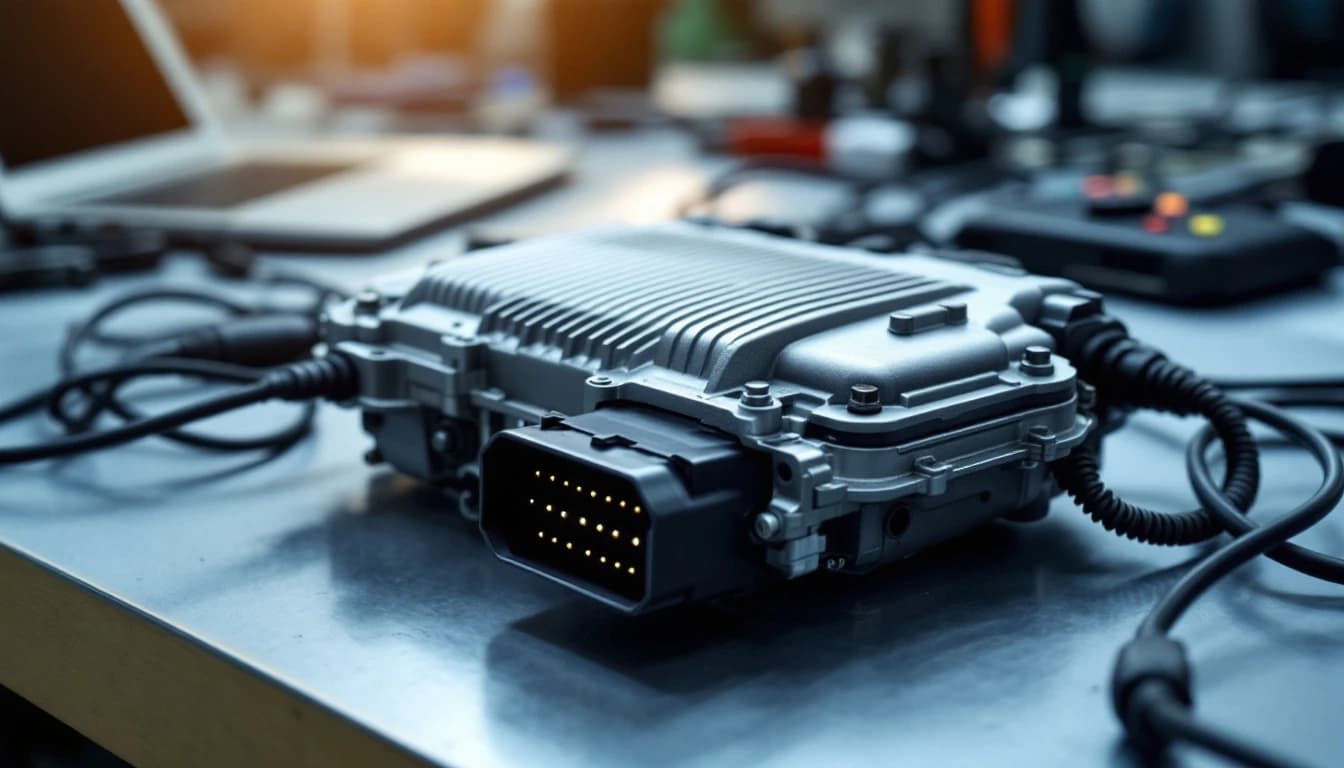
The controller. A new or OEM-equivalent unit of the correct hardware and software variant. The variant matters more than owners expect: two cars of the same model year with the same engine can carry controllers that will not substitute for one another.
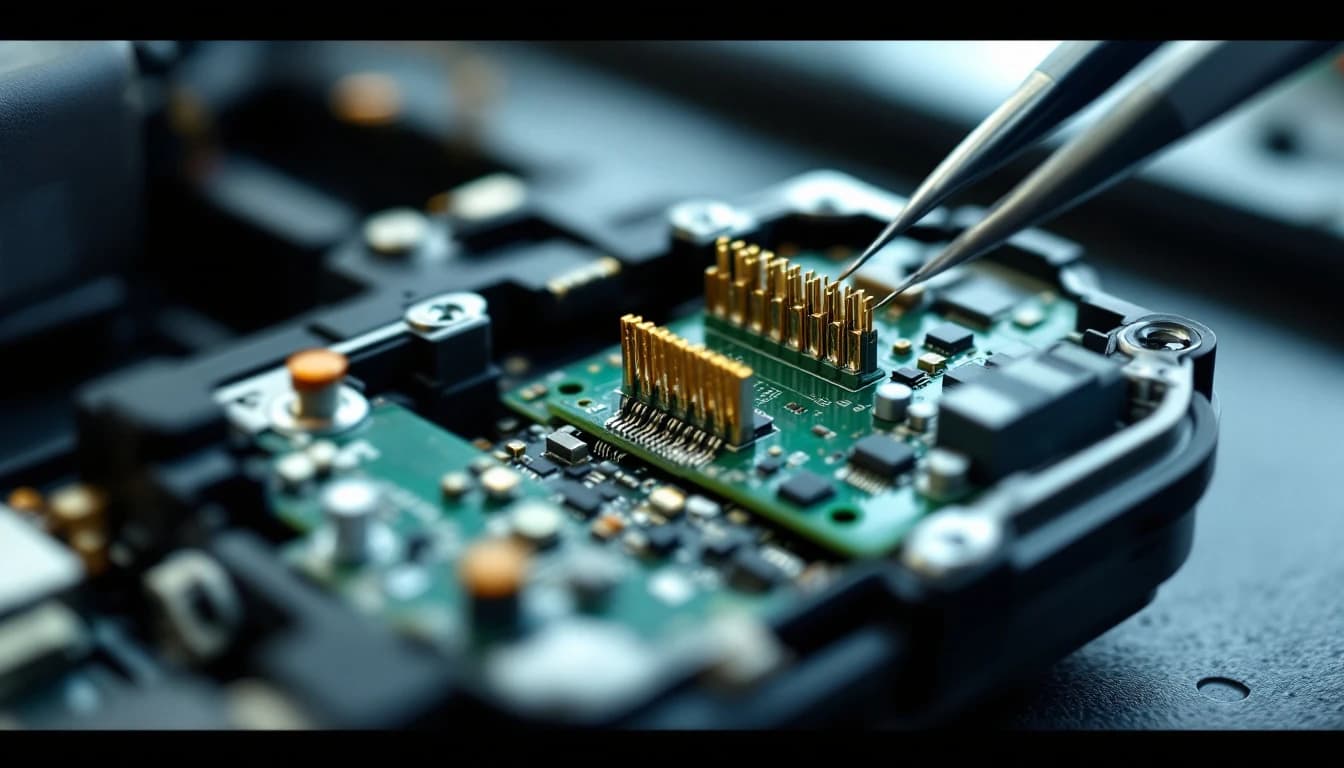
Data transfer. The old unit holds values the new one needs: the vehicle identification, the immobilizer identity, adaptation values, and on performance models the calibration set. When the old controller can still be read, that data is moved across. When it cannot — fire, water, a dead processor — the data has to be rebuilt from the rest of the car, which is slower and is the main reason one job lands at the top of its band and another at the bottom.
Security pairing. This is the step that makes a European engine computer different from a domestic one. The controller has to be accepted by the car's immobilizer chain before the engine is allowed to run. Each marque does this its own way, and the next section sets them out.
Coding and verification. Options, emissions configuration, transmission pairing, and a road test with live data. A controller that starts the car but has the wrong option coding will drive, set faults, and come back.
When someone quotes a price for "an ECU," the useful question is which of those four parts the number includes. A used unit from an online breaker covers the first and none of the other three.
Why European engine computers are not plug-and-play
BMW: the ISN
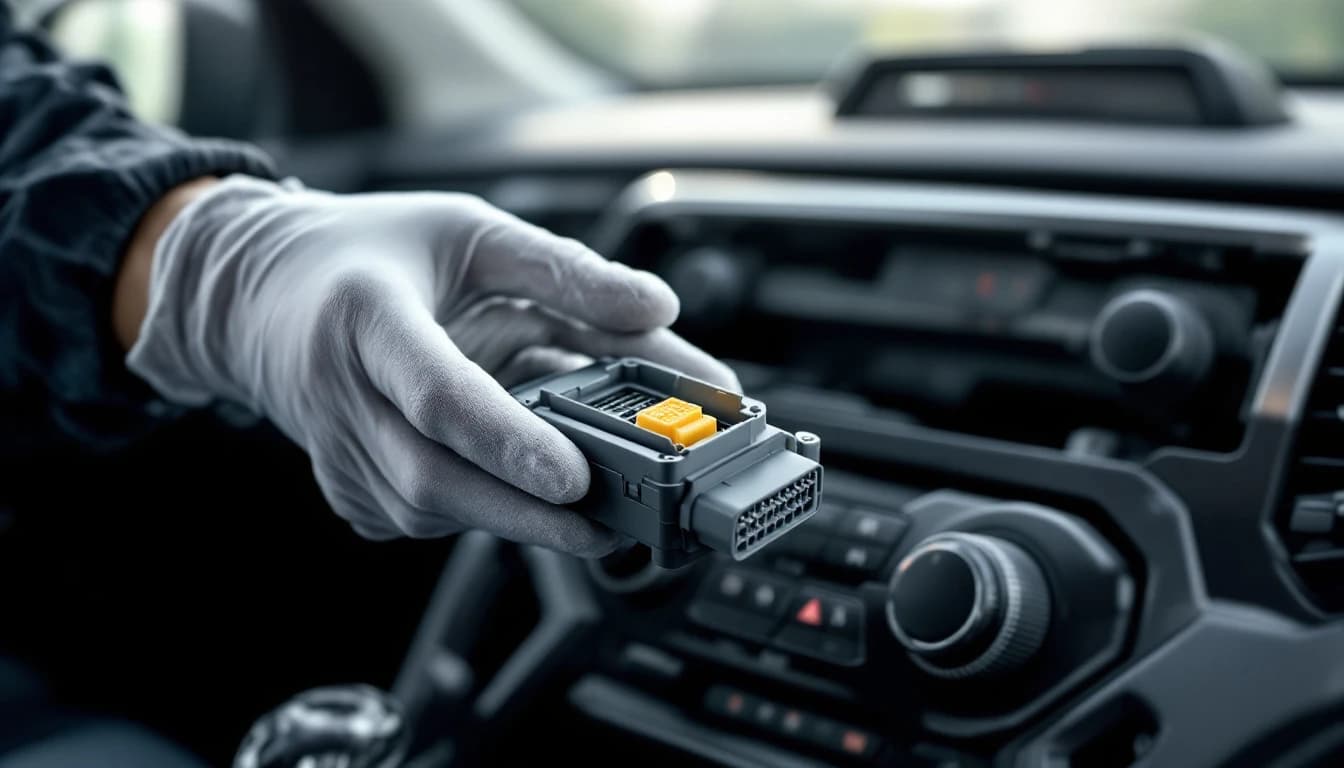
A BMW engine controller — DME on petrol cars, DDE on diesels — shares an individual serial number with the car's security module: CAS on most E-series, FEM or BDC on F-series and later. At every start the two exchange that value. If they do not match, the engine is not released. Replacing a DME therefore means reading the value from one side and writing it to the other, and on later cars that read is a bench job rather than something done through the diagnostic port. The per-generation detail lives on our BMW DME programming page, and the rest of the BMW module family is priced in BMW module repair cost.
Mercedes-Benz: the drive authorisation chain
On a Mercedes the engine controller is one link in a chain that runs from the key through the electronic ignition switch to the engine and, on many cars, the transmission and the steering lock. A replacement controller has to be personalised into that chain. A used one arrives personalised to a different car, which is why a used Mercedes engine computer bolted in as supplied will crank and not start. The controller families and the cars they sit in are covered in Mercedes ECM programming in Dallas–Fort Worth. If the read shows the fault is on the key side of that chain rather than the controller, the question becomes how much a Mercedes key costs — a far smaller number.
Audi and Volkswagen: immobilizer adaptation and component protection
On the Volkswagen group cars the engine controller participates in the immobilizer, so a replacement has to be adapted to the car's immobilizer identity before the engine will run. Newer Audi platforms add component protection, which binds certain modules to a specific vehicle and has to be released through coding after a swap. The MED17 sub-variants and what each one involves are laid out on our Audi MED17 ECU programming page.
Porsche, MINI and Land Rover
Porsche shares its controller foundations with the Volkswagen group but carries Porsche-specific coding, including the pairing to the PDK transmission where fitted; our Porsche ECU programming page covers the families. MINI follows BMW practice — CAS on R-series cars, FEM or BDC on F-series — and is covered in MINI Cooper ECU programming. Land Rover pairs the engine controller with the body control module as part of its immobilizer, which is why a Range Rover engine-computer job is often quoted alongside body-module coding.
The common thread: in every case the price is driven by how the car proves the controller belongs to it, not by how hard the box is to unbolt.
What changes the price
Eight variables decide where a specific car lands inside its band. In rough order of weight:
- The controller generation and sub-variant. Later controllers have longer procedures and more of the work has to be done on the bench. This is the difference between the rows of the table.
- Whether the old controller can still be read. A unit that still communicates gives up its data in minutes. A unit that is dead has to be opened and read at the chip, or its data rebuilt from the security module. Same car, same part, different labour.
- Performance variants. M, AMG, S, RS and GT controllers carry calibration data — launch behaviour, torque models, exhaust and differential logic — that has to be restored and then checked. The parts cost more as well. That is why those rows sit above their base-model siblings.
- Petrol or diesel. Diesel controllers add injector coding and after-treatment configuration to the job.
- Who supplies the part. A controller we source is one we can warrant end to end. A controller the owner bought first is welcome, but if it is the wrong variant the visit becomes a diagnostic and a second trip.
- New, used, or repaired. A used unit can work on older European platforms and is a poor bet on newer ones. A bench repair, where the failure is a known one, undercuts both. The next section deals with this properly.
- Key state. If the car has no working key, the security side has to be worked before the engine side can be paired, and the key job is priced on top. Key prices by make are in the DFW car key replacement cost index.
- The tow. A car that will not run cannot drive to a dealership. That is $150–$300 before any work starts, and mobile service removes it entirely.
Notice what is not on the list: the age of the car in itself, and the dealer's hourly rate. Age only matters through the controller generation. And a mobile specialist prices the job, not the hour.
Repair, reflash, or replace
Before any controller is replaced, three cheaper outcomes have to be ruled out.
A reflash. Corrupted software, a failed update, or a known software fault addressed by a later calibration. No hardware changes hands. $300–$500 against a dealer's $585–$895.
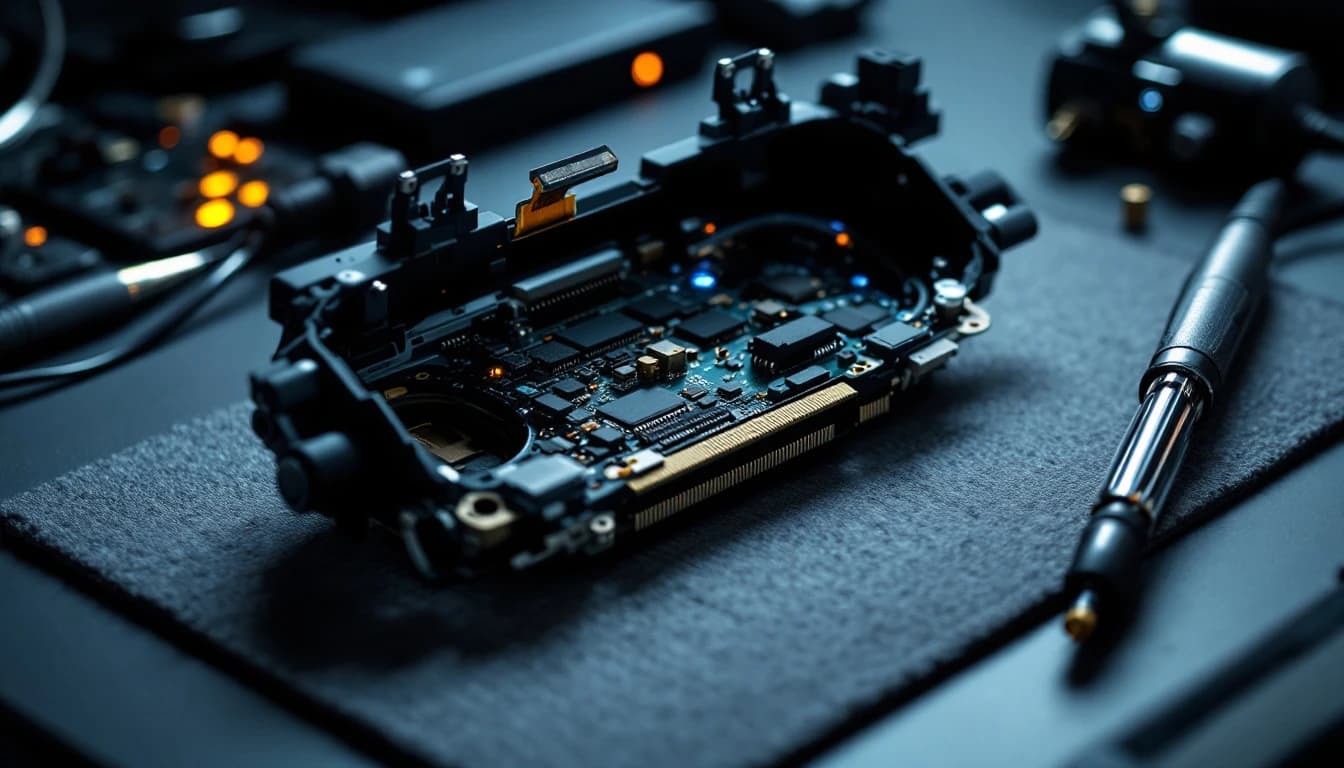
A bench repair. Some controllers have well-understood component failures that can be repaired on the board. The Mercedes MED17.7 voltage regulator is the standard example, with repair sometimes feasible at $200–$400 against $850–$1,050 for replacement. BMW owners with N54 and N55 engines will know a related story from the injector and valve-control driver side, which has its own page: BMW DME MOSFET repair. Not every failed board can be repaired, and an honest shop says so after looking rather than before.
Coding only. A controller that was already replaced elsewhere — by a dealer, a general shop, or the owner — and was never properly introduced to the car. The hardware is fine; the car simply does not trust it. That is $250–$400 for VIN coding or $350–$550 for Audi and VW component-protection coding, and it is one of the most satisfying calls we take because the expensive part has already been paid for.
Replacement is the right answer when the controller has taken water, been through a fire, suffered a failure of the processor itself, or been damaged by an over-voltage event. Those are real, and when one of them has happened no amount of software will bring the unit back.
Is it really the ECU?
This section saves more money than any other on the page.
An engine computer is blamed for misfires, stalling, no-start conditions, limp mode and communication faults. It is the actual cause of a small minority of them. Before a controller is condemned, the following should have been checked and documented:
- Battery and charging. A weak battery or an alternator producing unstable voltage generates fault patterns that look exactly like a failing controller. This is the first check for a reason.
- Power and ground at the controller. A corroded ground strap or a failed relay starves a healthy controller. The symptom is a module that "drops offline" and comes back.
- The wiring harness. Chafed looms, rodent damage, and connectors that have taken water at the bulkhead. A controller cannot fire a coil through a broken wire.
- The component it controls. A shorted coil or injector can take out a driver circuit, but far more often the coil or injector is simply the failed part and the controller is reporting it correctly.
- The security chain. A car that cranks strongly and never fires, with every key behaving the same way, frequently has a pairing problem rather than a dead controller. If that began right after engine-computer work, start with car will not start after an ECU swap.
The $90–$150 diagnostic read is what sorts these. It reads the controller's own fault memory, the security module's fault memory, live voltage and the communication network, and it ends in a sentence: this is the controller, or this is not the controller and here is what it is. A quote for a replacement that was not preceded by that sentence is a guess with a price on it.
The used-ECU question
Online breakers sell used European engine computers at a fraction of new, and the question we are asked most often is whether one can be programmed to the car.
The honest answer is "sometimes, and less often the newer the car is." On older European platforms a used controller with matching hardware can frequently be coded to the vehicle; on pre-2010 European cars that route typically runs $500–$750 including the unit. On newer platforms, particularly Audi and Volkswagen cars with component protection, a used unit is often impractical, and a failed attempt still costs $200–$300 in labour and sourcing time before the job restarts with a new controller. That arithmetic is laid out case by case in used ECU and PCM programming: when it works.
Two rules keep owners out of trouble. Match the hardware and software numbers on the old unit exactly, not just the model and year. And ask before buying — a two-minute phone call with the part numbers costs nothing and tells you whether the unit has a realistic chance.
Why the dealer quote is what it is
A dealer's number for this job is not padding. It is the sum of four things a specialist does differently.
List-price parts. The controller is sold at the manufacturer's list price. A specialist sources the same Bosch or Continental hardware through trade channels.
Replace, not repair. A franchise service department is built to swap assemblies. It does not open a controller and replace a regulator, so the bench-repair row has no dealer equivalent at all.
Shop-rate labour. Programming time is billed at the same posted hourly rate as mechanical work, with a minimum.
The tow and the wait. A non-running car arrives on a flatbed and joins a queue. Neither appears on the repair invoice, and both are real costs.
The dealer is still the correct choice in three situations: the controller is covered by a warranty or an emissions warranty that is still in force, the fault is the subject of a recall or service campaign, or the car is new enough that independent access to its security system does not yet exist. Which jobs fall on which side of that line is the subject of which car modules need the dealer and which do not. We will tell you on the phone if your car is one of them.
What the visit looks like
- A call with the VIN and the symptom. What the car does, what was replaced recently, and whether every key behaves the same way. This is enough to tell you the likely band before anyone drives out.
- Diagnosis at the car. Fault memories, live voltage, power and ground at the controller, network communication. This is where a large share of "ECU" jobs turn into something cheaper.
- The decision, priced. Reflash, repair, coding or replacement, with the cheapest viable option named first.
- The work. On-site for most replacement and coding jobs, typically 75 to 150 minutes depending on the family. Board-level repair goes to the Arlington bench and comes back.
- Verification. Faults cleared and rechecked, adaptations run, a road test with live data, and every key you own confirmed to start the car.
If you are comparing shops, the distinction between flashing, cloning, coding and adapting is worth five minutes — it is explained in plain terms in flash, clone, code, adapt, and it will tell you quickly whether the person quoting understands the job. For help choosing a provider at all, see our guide to module programming near you.
Frequently Asked Questions
How much does it cost to replace an ECU on a European car in DFW?
As of October 2026, replacement with programming runs roughly $600–$1,500 with a mobile specialist, depending on marque and controller generation — for example $700–$950 for an E-series BMW petrol controller, $850–$1,150 for a Mercedes MED17.9, and $750–$950 for an Audi MED17.5. Dealer quotes for the same work typically run $1,100–$2,800 plus a $150–$300 tow.
Is a DME the same thing as an ECU?
Yes. DME is BMW's name for the petrol engine controller and DDE for the diesel one. Mercedes documentation uses ME or ECM, Audi and Volkswagen use ECU or engine control unit, and American usage often says ECM or PCM. They all describe the computer that runs the engine.
Can I just buy a used ECU and plug it in?
No. A used European engine computer arrives paired to the car it came from and will not release the engine in yours until it is coded or adapted. On older platforms that is often possible. On newer ones, especially Audi and Volkswagen cars with component protection, it frequently is not, and a failed attempt still costs $200–$300.
How do I know the ECU is really the problem?
By diagnosis, not by symptom. Battery condition, power and ground at the controller, the harness, the controlled components and the security chain all produce symptoms that are routinely blamed on the computer. A diagnostic read at $90–$150 checks them and is usually credited toward the repair.
Is a reflash cheaper than a replacement?
Considerably. A reflash or firmware update with no hardware change is $300–$500 against a dealer's $585–$895, and it resolves software corruption and known software faults. It will not fix a controller with a failed component.
Why is the dealer nearly twice the price?
The dealer sells the controller at list price, bills programming at the shop's posted hourly rate, replaces units it could otherwise repair, and needs the car on its premises — which means a flatbed when the engine will not run. A mobile specialist sources at trade cost, prices the job rather than the hour, and does the work where the car sits.
How long does the job take?
Most replacement and coding jobs take 75 to 150 minutes on site. A reflash is usually 60 to 90 minutes. Board-level repairs go to the bench and are returned, so allow longer for those.
Do you need my keys?
Yes, all of them. After the controller is paired, every key is confirmed to start the car. If you have no working key at all, the security side is worked first and the key job is quoted separately.
Get the diagnosis before the part
Not Your Basic Locksmith is an owner-operated automotive locksmith and module programming shop based at 1168 W Pioneer Parkway in Arlington, working across Dallas–Fort Worth since 2012 and licensed by the Texas Department of Public Safety Private Security Program, licence #B28531501. European engine-computer work is done at the car or on our bench, never by posting your module to a third party.
Call or text (682) 344-1957 with your year, model, VIN and what the car is doing. If it is the controller, you will get a firm number. If it is not, you will have saved the price of one.