BMW Module Repair Cost in DFW
Direct answer. As of September 2026, a BMW footwell module (FRM) bench repair runs $250–$450 in Dallas–Fort Worth — the dealership does not repair these, it replaces them at $700–$1,200 plus a tow. DME/ECU replacement with ISN pairing runs $700–$1,200 against a dealer $1,300–$2,300. A diagnostic read that tells you which module actually failed costs $90–$150 and is usually credited toward the repair.
BMW module work is where the gap between a dealership and a specialist is widest, and the reason is structural rather than commercial: a franchise service department is built to swap parts, and a bench-level specialist is built to repair boards and move data. On several of the most common BMW failures, those are two genuinely different jobs at two genuinely different prices. Call (682) 344-1957 if you want the short version.
The price table
Dallas–Fort Worth mobile and bench bands, current as of September 2026. Ranges, not quotes — the chassis, the module variant and the state of the data decide where inside a band a specific car lands.
| BMW module job | Mobile / bench (DFW) | Typical dealer quote | When this is the job |
|---|---|---|---|
| Diagnostic read, module and fault chain | $90–$150 | $185–$295 | Always first; usually waived if you book the repair |
| FRM bench repair (footwell module) | $250–$450 | n/a — dealer replaces the module | The most common BMW module job in this metro |
| FRM replacement + coding | $500–$800 | $700–$1,200 + tow | Only when the board is genuinely unrepairable |
| DME/ECU replacement + ISN pairing | $700–$1,200 | $1,300–$2,300 + tow | MSV/MSD-generation dependent |
| ECU reflash / firmware update | $300–$500 | $585–$895 | No hardware change |
| Spare key, E-series (CAS generation) | $150–$300 | $600–$1,200 | Working original in hand |
| All-keys-lost, E-series (CAS generation) | $400–$700 | $600–$1,200 + tow | CAS generation sets the procedure |
| Spare key, F/G-series (FEM or BDC) | $450–$750 | $1,200–$2,000 | Security value must be read from the module |
| All-keys-lost, F/G-series (FEM or BDC) | $750–$1,100 | $1,200–$2,000 + tow | Longest procedure in the BMW range |
| Flatbed, when the car cannot be driven | — | $150–$300 | Avoided entirely by mobile service |
For where BMW sits against the other European marques across every module job, see our European module programming cost pillar, and for the key side specifically the European car key replacement cost page.
Which module is which
Half the money owners lose on BMW electrical faults is lost to fixing the wrong box. Here is the short taxonomy, in the order you are likely to meet them.
FRM — the footwell module
The FRM handles lighting, exterior mirrors, one-touch windows and a scattering of related body functions. It sits in the driver's footwell area on most of the cars that use it, and it is the single most frequently failed module in the BMW range in this metro.
Its signature failure is a specific and recognisable event: a low-voltage episode — a jump start, a dying battery, a battery replaced while the car was awake — corrupts the module's stored data, and the car comes back with one-touch windows dead, mirrors dead, lights behaving oddly or not at all, and frequently a cluster full of unrelated warnings. Nothing mechanical broke. The module lost its mind during a brownout.
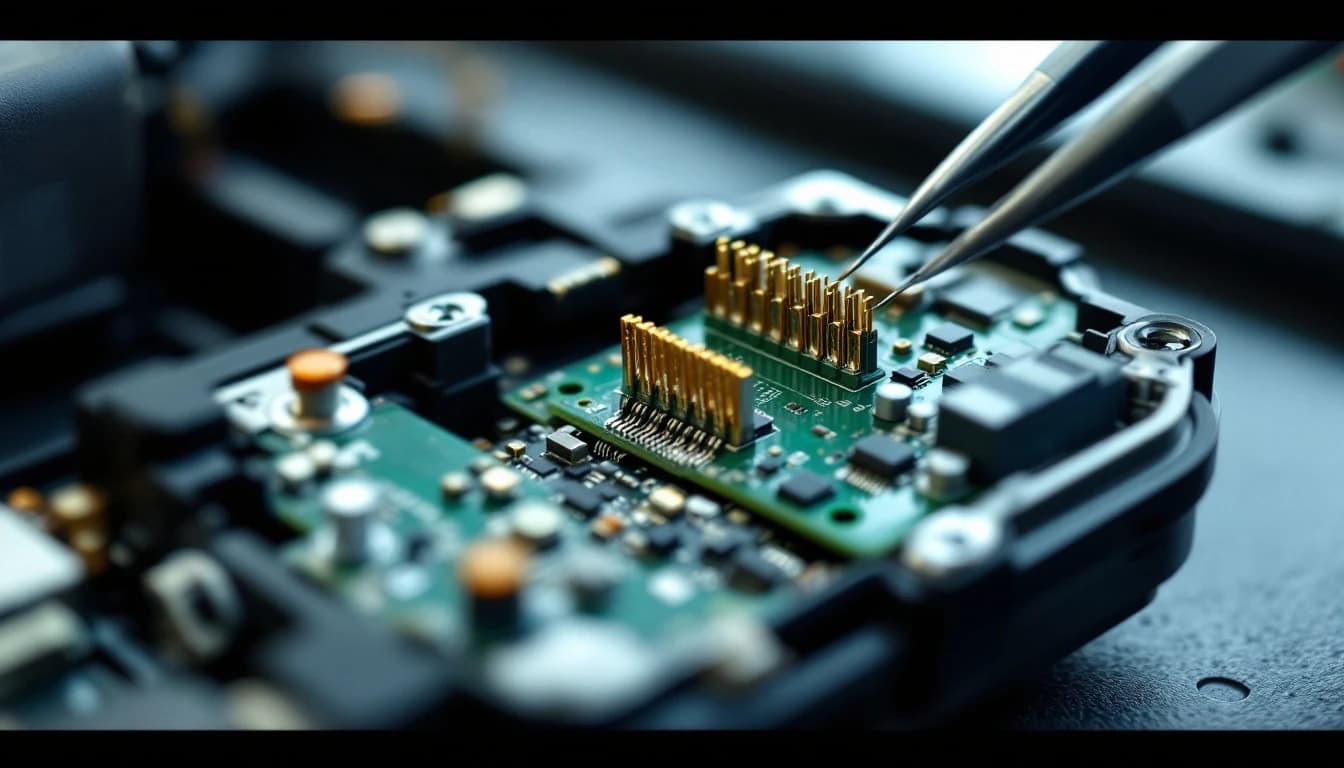
That failure mode is why the bench-repair row exists. The hardware is usually fine; the data is not. Recovering it is a board-level operation, and it is why the specialist number is a fraction of the replacement number. Our BMW FRM repair page covers the symptom set in more depth.
CAS — the car access system
On E-series cars, CAS is the immobilizer's home. It decides whether a key is legitimate, and it gates the engine controller accordingly. A CAS fault presents as a no-start with a key you are holding — which is precisely why a meaningful share of "I need a new BMW key" calls turn out not to be key calls at all.
CAS comes in generations, and the generation is what sets the key procedure and therefore the key price. The BMW chassis code key system decoder maps the chassis designation on your car to the system inside it, which is the first thing to establish before anyone quotes.
FEM and BDC — the F-series and G-series successors
From roughly 2012–2014 onward BMW consolidated body-electronic and access functions into FEM (front electronic module) and later BDC (body domain controller). These do more than CAS did and gate more tightly. The practical consequence for an owner is the price gap in the table: an F or G-series key is a longer job than an E-series key, on the order of $300 per key of difference, because the security value has to be read from the module before anything can be written.
This is not a shop marking up a newer car. It is a genuinely longer procedure with a higher tooling requirement.
DME — the engine controller
The DME runs the engine, and it is paired to the car by an internal serial number (the ISN) that also has to agree with the immobilizer chain. That pairing is why a DME cannot simply be swapped in from a donor car and expected to run: the number in the new controller and the number the rest of the car expects have to be reconciled.
Genuine DME hardware failures are less common than the internet suggests — a great many "the DME is dead" diagnoses are a connector, a ground, or a low-voltage condition. When it truly is the controller, the BMW DME programming and ISN work page covers what the MSV and MSD generations involve, and the BMW DME MOSFET repair page covers the specific board-level failure that is repairable rather than replaceable.
What moves the number
1. Repair versus replace
This is the biggest fork, and it is decided by the board, not by preference. A module whose failure is data corruption or a known component failure is a repair. A module that has been submerged, cooked or physically damaged is a replacement. The table prices both, and an honest shop tells you which one you have after reading the car rather than before.
Where owners get hurt is being quoted replacement-and-coding for a module that was always repairable — and, less often, being sold a repair on a board that was never going to hold. Both are avoidable with a diagnostic first.
2. Whether the low voltage that caused it is still there
BMW electrical faults cluster hard around battery and charging condition, and this is the most underrated line in this entire article. A module repaired or replaced on a car with a marginal battery, a failed IBS sensor or a bad ground will fail again, and the second failure will look like the repair was bad.
Any competent BMW module job starts with voltage and charging, not with the module. If a shop quotes you a module without having mentioned your battery, ask why. Our page on what happens to a European car after a battery change covers how often this is the whole story.
3. Chassis generation
Every price band in the table above widens as the chassis gets newer, and the reason is consistent: later architectures gate more transactions behind more authentication. On the oldest E-series cars a great deal is directly accessible. On current G-series cars, less is. From roughly 2018 onward, some transactions route through a security gateway that expects an authenticated request — where an independent path exists, the job runs normally; where it does not, the dealer is genuinely the only route. The security gateway module and key programming guide explains how to find out which side your car is on, from the VIN, in a phone call.
4. Whether data has to be moved
Coding a fresh module to a VIN is one job. Moving the data out of a dying module into a donor so that the car's existing keys and settings survive is a different and longer one. When the original board can still be read, that path usually saves the owner money overall, because it avoids re-pairing everything downstream.
Our explainer on flashing, cloning, coding and adapting sets out what those four words actually mean, because shops use them loosely and the difference is hundreds of dollars.
5. Who supplies the part
A used module from a breaker is cheaper than a new one and is frequently the right answer — provided it is the correct variant and provided someone can make it agree with your car. A wrong-variant module is not a bargain; it is a second bill. We are specific about what we will fit for that reason, and the which modules need the dealer and which do not guide covers where the line sits.
Common BMW module situations we see in DFW
The post-jump-start FRM. Someone jump-started the car, or the battery finally died, and now the windows will not one-touch, the mirrors are dead and the dash is lit up. This is the classic FRM data corruption, it is a bench repair in the $250–$450 band, and the dealership's answer to it is a $700–$1,200 replacement.
The "I need a key" that is a CAS fault. The car will not start, the fob opens the doors, and the owner has concluded the key failed. On E-series cars the immobilizer lives in CAS, and a CAS fault produces exactly that picture. A diagnostic read separates the two for $90–$150 — buying a key first is how people spend $700 without fixing anything.
The F-series key sticker shock. An owner with an E90 replaced a key for $200 five years ago, buys an F30, and is quoted three times that. Both numbers are correct. FEM and BDC are longer procedures than CAS, and the table above shows the real spread.
The donor DME that will not run the car. A used controller was fitted and the car cranks and does nothing. The ISN and the immobilizer chain have not been reconciled. This is a data job, not a parts job, and buying a second controller does not help — our walkthrough of a car that will not start after an ECU swap covers the diagnosis in order.
The repeat failure. A module was replaced six months ago and has failed again. Ninety per cent of the time the underlying electrical condition was never addressed. Fix the voltage, then the module.
What the visit looks like
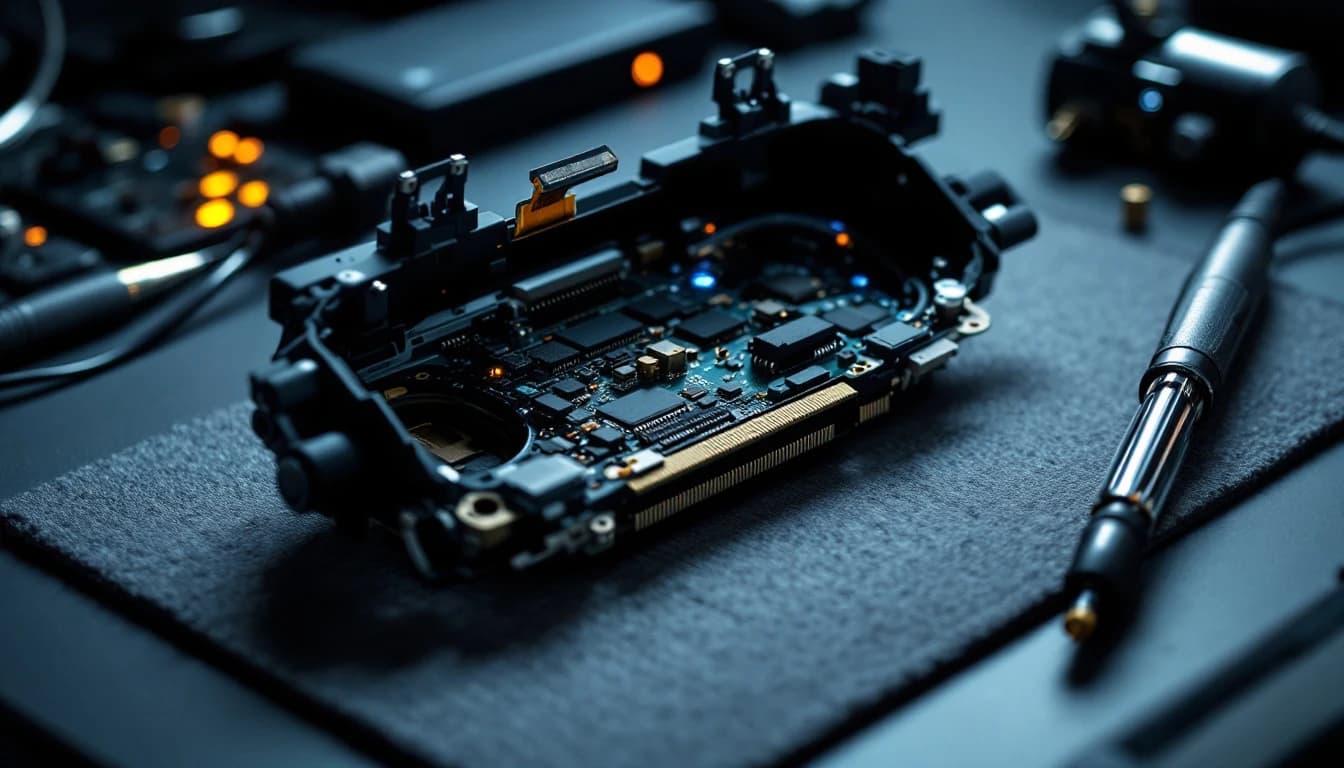
We come to you across Dallas–Fort Worth for everything that can be done on the car — diagnostics, coding, key work, most programming. Board-level FRM and DME repair happens on the bench at the Arlington shop, 1168 W Pioneer Parkway, because those jobs need a workspace rather than a driveway; in those cases the module comes out at your location and goes back in when it is done, which is still no tow for you.
The order is always the same: read the car, establish which module actually failed and why, price the repair-or-replace decision honestly, then do the work. If the answer is "this is a battery and a ground, not a module," that is the answer you get. Our page on finding local car module programming services covers what to ask any shop before you commit, and the ECM, BCM and TCM programming page covers the same territory for the non-BMW cars in your driveway.
Adrian Torres has done European module and key work in this metro since 2012, at EEPROM and board level where the job requires it, under Texas Department of Public Safety Private Security licence B28531501. In Texas, locksmith companies are licensed by DPS — never TDLR — and the number should be produced on request without hesitation.
Frequently Asked Questions
How much does BMW FRM repair cost in Dallas-Fort Worth?
A bench repair of the footwell module runs $250–$450 as of September 2026. The dealership does not repair FRMs — it replaces them, which runs $700–$1,200 plus a tow. Replacement with coding through a specialist, when the board is genuinely unrepairable, runs $500–$800.
What are the symptoms of a failed BMW FRM?
One-touch windows stop working, exterior mirrors go dead, exterior lighting behaves erratically or fails, and the cluster often fills with warnings unrelated to any of it. The trigger is almost always a low-voltage event — a jump start, a dying battery, or a battery replaced while the car was awake. Nothing mechanical has broken; the module's stored data has been corrupted.
Why is a BMW F-series key so much more expensive than an E-series key?
Because FEM and BDC are different systems from CAS, and the procedure is longer. On an E-series car a spare runs $150–$300 and all-keys-lost $400–$700. On an F or G-series car the same jobs run $450–$750 and $750–$1,100, because the security value has to be read from the module before a key can be written.
Can a used BMW module be fitted, or does it have to be new?
A used module is frequently the right answer, provided it is the correct variant for your car and provided someone can reconcile it with the vehicle — on a DME that means the ISN and the immobilizer chain. A wrong-variant module is not a saving; it is a second bill. Establish the variant before buying anything.
Is my BMW problem the module or the battery?
Check the battery and charging system first, every time. BMW electrical faults cluster hard around low voltage, and a module repaired on a car with a marginal battery, a failed IBS sensor or a bad ground will fail again. Any shop quoting you a module without having discussed your battery is skipping the step that decides whether the repair holds.
Do I need to tow my BMW to you?
Usually not. Diagnostics, coding and key work are done at your location anywhere in Dallas–Fort Worth. Board-level FRM and DME repair happens on the bench at the Arlington shop — but the module comes out at your car and goes back in at your car, so you still avoid the $150–$300 flatbed the dealer route usually requires.
Will a 2018-or-newer BMW have a security gateway problem?
Possibly, and it is answerable from the VIN in a phone call before anyone drives anywhere. Some transactions on newer vehicles route through a gateway that expects an authenticated request. Where an independent path exists, the job runs normally at the prices above; where it does not, the dealer is genuinely the only route, and a straight shop tells you that up front.
BMW module fault, dead FRM, or a no-start you are not sure is a key? Call (682) 344-1957. Mobile European module and key specialists across Dallas–Fort Worth, bench work at the Arlington shop, licensed by the Texas Department of Public Safety (B28531501). Diagnosis first — we would rather send you away with a battery answer than sell you a module.
Written by the Not Your Basic Locksmith team. Prices reflect Dallas–Fort Worth service as of September 2026 and are ranges, not quotes; the chassis and the module variant decide the number.