Mercedes SAM Module Failure
A Mercedes whose SAM module is failing rarely stops dead. It misbehaves in clusters: a wiper that runs on its own, a light that flickers or will not switch off, a lock that ignores the remote, a battery that is flat after two days in the driveway. Any one of those is easy to blame on a part. Four of them in the same month point at the unit that controls them all.
As of November 2026, the first step in Dallas–Fort Worth is a diagnostic read at $90–$150 (a dealer typically charges $185–$295), which shows whether the faults share a source. What happens next depends on the car and on what the read finds. A body-module job on a European car is quoted from the VIN once the fault is known, because the range between a corroded connector and a drowned module is far too wide to print one honest number.
This page is the diagnosis: what the SAM does, why it fails, what imitates it, and what to check first.
What a SAM is
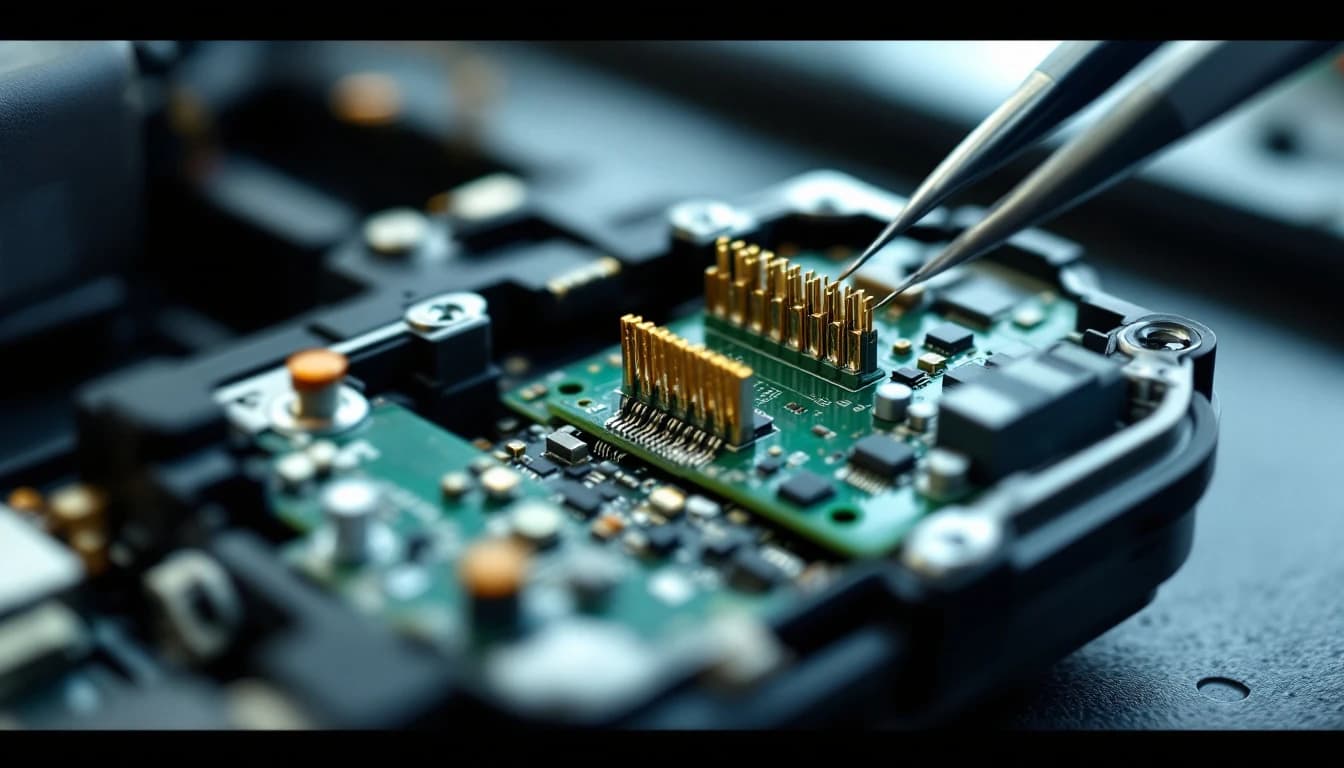
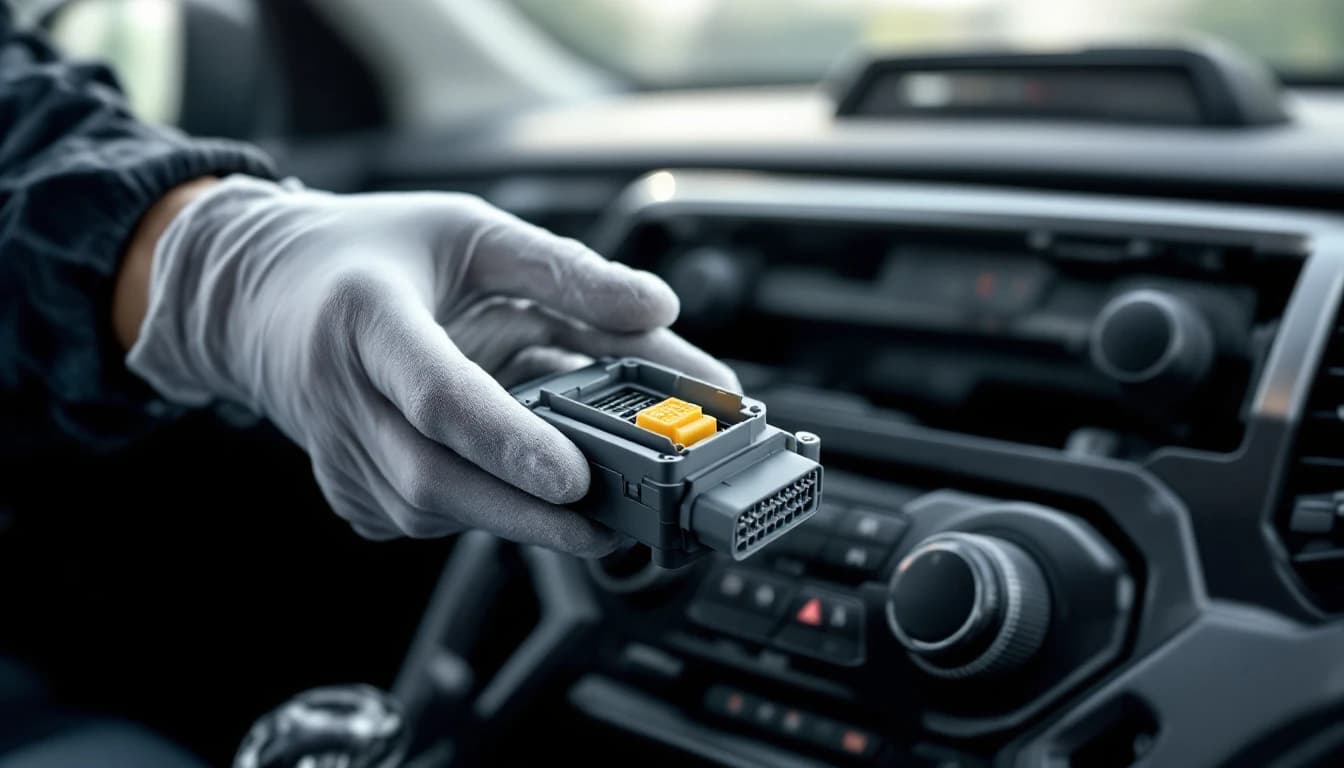
SAM stands for Signal Acquisition and Actuation Module. On many Mercedes-Benz models there are two of them: a front SAM, often in the engine-bay fuse and relay area, and a rear SAM, often low in the luggage area. Together they act as the car's body controllers, switching and monitoring:
- exterior lighting
- wipers and washers
- central locking and some door functions
- fuel pump and similar relays, depending on model
- convenience and comfort circuits
The SAM is not the module that holds your key. That job belongs to the ignition module, called the EIS or EZS. Our Mercedes control unit glossary explains every unit in the chain, and the distinction matters because a SAM fault and a key fault can produce the same "will not start" evening.
Not every Mercedes has a SAM in this form. Newer models use different body architectures, so check the model and year before assuming. The VIN, and our Mercedes chassis code decoder, will tell you which family your car belongs to.
The symptoms, grouped by what they tell you
Lighting and wiper symptoms
- A headlight, tail light or indicator that is dead with a good bulb
- A light that flickers, or one that stays on after the car is locked
- Wipers that run on their own, park in the wrong place or do not run
- Washer function missing
Lock and access symptoms
- Doors that will not lock or unlock from the remote or the button
- The boot that will not open or will not latch
- Central locking that works on some doors only
Power symptoms
- A battery that goes flat overnight or over a weekend
- Starting that works after a jump but fails again days later
- Electrical features that disappear and return
Warning-light symptoms
- Several dash messages at once with no obvious common cause
- A scan showing faults in several body systems together
When the faults are body functions that all happen to be managed by the same unit, the unit is the suspect. When they are spread across engine, brakes and gearbox, the problem is often more basic, such as the battery or a ground.
Why SAM modules fail
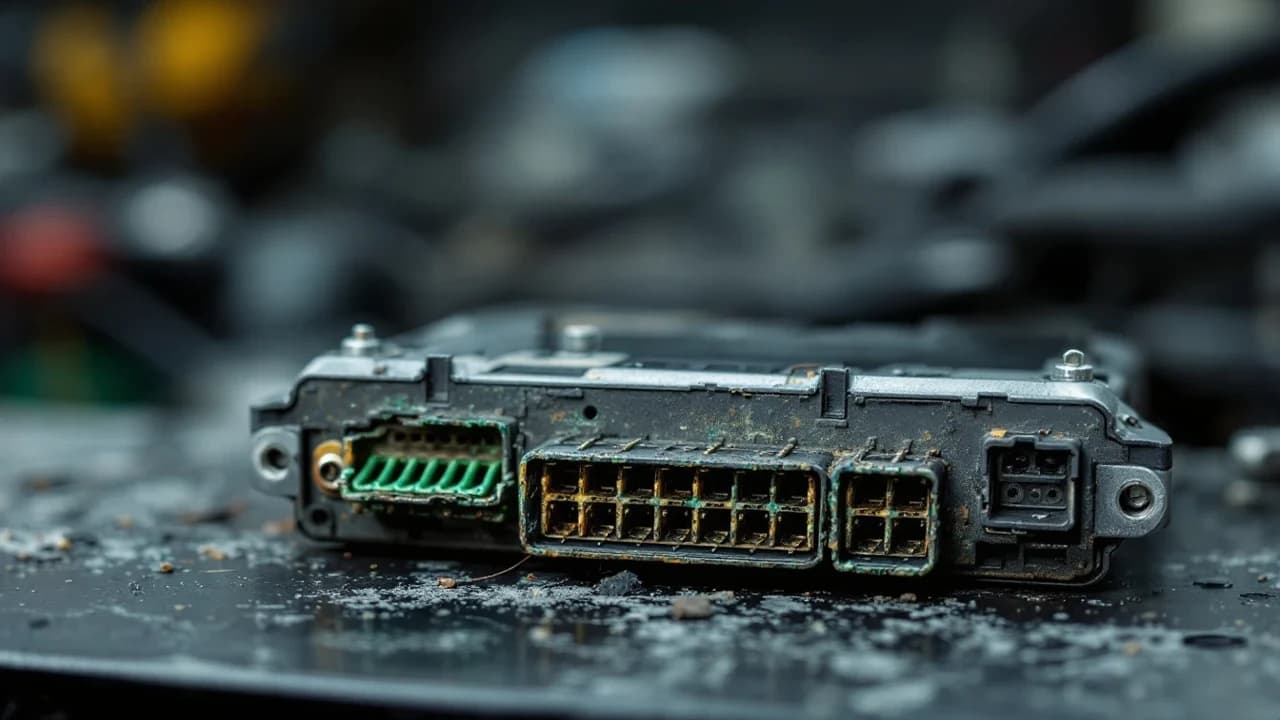
Water. This is the most commonly reported cause on European cars. The rear SAM sits low in the luggage area, so a leaking boot seal, a blocked drain, a faulty tail-light gasket or water that runs down a trim panel can reach it. The front SAM sits in the engine bay, where a blocked scuttle drain can let water pool around it.
Corrosion at the connectors. Damp air and road salt corrode terminals, producing intermittent faults that appear after rain and disappear when it dries.
Voltage events. A jump start in the wrong order, a failing battery or a charging fault can damage electronic controllers.
Age and heat. Parts that switch lights and motors run warm for many years.
Our guide to water damage and electrical faults in European cars covers how moisture finds its way into modules and what the usual damage looks like.
What gets mistaken for a SAM fault
Before accepting "it's the SAM", rule out these six.
- A weak or ageing battery. Low voltage makes many modules behave strangely at once.
- A single failed bulb or a corroded socket. One dead light does not need a module.
- A blown fuse or relay. The cheapest cause of a dead function.
- A bad ground. A corroded earth strap causes scattered symptoms across the car.
- A failed wiper motor or lock actuator. The module may be fine and the mechanical part dead.
- A key problem. A car that unlocks but will not start may have an ignition module or key problem rather than a body-module one. See Mercedes "see operator's manual" start error for that side.
The reason this matters is cost. A module replaced for a fault it did not cause is the most expensive wrong turn on the page, and the body module is the part most often blamed because it controls so many symptoms.
Driveway checks worth ten minutes
- Test the battery. Parts stores check it free. A weak battery explains more electrical oddities than any other part.
- Check the fuses and relays for the failed functions. Your owner's manual identifies them.
- Look for water. Check the boot floor, spare-wheel well and under the carpet. Dampness or a musty smell is a strong clue.
- Clear leaves and debris from the scuttle area under the windscreen where it drains.
- Look at the tail-light seals for gaps or perished rubber.
- Note the pattern. Does it follow rain or a car wash? Does it only appear after sitting overnight?
- Write down every message the dash shows.
Do not remove or open the module yourself. These units are configured to the car, and mishandling one can turn a repairable fault into a replacement.
What the repair involves
1. Diagnostic read. A scan of all control units, $90–$150 locally and usually credited toward the repair. It shows whether several faults share a single source.
2. Find the cause of the fault, not just the fault. If water caused the damage, the leak that let it in has to be found, or a repaired module will fail again. A repair shop that does not ask where the water came from is repairing half the problem.
3. Repair or replace. Depending on the damage, a SAM can be repaired on the bench, or replaced with a new or used unit.
4. Coding. A replacement module has to be configured to the car's VIN and options. That is module programming, and it is the same work described on our module programming page.
5. Test. Lights, wipers, locks and the remote are tested, and the battery draw is checked after the car has rested.
For how body-module work is priced across makes, see BCM programming and repair cost, and for the wider European picture, European module programming cost. Those pages carry the price bands. We do not print a single SAM price here because the correct figure depends on the model, on whether the unit is repairable and on what the read finds, so it is quoted by VIN.
Why a SAM fault is often misdiagnosed as a key problem
The reason this module appears on a locksmith's site is that its failures look like key failures. A car that will not lock, will not unlock, or drains overnight is first blamed on the remote or on the key. A body-module fault can make a perfectly good key appear faulty.
Our guide to body-module symptoms misdiagnosed as a key problem walks through the pattern, and the lesson is simple: when several body functions fail together, test the module chain before buying a key.
When to call a professional
Call a specialist, rather than keep guessing, if:
- more than one body function has failed
- the battery keeps going flat after you replaced it
- you find water in the boot or footwell
- the doors will not lock, so the car cannot be left secure
- a scan shows faults in several body systems
What to have ready when you call
- Year, model and VIN.
- Exactly which functions have failed and when they began.
- Any water in the car, recent repairs or battery replacement.
- Whether the battery has been tested.
- Where the car is. Mobile service comes to it.
Frequently Asked Questions
What are the symptoms of a bad Mercedes SAM module?
Several body functions failing together: lights that flicker or fail, wipers that run on their own or not at all, locks that stop responding, and a battery that drains overnight. The common cause is the shared module.
Is the SAM the same as the ignition module?
No. The SAM is a body controller for lights, wipers and locks. The EIS or EZS holds the key data and authorises the engine. The two can produce similar-looking failures, but they are different parts.
Can water damage a SAM?
Yes, and it is the most commonly reported cause on European cars. The rear unit sits low in the luggage area and the front unit in the engine bay, and both can be reached by leaks or blocked drains.
How much does it cost to diagnose a SAM fault in DFW?
As of November 2026, a diagnostic read is about $90–$150 locally against $185–$295 at a dealer, usually credited toward the repair. The repair itself is quoted by VIN once the fault is known.
Can a SAM drain my battery?
Yes. A module that does not go to sleep keeps drawing current. Test the battery first, since a failing battery causes similar problems.
Does a replacement SAM need programming?
Generally yes. A replacement has to be configured to the car's VIN and options before everything works, and key data may need to be re-paired depending on the job.
Can I just replace the module myself?
We would not. The unit is configured to the car, and fitting one without coding can leave features dead and cause more faults. Have the fault read first.
Will the leak come back after the repair?
It can, if the source of the water is not found and fixed. A good repair includes tracing the leak.
Get the right fault diagnosed
A Mercedes with lights, wipers and locks all misbehaving is rarely four separate faults. Not Your Basic Locksmith is licensed by the Texas Department of Public Safety Private Security Program and has specialised in European key and module work since 2012 — Arlington shop or mobile across Dallas–Fort Worth. Call (682) 344-1957 with your year, model, VIN and the list of symptoms.