BMW FEM and BDC Module Failure
A failing FEM or BDC does not look like one fault. It looks like five unrelated ones arriving in the same week: the remote stops locking the doors, a headlight stays on, the wipers do something odd, the start button lights the dash but nothing follows, and a scan tool that worked last month cannot connect. That scatter is the signature. One module runs all of those functions, so when it struggles they fail together.
As of October 2026, sorting out which of those cars has a genuinely failed module and which has a flat battery, a wet footwell or a bad key starts with a diagnostic read at $90–$150 in Dallas–Fort Worth, against $185–$295 at a dealer. Where the outcome is a key rather than a module, an F-series or G-series spare runs $450–$750 and an all-keys-lost job $750–$1,100. Module recovery or replacement is quoted from the VIN once the read shows what state the module is in — it varies too much by car to print one honest number.
This page is the diagnosis: what these modules do, how they fail, what imitates them, and what to check before you pay anyone.
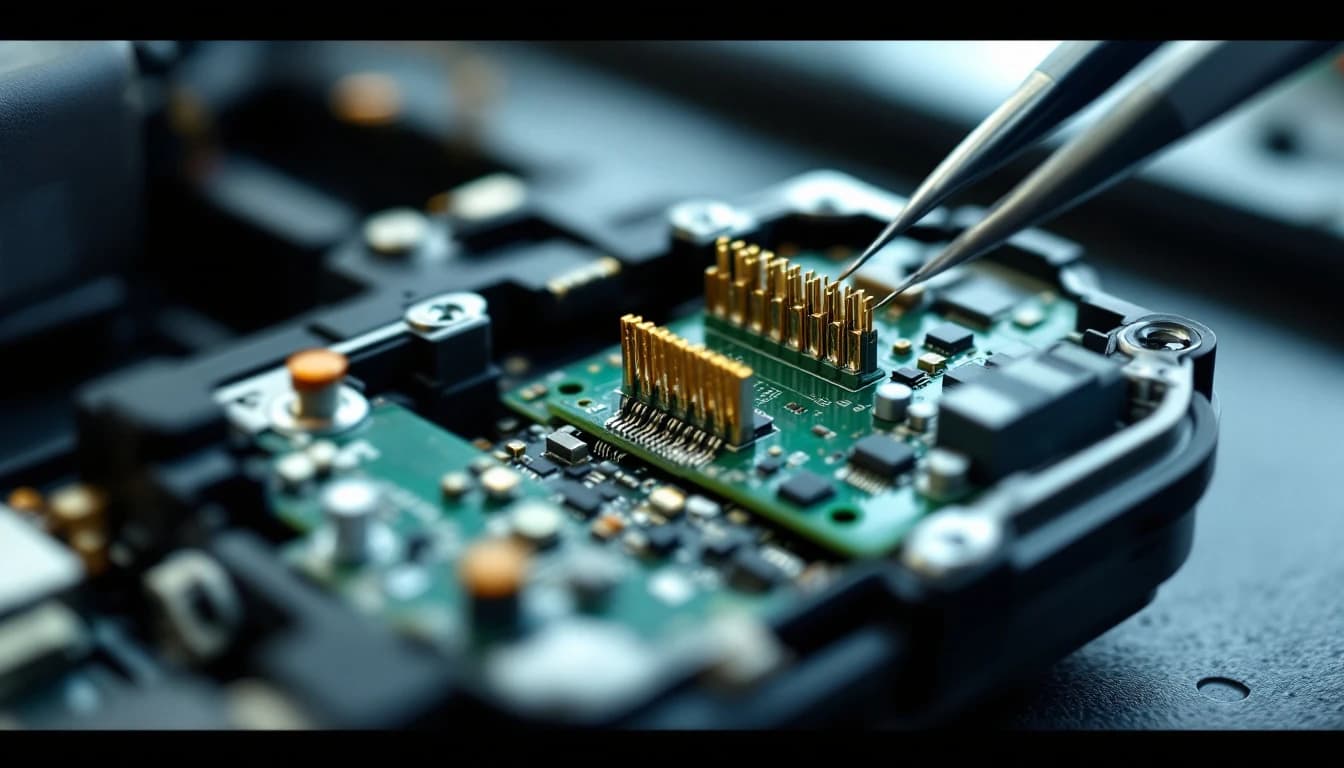
What FEM and BDC actually are
Through the E-series years, BMW split body and security functions across several boxes. A footwell module ran the lights and windows. A junction box ran power distribution. The CAS module ran the keys, the start button and the immobilizer.
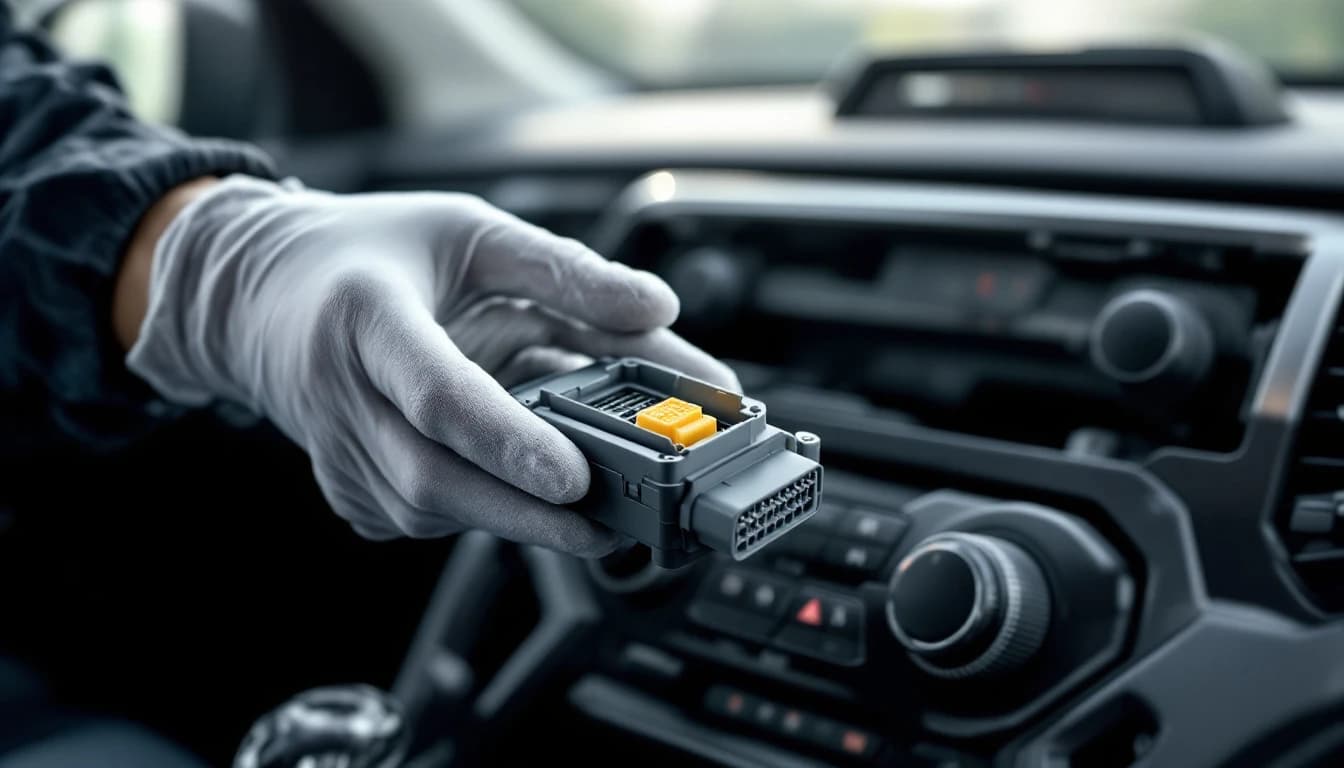
From the F20 1 Series and F30 3 Series onward, BMW folded most of that into one unit: the front electronic module, FEM. The larger and later cars use its successor, the body domain controller, BDC. The two differ in detail, but for an owner they are the same idea — one controller that handles:
- central locking and the remote
- Comfort Access and key recognition
- terminal control: what happens when you press the start button
- the immobilizer, and the release it sends to the engine computer
- exterior lighting
- wipers and washers
- front window and mirror functions
- the gateway that lets the car's networks, and a diagnostic tool, talk to each other
That last line explains the strangest symptom on this page. When the module that carries the gateway is down, a scan tool plugged into the diagnostic port may find nothing to talk to. A car that "will not communicate" is not necessarily a car with a dozen dead modules. It can be a car with one.
Which BMWs have which module
The letters matter, because the fix differs by generation and because a surprising number of F-series cars do not have a FEM at all.
| Module | Typical chassis | Approximate years | What an owner should know |
|---|---|---|---|
| CAS4 / CAS4+ | F10 5 Series, F01 7 Series, F25 X3, F26 X4 | 2010–2017 | F-series cars, but still a CAS-family security module — not FEM |
| FEM | F20/F21 1 Series, F22/F23 2 Series, F30/F31/F34 3 Series, F32/F33/F36 4 Series | 2012–2019 | The classic FEM cars; body and security functions in one unit |
| BDC | F15 X5, F16 X6, F45/F46 2 Series tourers, F48 X1, F-series MINI | 2014–2019 | Successor to FEM, same role |
| BDC2 and later | G20 3 Series, G30 5 Series, G01 X3, G05 X5 and newer | 2017–present | Newer architecture; some work is gated by model year |
The symptoms, grouped by what they tell you
Access and start symptoms
- The remote will not lock or unlock, with a fresh fob battery
- Comfort Access handles do nothing
- The start button wakes the dash but the engine never cranks
- "Key not detected" with a key that worked yesterday
- Every key behaves the same way
Body-function symptoms
- A headlight, tail light or indicator that stays on or will not come on, with a good bulb
- Wipers that park in the wrong place, run on their own, or do not run
- Front windows or mirrors that stop responding
- Interior lights that stay on and drain the battery
Network symptoms
- A long list of communication faults stored across unrelated modules
- A diagnostic tool that cannot identify the car or drops the connection
- Warning messages for systems that are physically fine
Any one of those alone is usually something small. Two or three from different groups at the same time is what points at the module, because the only thing a headlight, a door lock and a diagnostic connection have in common on these cars is the box that runs them.
What causes these modules to fail
Voltage events
The most common trigger. A battery that went completely flat, a jump start with the leads connected in the wrong order or to the wrong point, a charger left on a boost setting, or an alternator fault that let system voltage run high. The module either suffers component damage or, more often, has its stored data corrupted mid-write.
Water
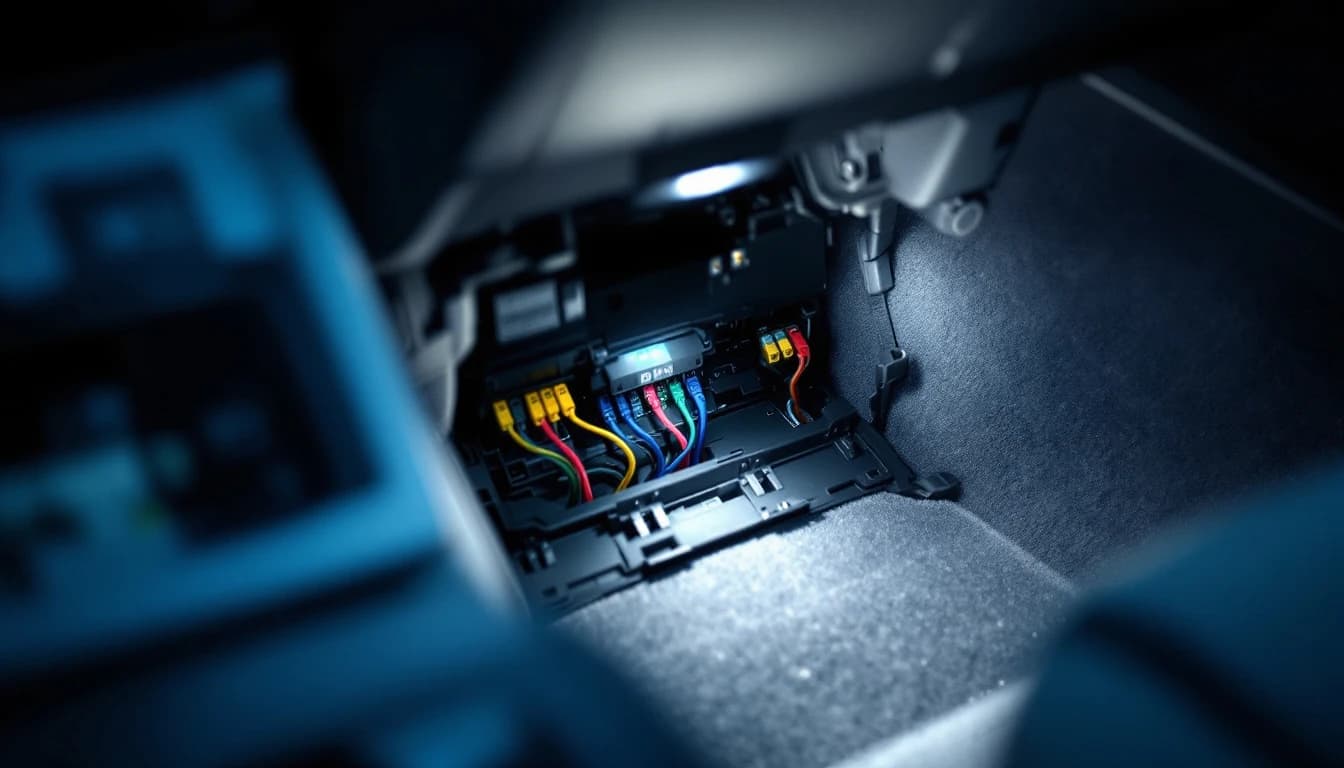
The module sits low in the front footwell behind the side trim on most of these cars. A blocked drain, a leaking windscreen seal or a sunroof drain that has come adrift lets water run down exactly where it lives. Corrosion at the connectors produces intermittent, weather-dependent faults long before the module stops altogether. A damp carpet on that side is a finding, not a coincidence.
An interrupted programming session
Software updates and key programming both write to the module. If the car's battery sags during an update, or a key-programming attempt is abandoned partway, the module can be left with incomplete software or with its data in a half-prepared state. The car arrives on a flatbed with a history of "it was fine until someone tried to program it." That situation is recoverable far more often than owners are told, and it has its own page: failed key programming recovery.
Overloaded or shorted outputs
These modules protect themselves. A shorted lamp circuit, an aftermarket LED conversion, trailer wiring spliced into the tail lights, or a water-filled lamp housing can cause the module to shut that output down. After enough repeats, it leaves the output switched off. The lamp is fine, the bulb is fine, the module is healthy — and the light will not work until the cause is fixed and the output is released again. This is the single most common "failed FEM" that is not a failed FEM.
Age and heat
Less dramatic, but real on higher-mileage cars: solder joints and relays on the board wear, and a function becomes intermittent before it fails.
Six things that get mistaken for a failed module
Check these before accepting a module diagnosis from anyone, including us.
- The battery. These cars are intolerant of low voltage, and a tired battery produces key, start and communication faults that look exactly like module failure. A battery replaced without being registered to the car can cause its own trouble.
- A fob battery or a damaged key. One key failing while another works is a key problem. See the driveway checks below.
- A shorted output, as above. One dead lamp with everything else normal is almost never the module.
- A blown supply fuse. The module has more than one power feed. Losing one takes out a group of functions and leaves the rest working.
- The brake-light switch or the start button itself. No brake signal, no start — and the dash still lights up.
- A security disagreement rather than a failure. After battery or engine-computer work, the module and the engine computer can lose their agreement about each other. Every key is rejected, the module is perfectly healthy, and the fix is a pairing rather than a part. That is the "Drive-Away Protection Active" case, covered in BMW Drive-Away Protection Active.
Driveway checks before you call
- Try every key you own. If one starts the car, the car is fine.
- Use the emergency start position. Hold the fob against the key symbol marked on the steering column and press start. This reads the key directly and takes the fob battery and the radio side out of the question.
- Measure or charge the battery. If the dash dims hard when you press start, deal with the battery before drawing any conclusion.
- List everything that is wrong. Lights, locks, wipers, windows, start, warning messages. A written list of what works and what does not is the most useful thing you can hand a technician.
- Feel the front carpet on both sides. Damp is a diagnosis in itself.
- Think about what changed. A battery swap, a jump start, a software update, an accessory fitted, a key programmed elsewhere, heavy rain. Faults on these cars rarely appear from nowhere.
If nothing works and the car cannot be woken at all, stop pressing the button. Repeated start attempts on a car with a low battery or a half-written module drain what is left and can make a recoverable module harder to recover.
From symptom to likely cause
| What you see | Most likely cause | What it typically takes |
|---|---|---|
| One key dead, another works | That key | Fob battery, or a key job |
| Works from the emergency position only | Weak fob battery | A coin cell |
| One lamp dead, everything else normal | Shut-down output or wiring | Fix the cause, release the output |
| Group of functions dead, others fine | Supply fuse or connector | Electrical repair, no module |
| Everything flaky, battery old or recently flat | Low voltage | Battery, then re-check |
| Every key rejected right after battery or engine-computer work | Module and engine computer out of agreement | Pairing — quoted after the read |
| Locks, lights and start failing together; damp footwell | Water in the module | Module recovery or replacement — quoted by VIN |
| Dead after an update or key-programming attempt | Interrupted write | Data recovery — quoted by VIN |
| No communication with the car at all | Module or its power supply | Diagnosis first |
What a real fix involves
Once the read confirms the module itself, there are three routes, in ascending order of cost.
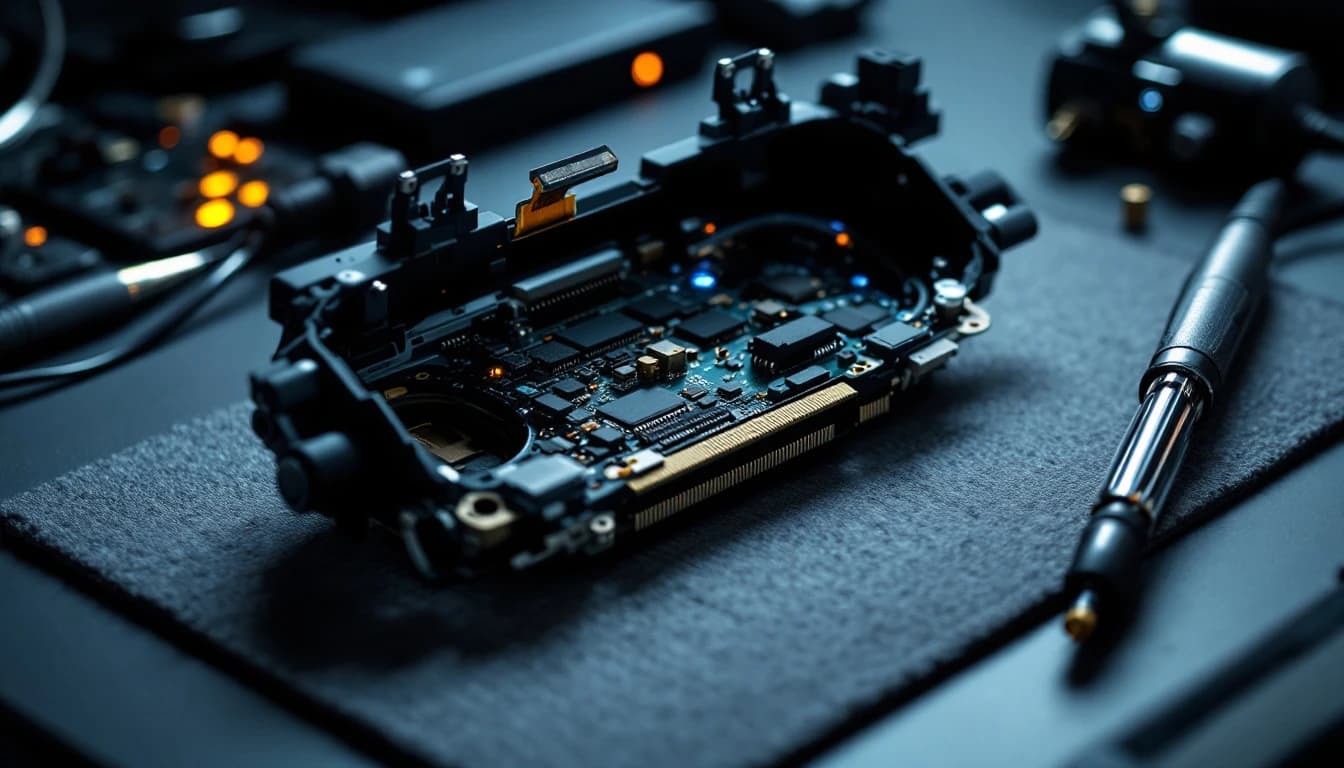
Recover the module you have. If the hardware is sound and the data or software is damaged, the module comes out, goes on the bench, and has its memory read, repaired and written back. Because the car's own data goes back into the car's own module, every key you already own keeps working. This is the outcome we aim for first.
Repair the board. Corroded connectors, a failed relay or a damaged driver can sometimes be repaired at component level, followed by the same data check. Not every water-damaged board is worth saving, and that judgement is made on the bench with the board in hand.
Replace the module. When the unit is beyond repair, a replacement has to be given this car's identity: its coding, its key data, and the security value it shares with the engine computer. A new module is programmed and coded to the car. A used one carries another car's identity, and the dependable way to use one is to transfer your original module's data into it — which only works if the original can still be read. This is why we ask you never to throw the old module away, however dead it appears.
What does not work is fitting a used module as supplied. The car will not start, the keys will not be recognised, and the mileage and equipment data will be wrong.
What it costs in Dallas–Fort Worth
Prices as of October 2026:
- Diagnostic read of the module and the fault chain: $90–$150, against $185–$295 at a dealer, and usually credited when you book the repair.
- Spare key on an F-series or G-series car, working key in hand: $450–$750, against a typical dealer $1,200–$2,000.
- All-keys-lost on an F-series or G-series car: $750–$1,100, against $1,200–$2,000 plus a tow.
- Module data recovery, board repair or replacement: quoted from the VIN after the read. The chassis, the module variant and whether the original data is readable move the figure too far for a single band to be honest.
- Flatbed to a dealer, if you go that route: $150–$300, avoided entirely by mobile service.
The full BMW module price sheet — footwell modules, engine computers and keys by generation — is in BMW module repair cost, and key pricing by security generation is in BMW spare key vs all-keys-lost cost.
Why the dealer route costs more
A franchise workshop does not recover or repair these modules. It replaces them, at list price, programs the new unit through the factory system, and supplies new keys if the old ones cannot be carried across. Each step is legitimate. The total is high because a repairable part was treated as a consumable and because a car that will not start arrived on a truck.
The dealer is still the right call in two cases: a car under a warranty that covers the module, and certain recent G-series builds where the pairing currently requires the factory's online access. We will tell you on the phone if either applies. For the wider question of which jobs can leave the dealer network, see which car modules need the dealer and which do not.
Related faults worth ruling out
Three neighbouring problems share symptoms with a failing module and are cheaper to fix:
- A car that will not start after the battery was changed: European car won't start after a battery change
- A battery that is flat every morning because a module is not going to sleep: battery dead overnight after key or module work
- Water damage across several modules at once: European module water damage and electrical faults
And if you are deciding who should do the work at all, our guide to module programming near you sets out what to ask.
Frequently Asked Questions
What are the symptoms of a bad BMW FEM module?
Several unrelated functions failing together: remote locking, key recognition and starting, exterior lights, wipers, front windows, and often a diagnostic tool that cannot communicate with the car. One symptom alone is usually something smaller. A cluster across different systems is what points at the module.
What is the difference between FEM and BDC?
They do the same job. FEM, the front electronic module, is fitted to the F20 and F30 families and their relatives. BDC, the body domain controller, is its successor on cars such as the F15 X5 and on G-series models. Both combine body functions, key recognition, the immobilizer and the network gateway in one unit.
Does my F10 5 Series have a FEM?
No. The F10, along with the F01 7 Series and F25 X3, uses a CAS4 security module with separate body modules. It is an F-series car without a FEM, which changes both the diagnosis and the procedure.
Can a jump start damage a BMW FEM or BDC?
Yes. A badly executed jump start, a flat battery, or unstable charging voltage can damage the module or corrupt its stored data. Symptoms that began immediately after battery work are the single most useful clue in the diagnosis.
Can a FEM or BDC be repaired, or does it have to be replaced?
Often it can be recovered. If the hardware is sound and the data or software is damaged, the module's memory is repaired on the bench and the original keys keep working. Replacement is for units with unrecoverable physical damage.
Can I fit a used FEM or BDC from another car?
Not as supplied. A used module carries another car's coding, keys and security value. It only works once your original module's data has been transferred into it, which is why the old module should never be discarded.
How much does it cost to fix in DFW?
As of October 2026 the diagnostic read is $90–$150. If the result is a key job, a spare is $450–$750 and all-keys-lost $750–$1,100 on these cars. Module recovery or replacement is quoted by VIN after the read, because the figure depends on the chassis and the state of the data.
Does the car have to be towed?
Usually not. Diagnosis is done where the car sits. If the module needs bench work, it is removed on site and returned, so the car stays in your driveway rather than on a dealer's lot.
Get it read before you buy a part
A FEM or BDC fault is one of the most expensive things to guess at on a modern BMW and one of the most rewarding to diagnose properly, because so many of them turn out to be a battery, a fuse, a wet connector or a pairing. Not Your Basic Locksmith has specialised in European key and module work since 2012 and is licensed by the Texas Department of Public Safety Private Security Program. Arlington bench or mobile across Dallas–Fort Worth — call (682) 344-1957 with your model, year and a list of everything the car is and is not doing.