The Key Will Not Come Out
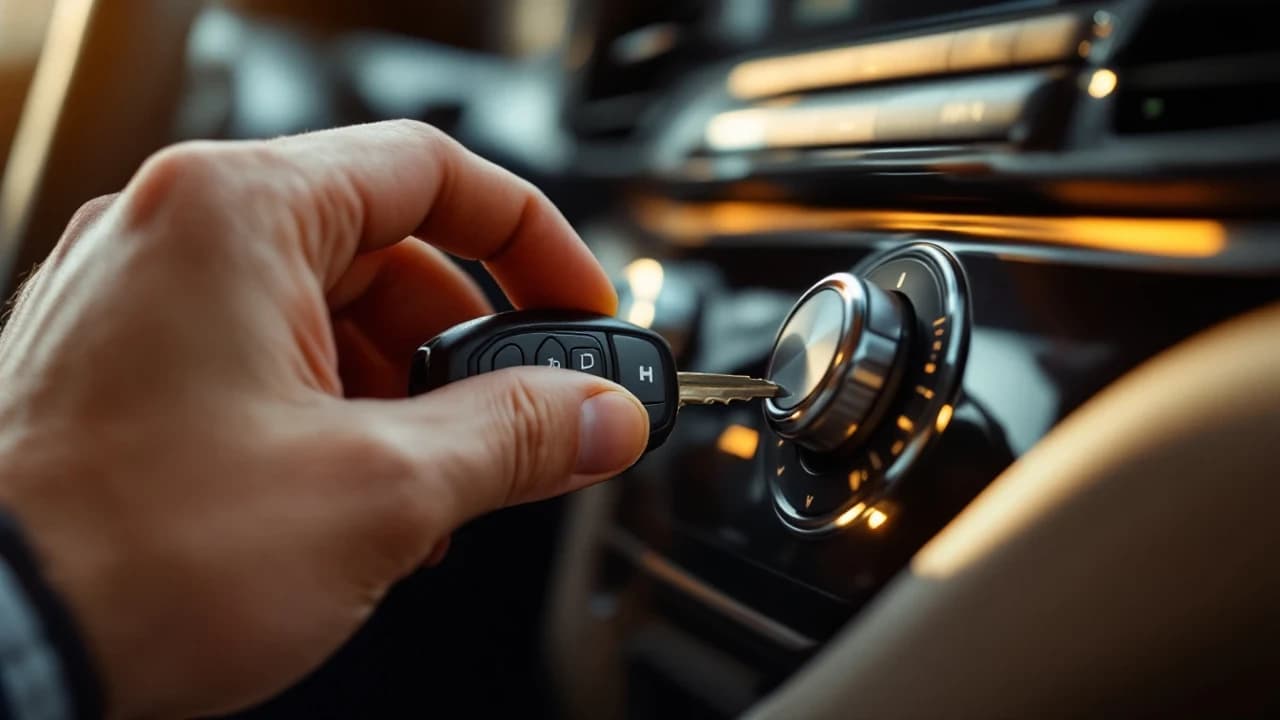
You switch the car off, reach for the key, and it does not move. It is not that the key will not turn — that is a different fault, and we cover it in our key won't turn diagnostic ladder. This is the opposite problem: the car is off, the key is in, and it refuses to leave.
On an older mechanical car, a stuck key usually means a worn key or a tired lock cylinder. On a European car built in the last twenty years it is more often a deliberate refusal. Many of these cars hold the key in on purpose until a list of conditions is met — the gear selector is in Park, the electrical system is awake, the steering lock has settled — and a missing condition looks exactly like a mechanical jam.
That is good news for your wallet. The first four causes below cost nothing to check. This guide takes them in the order we would, tells you what not to force, and prices the repairs in Dallas–Fort Worth as of October 2026 for the cases that do need a technician.
As of October 2026. Costs are planning ranges for the DFW service area, not quotes.
Why European cars hold the key on purpose
Many European cars with an automatic transmission use a key interlock: the key cannot be released until the selector confirms Park. Others hold the key while the ignition circuit is still powered. On cars with an electronic ignition module, release of the key can depend on that module agreeing the car is in a safe, shut-down state. And on cars with a motor-driven steering lock, the column pin and the key release can interact.
None of this is a fault. It is design. The fault is when a sensor, a switch, a low battery or a worn part makes the car believe a condition is unmet when it is met. The ladder below separates "design waiting for a condition" from "something is actually broken".
The likely causes, in order
1. The selector is not fully in Park
The most common cause by a distance. The lever looks like it is in Park, but the sensor is not reporting it. Move the selector firmly out of Park and back in, with your foot on the brake, then try the key. On a car whose selector position is reported electronically, a slightly worn or dirty switch can leave the car convinced it is in Neutral.
2. A weak car battery
The release mechanism and the module that controls it need power. A battery that can still light the dash may not hold enough charge to release a key. If the car struggled to start, if it sat for a while, or if the battery is five or more years old, this is the first thing to test. A jump or a charge sometimes frees the key immediately.
3. The ignition is not fully off
Some cars keep a circuit powered until a door opens, a timer elapses or the system settles. If the key is released a moment after you open the driver's door, you have the answer. Close the door, wait a minute, and try again.
4. Tension on the steering lock
If the wheels were turned against a kerb when the car was parked, load can sit on the steering lock pin, and that load can keep the key from releasing. Turn the steering wheel gently one way and the other while easing the key out. A little movement relieves the tension. Do not use force.
5. A worn key
A key whose blade or wafers are worn can fail to ride over the lock's internal features, and the key will catch instead of release. Try your spare key. If the spare comes out smoothly and the main key sticks, the main key is worn. This is a cheap fix: a new key cut properly, and the existing lock often continues to work.
6. A worn or damaged lock cylinder
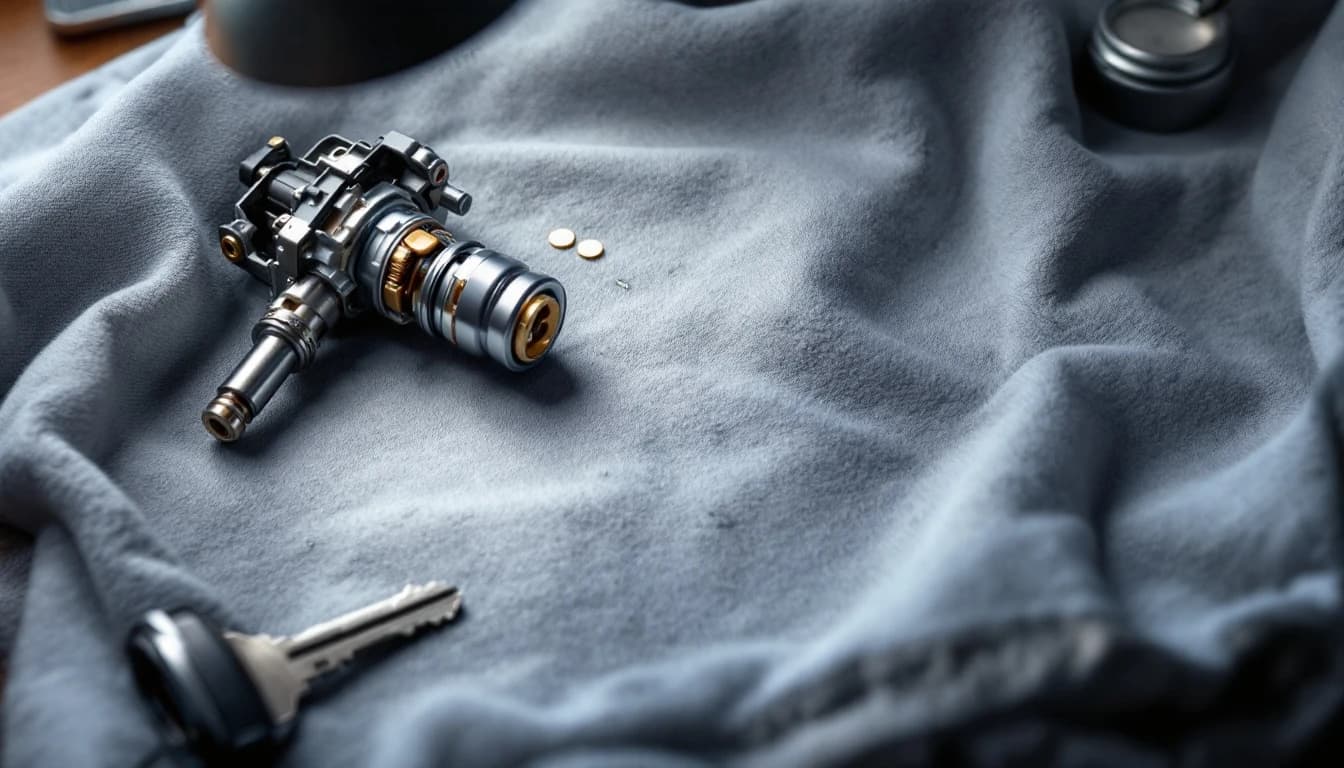
If every key sticks, the lock cylinder is the suspect. Worn wafers, broken springs and debris all stop a key from releasing. This is a mechanical repair, and it usually shows itself over months — a stiff, notchy feel on insertion and removal, a need to wiggle the key — before it fails outright.
7. A fault in the electronic ignition or steering lock
On Mercedes, BMW and Audi cars with an electronic ignition module or a motor-driven steering lock, a failed actuator or a data fault can hold the key in place. The tell is that the dash behaves oddly too: a steering-lock message, a security light, an intermittent start. This is not a lock cylinder repair. The part is electronic, and the diagnosis needs a read. Our guide to why a European ignition problem is usually a module explains the four different things owners call "the ignition".
A safe driveway checklist
- Check Park. Foot on the brake, selector out of Park and firmly back in, then try the key.
- Check the battery. Are the dash lights dim? Did the car crank slowly? Has it sat? If you have a jump pack or a charger, use it.
- Open and close the driver's door, wait about a minute, and try again.
- Relieve steering tension. Move the steering wheel gently from side to side while easing the key.
- Try the spare key. If you have one, a smooth release with the spare isolates a worn main key.
- Look at the dash. Write down any message — "steering lock", "key not detected", a security light. The wording is the single most useful clue you can give a technician.
- Stop there.
What not to force
This section matters more than the rest.
Do not pull hard on the key. Keys on many European cars are a plastic-and-metal assembly that contains electronics. Pulling hard can snap the blade inside the lock, which turns a cheap fix into an extraction job, or break the key head and leave a working transponder in your hand and a blade in the lock.
Do not spray lubricant into the ignition. The usual aerosol attracts dust, and on a car with an electronic ignition it can find its way to contacts and sensors that were never meant to be wet. A graphite-based lock lubricant is a different matter, but it is rarely the answer to a key that will not release.
Do not tap the key with a hammer or pry the ignition trim off. You will not free a stuck key that way, and you may damage the steering column electronics.
Do not keep trying with a flat battery. Repeated attempts drain whatever charge is left and make the release less likely, not more.
Do not remove the battery to "reset" the car on a European model without knowing what the car will need afterwards. On several platforms, disconnecting the battery drops module pairings and can leave you with a stuck key and a car that will not start. Our guide to European cars that will not start after a battery change shows what that can look like.
What repair costs in DFW
Planning ranges as of October 2026. They match the pricing used across our other pages.
| Cause found | Mobile (DFW) | What it means |
|---|---|---|
| Selector, battery or door-timing issue | Diagnostic $90–$150, plus battery if needed | Nothing is broken in the ignition; cheapest outcome |
| Worn main key | New key cut and programmed, $300–$600 for a European spare when a working key exists | The lock is fine; the key is the problem |
| Mercedes steering lock motor repair with module re-personalisation | $400–$700 | Dealer route typically $1,500–$2,500 plus tow |
| Mercedes ignition module data repair | $300–$500 | Dealer route typically $800–$1,400 |
| Electronic steering lock faults on other European platforms | Generally $400–$800 | Overlapping symptom, different part |
| Lock cylinder or other ignition parts on a European car | Quoted by VIN after the read | Varies by platform |
| Ignition module replacement with key re-pairing, Mercedes | $1,200–$1,800 | Rare; water or fire damage |
| Flatbed to a dealer | Not needed with mobile service | $150–$300 on the dealer route |
For the steering-lock figures in detail, see Mercedes steering lock repair cost, and for the Mercedes module side, EIS and EZS repair versus replacement cost.
Brand notes
Mercedes-Benz. On the W204 C-Class and several related chassis, the electronic steering lock is the classic culprit, and a stuck key or a key that will not turn is often the first sign. If the wheel is locked as well, the lock is the first suspect. Our Mercedes ESL and EIS specialist guide covers the failure modes by chassis.
BMW. Selector reporting and battery state are the first things to check. A car that starts but will not release the key after a battery event may also be showing a module pairing issue; see BMW Drive-Away Protection Active.
Audi. The electronic column lock on several B8-era models is a known problem area, and a stuck key can be one symptom. Our guide to the Audi steering lock failure on the A4, A5 and Q5 goes through it.
Porsche. Several Cayenne, Panamera and Macan models use an electronic ignition lock and column lock, and faults can show up as a key that will not turn or will not release. See Porsche ignition and steering lock faults.
When to call a professional
- Your spare key sticks as well.
- The steering wheel is locked or a steering-lock message is showing.
- The dash shows a security or key-related message.
- The battery is healthy and the selector is firmly in Park, and the key still will not release.
- The key has already been bent, snapped or force-pulled.
- The fault has been getting worse over weeks.
At that point a diagnostic read tells you in minutes whether you have a worn key, a lock cylinder or an electronic part, and it prevents the most expensive mistake in this territory: replacing a lock cylinder when the fault is a module.
Frequently Asked Questions
Why won't my key come out of the ignition?
On a European car it is usually one of four things: the selector is not fully in Park, the battery is weak, the steering lock is under tension, or the key is worn. Less often it is a worn lock cylinder or a fault in the electronic ignition or steering lock.
Is a stuck key the same as a key that won't turn?
No. A key that will not turn is a separate fault, covered in our key-won't-turn ladder. A stuck key is a key that will not release after the car is off.
Can a weak battery stop the key coming out?
Yes. The release mechanism and the module that controls it need power. A battery that can light the dash may not release the key, and a charge or jump often frees it.
What should I try first?
Firmly cycle the selector out of Park and back in with your foot on the brake, then try the key. Then check the battery, open and close the driver's door, and gently relieve steering wheel tension.
Should I pull harder or spray lubricant?
Neither. Pulling can snap the blade or the key head and turn a cheap fix into an extraction job, and the wrong spray can reach electronics in the ignition.
How much does it cost to fix in DFW?
As of October 2026, from a diagnostic read of $90–$150, to roughly $300–$600 for a European key when the main key is worn, to roughly $400–$700 for a Mercedes steering lock repair. Lock cylinder work is quoted by VIN. Planning ranges, not quotes.
Does the car need to go to the dealer?
Usually not. Diagnosis, key work and steering lock repair happen where the car is parked, which avoids a $150–$300 flatbed. Only board-level module repair travels to a bench.
What should I tell you when I call?
Year, make, model and VIN, whether the spare key sticks too, the exact dash message, the age of the car battery, and whether the steering wheel is locked.
Get a diagnosis before you force anything
A stuck key is far cheaper to free than to break. Not Your Basic Locksmith is licensed by the Texas Department of Public Safety Private Security Program and has specialised in European key, ignition and module work since 2012 — Arlington shop or mobile across Dallas–Fort Worth. Call (682) 344-1957 with your year, model, VIN and what the dash is showing.