Mercedes EIS/EZS Repair vs Replacement Cost in DFW
As of September 2026, Mercedes EIS/EZS work in Dallas–Fort Worth runs roughly $300–$500 for a data-level repair on a module that is electrically healthy, $400–$700 when the job is really the steering lock plus an EIS re-personalisation, and $1,200–$1,800 for a genuine module replacement with the keys re-paired. Mercedes dealerships in this metro generally quote $800–$1,400 for the light end and $2,500–$4,000 plus a $150–$300 flatbed for the replacement path.
That is a five-fold spread on what customers describe with the same four words: the car will not start. The spread is not negotiation room. It is four different jobs wearing one name, and the point of this page is to tell you which one you are likely buying before anybody touches your steering column.
If you want the wider metro picture across every European brand, our European module programming cost pillar prices FRM, CAS, BCM, KVM and ECU work side by side. This page is the deep dive on the most expensive row in that table.
What the EIS actually is, in one paragraph
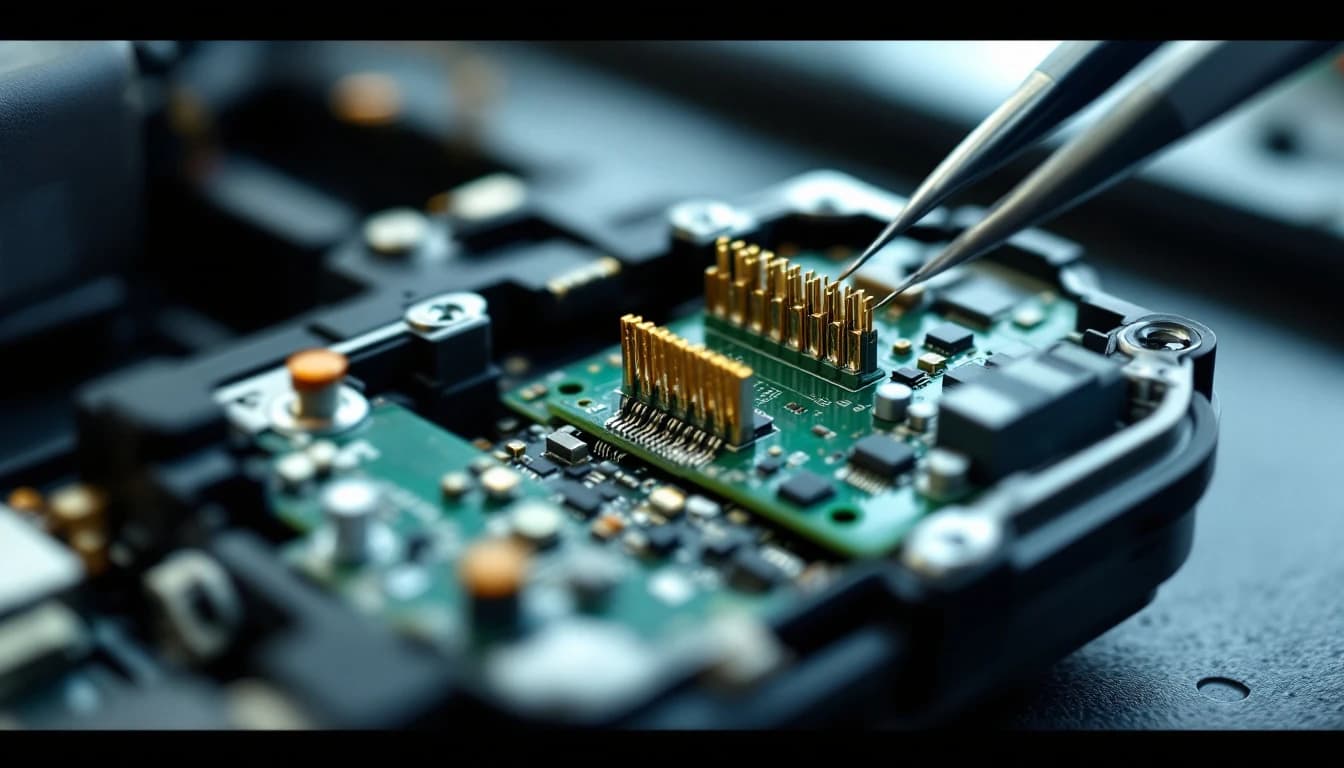
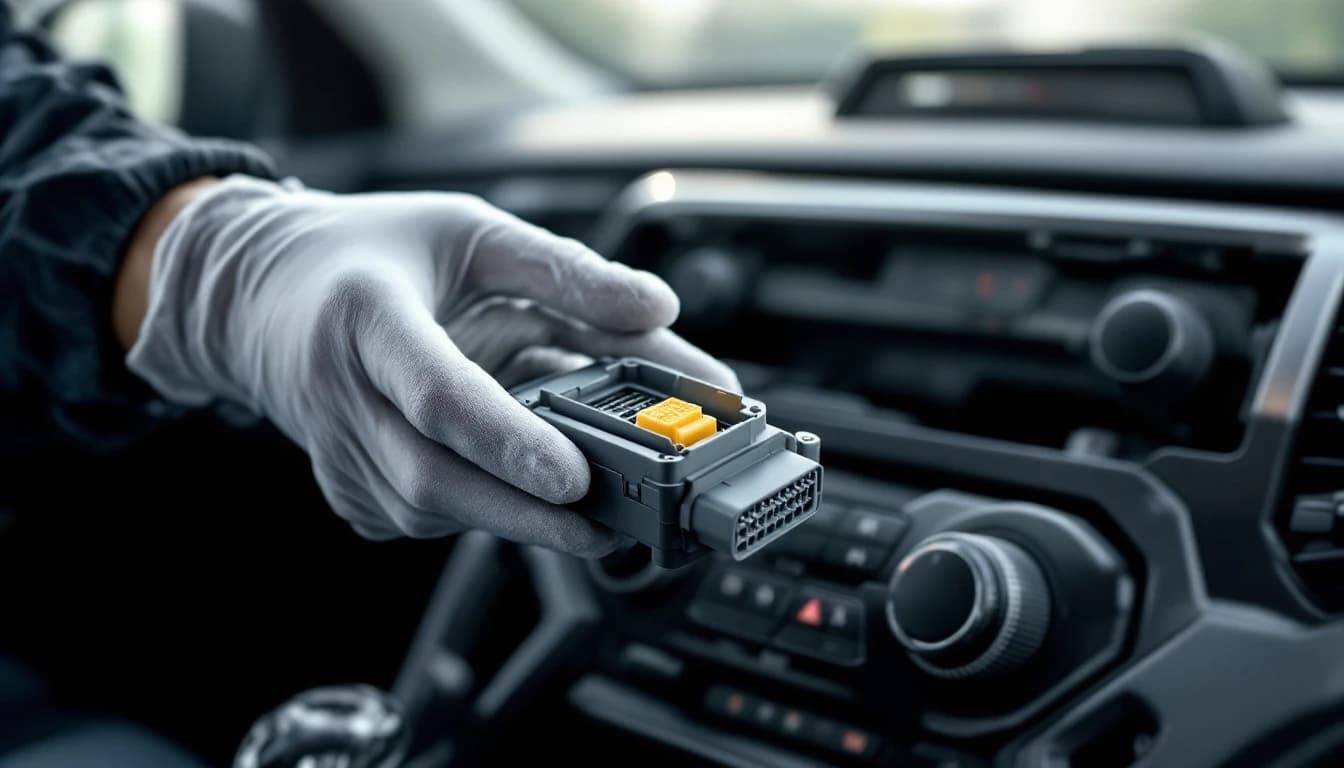
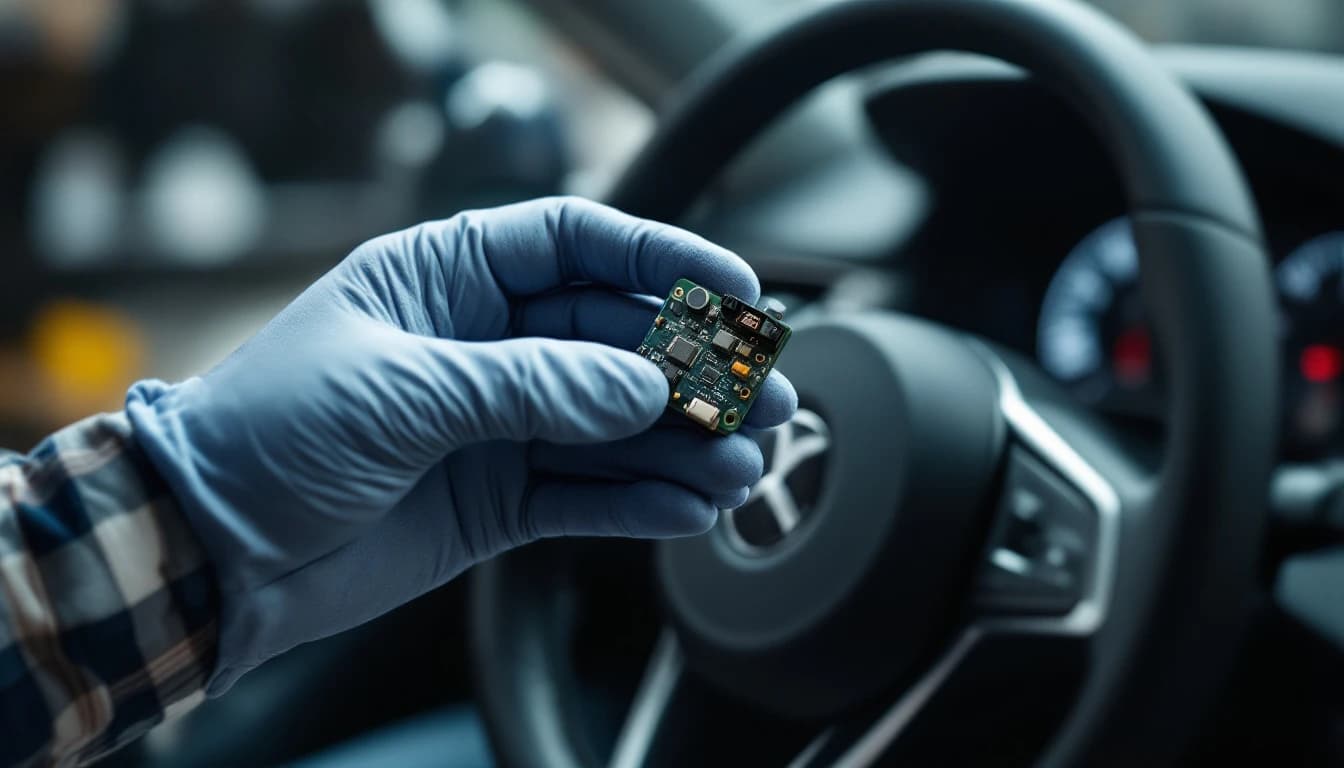
EIS (Electronic Ignition Switch) — badged EZS on German-market documentation — is the module your key talks to. It sits behind the ignition slot or the START/STOP button, holds the vehicle's key table, authenticates the key over an encrypted challenge, releases the electronic steering lock, and only then gives the engine controller permission to run. It is simultaneously the reader, the gatekeeper and the record-keeper. That is why an EIS fault can look like a key fault, a starter fault, a steering fault or an immobilizer fault, depending on which of its four jobs failed.
It is also why a Mercedes no-start is one of the few automotive problems where a locksmith, not a mechanic, is the correct first call. The mechanical parts of the car are usually perfect.
The four EIS jobs and what separates them
1. Data repair. The module's hardware is fine but its stored data has degraded — a corrupted key entry, a failed write from a previous attempt, a steering-lock status flag stuck in the wrong state. The fix happens at data level: the module is read, the fault corrected, the data written back. Nothing is replaced. This is the cheapest genuine repair and the most commonly missed one, because a shop that only replaces modules has no reason to look for it.
2. ESL/ELV work with EIS re-personalisation. The steering lock motor has seized — the classic W204 and W207 failure — and the EIS has to be re-synchronised with the repaired or replaced lock afterwards. The EIS itself is healthy. The bill lands in the middle band because the labour is column disassembly, not electronics. This is the most common job that arrives described as an EIS failure. Our Mercedes ELV/ESL steering lock repair page covers the mechanical side in detail.
3. Cloning or data transfer to a donor. The original module is physically dead — water intrusion, a fried board — but its data is still readable. A donor EIS receives that data so the car sees the module it always had, and the existing keys keep working. When it is possible it is dramatically cheaper than a virgin replacement, because nothing has to be personalised from scratch and no new keys are required.
4. Virgin module replacement plus key re-pairing. Nothing is recoverable. A new module is personalised to the VIN, the security chain is rebuilt, and the keys are written fresh — which in practice means new keys, because the old ones cannot be taught to a module that never knew them. This is the four-figure row, and it is rare. Any shop that quotes it on a car with an intermittent no-start is skipping the diagnosis.
The technical distinction between writing, coding, cloning and adapting is explained more generally in our guide to flash, clone, code and adapt. On a Mercedes that distinction is worth roughly $1,300.
The 2026 DFW price table for Mercedes EIS/EZS work
Ranges reflect mobile pricing in the DFW service area as of September 2026 and match the bands published across our Mercedes coverage. Final pricing depends on chassis, model year, whether a working key survives, and whether the steering lock is involved — these are planning numbers, not quotes. Call (682) 344-1957 with your year, model and symptom for a firm figure before dispatch.
| Mercedes EIS/EZS job | Mobile (DFW) | Typical dealer quote | When this is the job |
|---|---|---|---|
| Diagnostic read, EIS and key table | $90–$150 | $185–$295 | Always first; usually waived if you book the repair |
| EIS data repair (W211 / W212 / W213 and similar) | $300–$500 | $800–$1,400 | Intermittent no-start, Start Error message |
| ESL/ELV motor swap + EIS re-personalisation | $400–$700 | $1,500–$2,500 + tow | Steering lock seized, dash reads Steering Lock Defective |
| Fob no longer recognised, car still starts | $200–$450 | $400–$800 | Radio side of the key failed, transponder intact |
| Spare key written to a healthy EIS (FBS3) | $300–$600 | $700–$1,400 | Working original in hand |
| Spare key written to a healthy EIS (FBS4) | $400–$650 | $800–$1,600 | Working original in hand, newer platform |
| All-keys-lost, EIS healthy (FBS3) | $400–$800 | $900–$1,800 + tow | Last key gone, module fine |
| EIS clone / data transfer to donor module | $700–$1,200 | Not offered — dealer replaces | Board dead, data readable, keys survive |
| EIS module replacement + key re-pairing | $1,200–$1,800 | $2,500–$4,000 + tow | Water or fire damage, data unrecoverable |
| Flatbed, when no key exists and no mobile tech comes | — | $150–$300 | Avoidable entirely with mobile service |
Why the steering lock keeps showing up on an EIS invoice
On W204-generation cars in particular, the electronic steering lock and the EIS are joined at the hip. The EIS commands the lock to release; the lock reports back that it did. When the lock's motor seizes — a wear failure, not an electrical one — the EIS never receives that confirmation, refuses to authorise start, and logs a fault that reads to a scanner like an immobilizer problem.
The customer-visible symptom is almost perfectly ambiguous: key turns, dash lights, no crank, sometimes a Steering Lock Defective message and sometimes nothing at all. Buying a new key for that car accomplishes nothing, which is the most expensive wrong turn available in this category. The general version of that symptom is worked through in our key won't turn in the ignition diagnostic ladder; on a Mercedes, read the ESL branch first.
If the dash has actually displayed Start Error — See Operator's Manual, that specific message has its own path in our Mercedes start error breakdown.
FBS3 versus FBS4: the variable that moves the number most
Mercedes ran two immobilizer generations across the years most DFW owners are driving, and which one your car uses changes both the price and what is possible.
FBS3 covers roughly 2000 through the mid-2010s depending on model. Keys and EIS data can be worked with independently by an equipped specialist. Spares are straightforward, all-keys-lost is a real job but a solvable one, and the module is generally recoverable.
FBS4 arrived with the newer platforms and tightened the security chain considerably. Key writing is gated more heavily, all-keys-lost frequently requires manufacturer-side involvement, and the advice for owners is unambiguous: buy the spare while one key still works. Our FBS3 versus FBS4 spare key guide identifies which one your car is on from the year and model.
The practical consequence for this page: an FBS4 owner staring at a no-start has fewer cheap paths than an FBS3 owner with the identical symptom, and the gap widens on all-keys-lost.
The diagnosis that decides your bill
Any competent shop can separate these four jobs before quoting, and the sequence is not secret:
- Battery and charging health first. Low system voltage produces module and communication faults on Mercedes that vanish entirely once the battery is replaced. A shop that quotes an EIS before checking this is skipping the cheapest possible answer.
- Read the EIS and the key table. A module that responds and reports a complete key table is not a dead module. That single read separates the $300–$500 outcome from the $1,200–$1,800 one.
- Check the steering-lock status flag. If the ESL never confirmed release, you are in the middle band and the electronics are fine.
- Test the key's transponder independently of its radio side. A dead remote with a live transponder is a $200–$450 repair, not a key replacement.
- Only then price hardware. Replacement is the conclusion of a diagnosis, not the opening bid.
Anybody quoting a four-figure module over the phone from a symptom description alone has not performed steps one through four. That is the tell.
What we keep seeing, September 2026. The single most common way this job arrives is not as an EIS complaint at all. It arrives as an intermittent no-start — fine in the morning, refuses in the afternoon, fine again the next day — and the owner has usually already bought a key. On a Mercedes that pattern points at step one or step three far more often than at the module, which is why our intermittent no-start diagnostic ladder walks battery and steering lock before it ever mentions the EIS. The second most common arrival is a car that will not start with a key that turns perfectly, where the owner has been told by a general shop that the "ignition" needs replacing — on these cars the ignition is a module, and we wrote a whole page on why that quote is usually wrong.
Mobile versus dealer on this specific job
The gap here is unusually wide, and for structural reasons rather than pure margin.
The tow is not optional on the dealer path. A Mercedes that will not start also will not drive to Grapevine or Plano. That is $150–$300 before any work begins — the most avoidable money in the category, and the reason so many of these jobs get quoted in office parking lots and apartment garages. The same math on the key side is worked through in our cheapest car key replacement versus the dealership breakdown.
Repair is not on the dealer menu. Data repair and cloning are not dealer services. A franchise department diagnoses to the module and replaces the module. That is not incompetence; it is the warranty-backed process they are structured to deliver. It does mean the two cheapest outcomes in the table above are simply unavailable there.
When the dealer is genuinely the right call. If the vehicle is inside a factory warranty covering the work, if the fault falls under an open recall or service bulletin, or if the platform is new enough that its security gateway has no independent access path, go to the dealer. Newer gateway-equipped vehicles are covered in our note on security gateway module key programming from 2018 onward. An honest shop says that on the phone rather than after arriving.
For the make-by-make view of where Mercedes sits against BMW, Audi and Land Rover, see our Mercedes key replacement cost breakdown and the metro-wide European car key replacement cost index.
What to have ready when you call
Four things let any equipped shop quote firmly:
- Year, model and chassis — a W204 C300 and a W212 E350 with identical symptoms are different jobs.
- The exact dash message, word for word, if there is one. Start Error and Steering Lock Defective point in different directions.
- Whether a key still starts the car, even intermittently. Intermittent is good news; it means the module is alive.
- Where the vehicle sits — driveway, garage, workplace lot — because on-site is the default, not an upcharge.
Response inside Arlington city limits typically runs 12–22 minutes, Dallas 25–45. On-site time for an EIS data repair is usually 60–90 minutes; a steering-lock job with re-personalisation runs longer because the column has to come apart.
If you are still choosing a shop rather than diagnosing a car, our guide to BCM programming near me and how to vet a module shop covers the three questions that separate a real local specialist from a national dispatch broker — starting with the licence. Locksmith companies in Texas are regulated by the Texas Department of Public Safety Private Security Program under Occupations Code Chapter 1702, not by TDLR. Not Your Basic Locksmith operates under Texas DPS certificate #B28531501.
Frequently Asked Questions
How much does Mercedes EIS/EZS repair cost in DFW?
As of September 2026, roughly $300–$500 for a data-level repair on a healthy module, $400–$700 when the real fault is the steering lock and the EIS only needs re-personalising, $700–$1,200 for a clone onto a donor module, and $1,200–$1,800 for a full replacement with keys re-paired. Dealer quotes for the same work generally run $800–$1,400 at the light end and $2,500–$4,000 plus a $150–$300 tow for replacement.
Can a Mercedes EIS be repaired instead of replaced?
Frequently, yes. When the board is electrically healthy and only the stored data is at fault, the module is read, corrected and written back with no hardware change. When the board is dead but the data is still readable, a donor module can receive that data so the car sees the same module and the existing keys keep working. Replacement is the last option, not the first.
Why does my Mercedes say Start Error but the key still unlocks the doors?
Because the remote and the transponder are two separate systems inside one key. The radio side unlocking your doors proves nothing about the encrypted challenge the EIS runs at start. That combination usually points at the EIS, the steering lock, or a degraded key entry in the module's key table — not at a dead fob battery.
Is a no-start on a W204 C-Class usually the EIS or the steering lock?
On W204-generation cars the steering lock is the more common culprit by a wide margin. The ELV motor seizes, never confirms release to the EIS, and the car refuses to crank, which presents almost identically to an immobilizer rejection. It is a separate repair in the $400–$700 range, and buying a new key does nothing for it.
Do I need new keys if the EIS is replaced?
If the module is replaced virgin, yes — the old keys cannot be taught to a module that never knew them, so new keys are part of that job and that price. If the module is cloned onto a donor, no: the data carries over and the existing keys continue to work, which is a large part of why cloning is cheaper.
Can this be done at my house or workplace?
Most of it, yes. Diagnosis, data repair, key writing and re-personalisation happen at the vehicle. A steering-lock job requires column disassembly, which is still done on site in most cases but takes longer. The advantage is structural rather than cosmetic: a car with no working key cannot be driven to a dealership, so mobile service removes a $150–$300 tow from the bill entirely.
How do I know whether my Mercedes is FBS3 or FBS4?
Model year and platform decide it, and the split falls in different years for different models rather than on one clean date. Our FBS3 versus FBS4 guide identifies it from your year and model. The practical difference: FBS4 vehicles have fewer independent paths on all-keys-lost, which is the strongest argument for buying the spare while an original key still works.
Is the dealer ever the better choice for EIS work?
Yes, in three situations: the work is covered by an active factory warranty, the fault falls under an open recall or technical service bulletin, or the vehicle is new enough that its security gateway has no independent access path. Outside those, an equipped independent performs the identical work — and offers two repair options a dealer does not offer at all.