MINI Cooper Key and Immobilizer Decoder
MINI owners get quoted numbers that make no sense next to each other. One owner adds a spare to an R56 for a couple of hundred dollars; another walks into a dealership with an F56 and is quoted four figures. Both quotes can be correct, because "MINI key" describes three genuinely different security architectures built between 2001 and 2026, and the one under your dashboard decides everything.
The useful thing to know is that a MINI is a BMW underneath, and has been since the relaunch. The immobilizer generations track BMW's, not MINI's — which means the price bands that apply to your car are the bands for the BMW system inside it, not for the badge on the bonnet. This page decodes which system you have from the body code and model year, and sets out what each one means when you need a key.
Spare while you still have a working key is the cheap version on every single generation below. That is the whole article in one sentence. Call (682) 344-1957.
Find your body code
Every MINI carries a factory body code — R-something for the first two generations, F-something for the current one. It is the single most useful fact about your car for this purpose, more useful than the trim name, because "Cooper S" spans twenty-five years and three security systems.
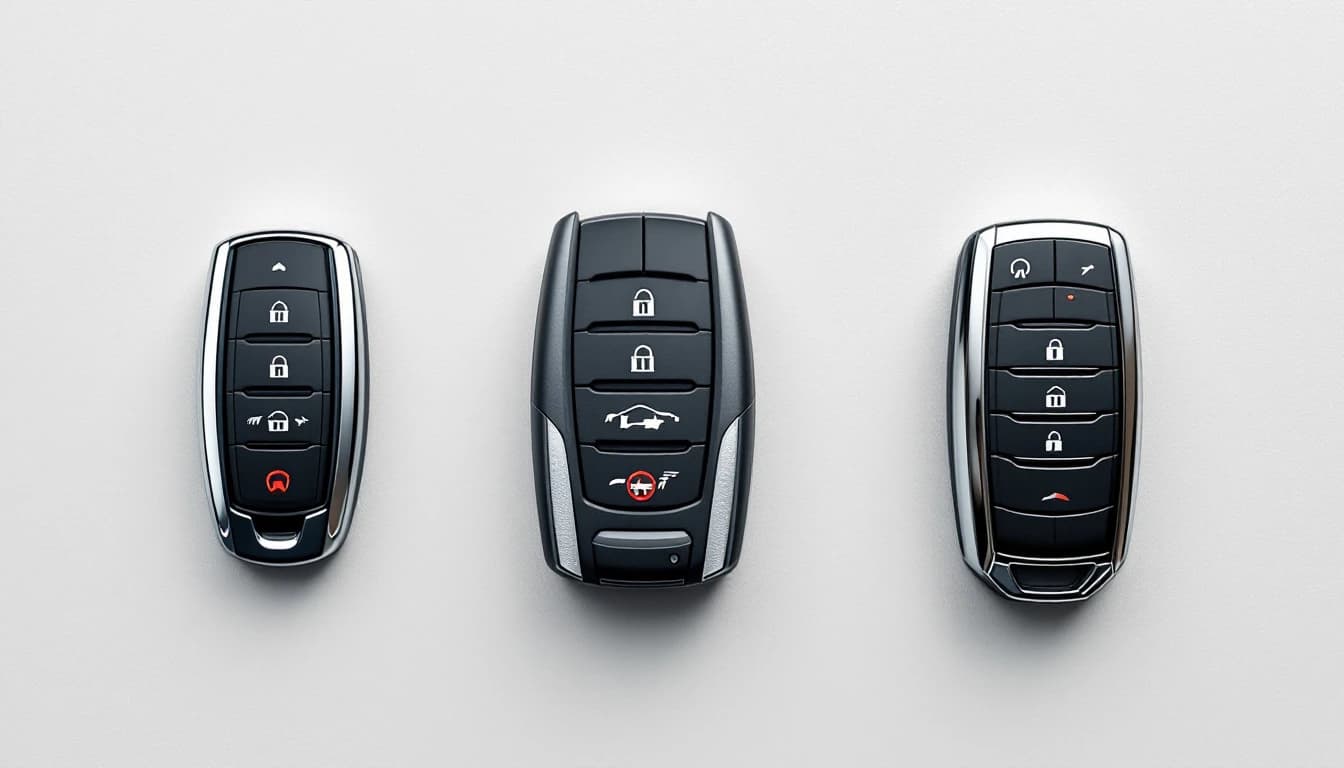
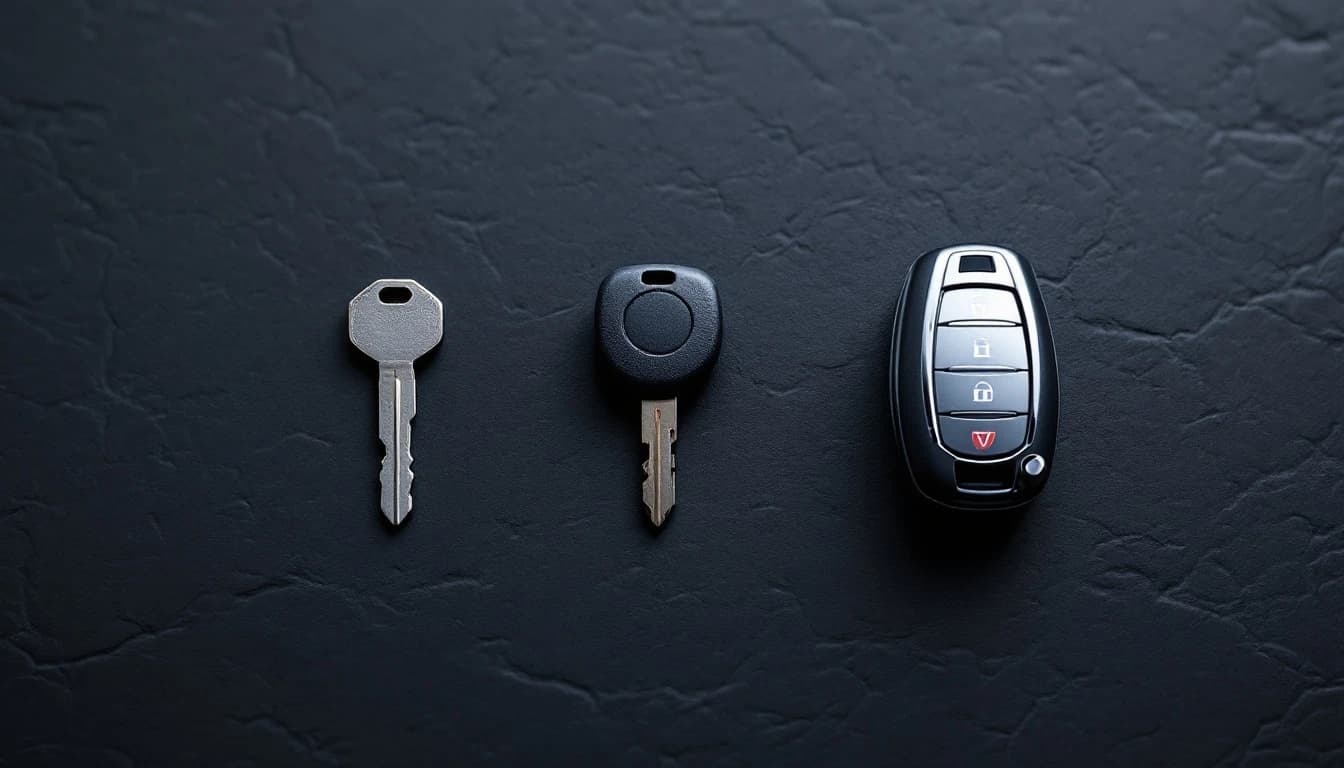
If you do not know yours, the model year and the body style in the table below will get you there. Where your car sits on a changeover year, verify against the key in your hand: a blade key that turns in a barrel, an oval fob that pushes into a dashboard slot, or a fob that stays in your pocket with a start button on the dash.
| Body code | Models | Years (approx.) | Immobilizer system | Key format |
|---|---|---|---|---|
| R50 / R52 / R53 | Cooper, Cooper S, Convertible | 2001–2008 | BMW EWS generation | Blade key with transponder |
| R55 / R56 / R57 | Clubman, Hardtop, Convertible | 2007–2015 | BMW CAS generation | Oval fob, dashboard slot |
| R58 / R59 | Coupe, Roadster | 2011–2015 | BMW CAS generation | Oval fob, dashboard slot |
| R60 / R61 | Countryman, Paceman | 2010–2016 | BMW CAS generation | Oval fob, dashboard slot |
| F55 / F56 / F57 | Hardtop 4-door, Hardtop 2-door, Convertible | 2014–2026 | BMW FEM / BDC generation | Proximity fob, start button |
| F54 | Clubman | 2016–2026 | BMW FEM / BDC generation | Proximity fob, start button |
| F60 | Countryman | 2017–2026 | BMW FEM / BDC generation | Proximity fob, start button |
What each generation means
R50, R52, R53 — the EWS generation
The first modern MINIs use the BMW electronic immobilizer of their era. The key is a conventional cut blade with a transponder in the head, read by an antenna ring around the ignition barrel. The immobilizer decides whether the engine controller may run.
Practically, this is the most accessible generation on the list. The keys are inexpensive, the procedure is established work for an equipped shop, and a spare is a short driveway visit. These cars are now old enough that two other things matter more than the key itself: the ignition barrel wears, and the battery and grounds are often tired. Both imitate a key fault convincingly — see our key will not turn in the ignition diagnostic ladder before you assume it is the key.
R55 through R61 — the CAS generation
The generation most people picture when they think "MINI key": the oval fob that pushes into a slot on the dashboard rather than turning in a barrel. Underneath, this is BMW's CAS — the car access system — doing the immobilizer job.
Two things about this generation are worth knowing before you need them. First, the slot itself is a mechanical reader, and it collects debris. A slot no longer reading a fob that is otherwise fine is a real and cheap failure, and it is worth ruling out before anyone discusses modules. Second, the fob contains a small rechargeable cell that charges from the slot — a fob that has been left out of the car for a very long time can go flat in a way that a normal battery swap does not address.
CAS is also where the immobilizer authority lives, which means a CAS fault on these cars presents as a key fault. The BMW chassis code key system decoder covers how that architecture behaves across the whole BMW range, and our BMW module repair cost page prices the outcomes when CAS is genuinely the problem.
F54 through F60 — the FEM and BDC generation
The current architecture. Proximity entry, a start button, no slot. Body electronics and access functions are consolidated into FEM and later BDC, and the security gating is materially tighter than CAS.
For an owner, that translates into one number: the spare-key band roughly triples between the CAS generation and this one. That is not a shop marking up a newer car — it is a genuinely longer procedure, because the security value has to be read from the module before a key can be written to it. On cars from roughly 2018 onward, some transactions additionally route through a security gateway that expects an authenticated request; where an independent path exists the work proceeds normally, and where it does not the dealer is the only route. Our security gateway and key programming guide explains how to establish which side of that line your car is on from the VIN.
What it costs in DFW
MINI shares BMW's security architecture, so the honest way to price a MINI key is by the system inside it rather than by the badge. These are Dallas–Fort Worth mobile bands as of September 2026, mapped to the generation in the table above.
| Your MINI's system | Spare (working key in hand) | All-keys-lost | Typical dealer quote |
|---|---|---|---|
| EWS / CAS generation (R50–R61) | $150–$300 | $400–$700 | $600–$1,200 |
| FEM / BDC generation (F54–F60) | $450–$750 | $750–$1,100 | $1,200–$2,000 |
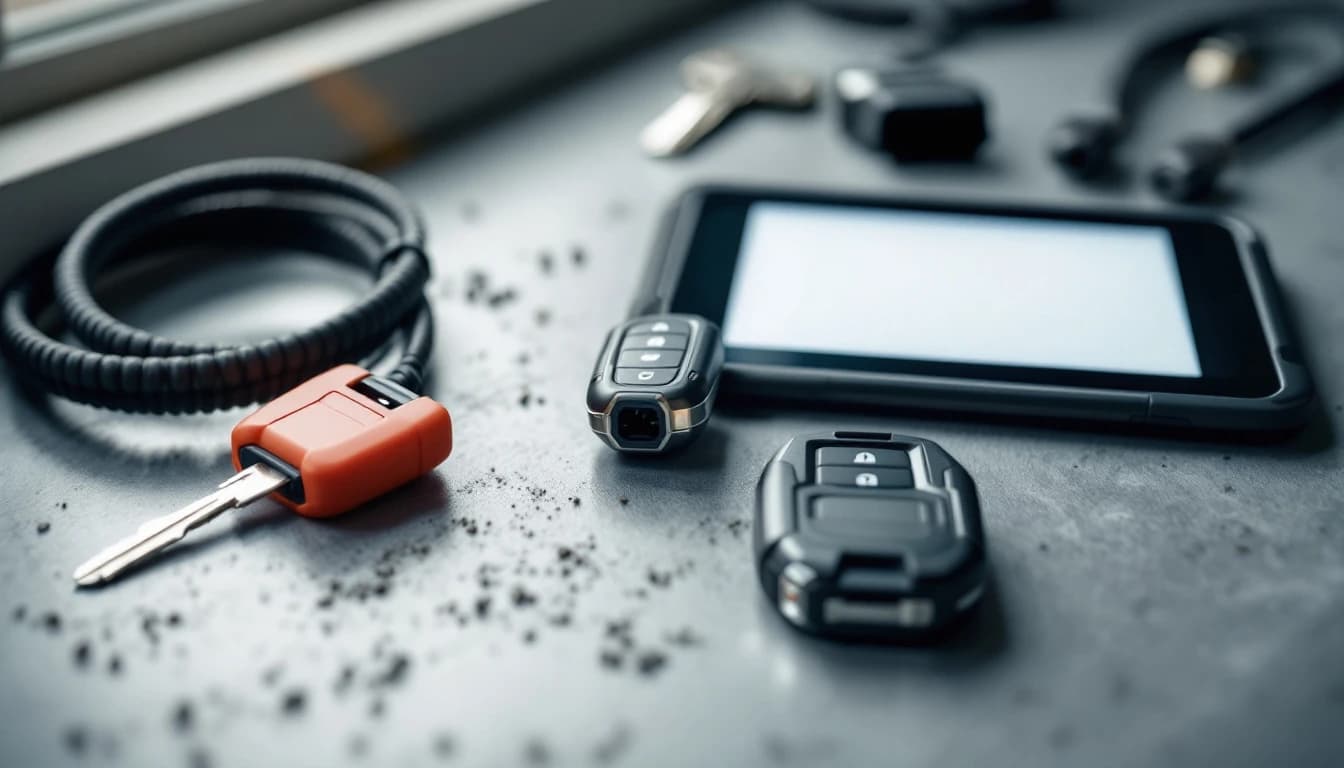
| Diagnostic read, either generation | $90–$150 | $90–$150 | $185–$295 |
| Flatbed, when the car cannot be driven | — | $150–$300 | $150–$300 |
Why the spare is the whole argument
Look at the two columns above and notice that the gap between them is larger than most people's monthly car payment. On a CAS-generation MINI a spare is a couple of hundred dollars and forty minutes; the same car with every key gone is two to three times that, plus the problem that it cannot be driven anywhere. On an FEM or BDC car the gap is larger still in absolute terms.
Nothing about that gap is arbitrary. With a working key the car already trusts a credential, and the technician authenticates with what you have and writes a second key into the key table. With no working key, the security state has to be established before anything can be written — a longer procedure with a higher tooling requirement, on a car that has to be worked on where it sits.
MINIs are disproportionately one-key cars in this metro, for a simple reason: they are frequently bought used from a second or third owner, and somewhere along that chain the spare disappeared. If you are reading this holding the only key your MINI has, our page on why a spare costs a fraction of an all-keys-lost call is worth five minutes.
Common MINI key situations we see
The slot that stopped reading. R-generation car, fob was fine yesterday, today the slot does not acknowledge it. Debris in the slot and a flat fob cell account for most of these. Cheap, fast, and not a module problem — but worth having looked at by someone who knows the difference rather than guessed at by someone who does not.
The used Countryman with one key. The single most common MINI call. An R60 bought with one key, three years ago, and the owner has been meaning to sort it out. Do it while the original works and it is a $150–$300 problem.
The F56 sticker shock. Owner replaced a key on an older MINI for very little, buys a current one, and is quoted four figures by the dealership. Both numbers are real; the systems are different. The independent band above is the honest middle.
The fob that unlocks but will not start. The remote and the transponder are separate systems inside one case. A working remote proves the battery is good and nothing else. On MINI the usual suspects are the transponder itself, the slot or antenna on the car side, or the key data in the module.
The aftermarket fob that was rejected. The good aftermarket parts are indistinguishable in use and the bad ones waste the programming labour as well as the part. Our aftermarket versus OEM key fobs page explains what separates them.
The "it is the key" that is not. A no-start on a MINI with a good key is frequently CAS, a low battery, or a ground. A diagnostic read at $90–$150 answers it before anyone buys a fob, and our intermittent no-start diagnostic ladder covers the version of this that comes and goes.
How we work
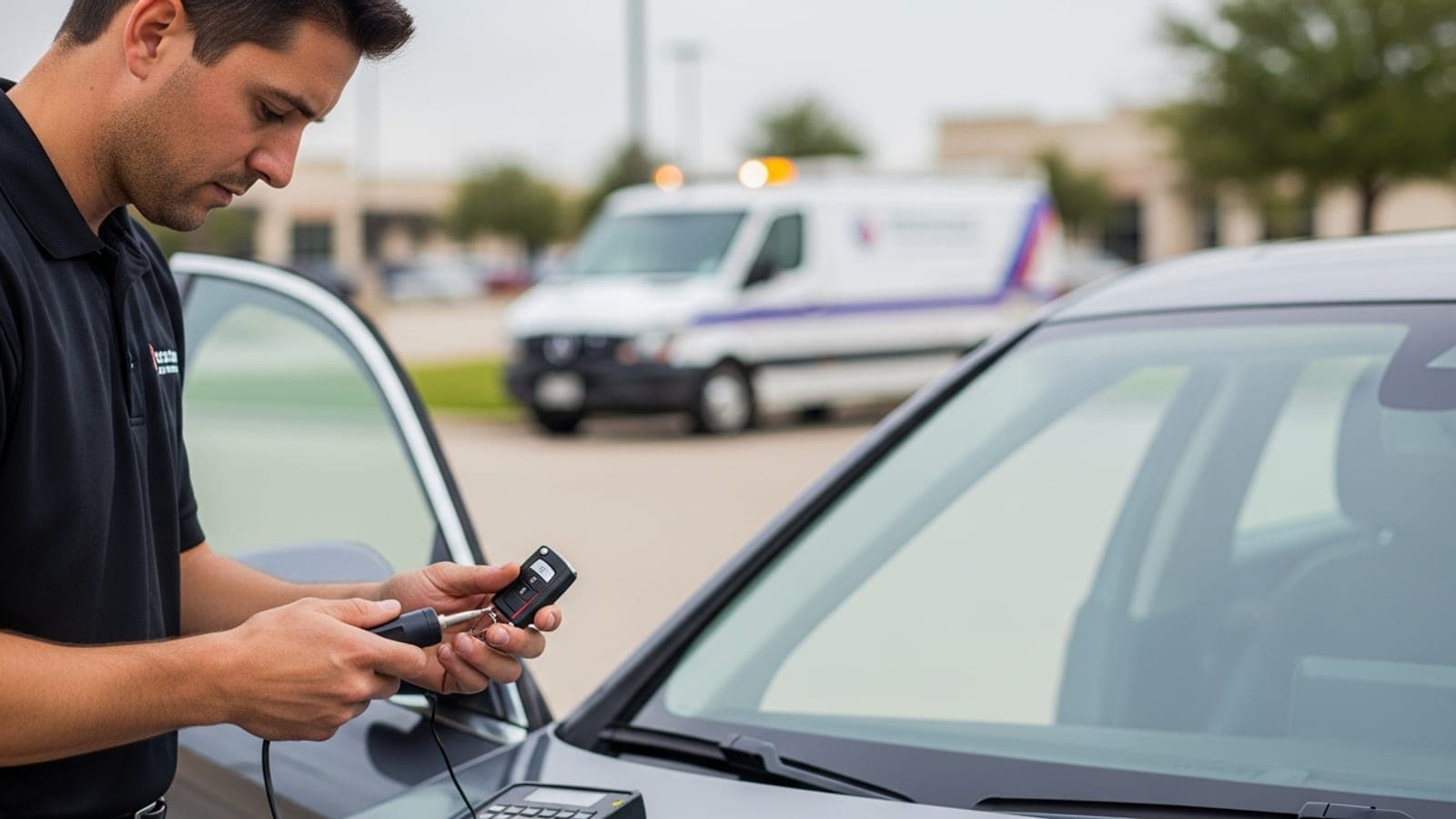
We come to you anywhere in Dallas–Fort Worth — home, work, the parking garage — for MINI key cutting, programming, spare keys and all-keys-lost, with the Arlington shop at 1168 W Pioneer Parkway available when a bench-level job genuinely calls for it. On an all-keys-lost call, bring proof of ownership: title, registration or an insurance document in your name, plus photo ID. It is not a formality we can waive, and having it ready at the kerb turns two appointments into one. What to have ready is set out here.
Adrian Torres has worked BMW and MINI key and module systems in this metro since 2012, at EEPROM level where the job calls for it, under Texas Department of Public Safety Private Security licence B28531501. Texas licenses locksmith companies through DPS — never TDLR — and the number should be produced on request. Our existing MINI Cooper key replacement page covers the service side, and MINI Cooper ECU programming covers the engine-management work.
Frequently Asked Questions
How much is a spare key for a MINI Cooper in DFW?
It depends on the generation. On an R50 through R61 — the blade-key and slot-fob cars, roughly 2001 to 2016 — a spare with a working key in hand runs $150–$300 as of September 2026. On an F54 through F60 with a start button, the same job runs $450–$750, because the newer FEM and BDC architecture requires a longer procedure.
Which immobilizer does my MINI have?
Go by body code. R50, R52 and R53 use the BMW EWS generation with a blade key. R55 through R61 use CAS, with the oval fob that pushes into a dashboard slot. F54 through F60 use FEM or BDC, with a proximity fob and a start button. If the table and the key in your hand disagree, trust the key.
Can a locksmith program a MINI key, or does it have to be the dealer?
An equipped independent can do MINI key work across the R generations routinely, and across most of the F generation as well. The exception is manufacturer-gated procedures on some newer vehicles, where an authenticated request the independent has no path to is required — that is established from the VIN in a phone call before anyone drives anywhere.
My MINI fob will not work in the dashboard slot. Is the module dead?
Usually not. The slot is a mechanical reader that collects debris, and the fob carries a small cell that charges from the slot and can go flat if the fob has been out of the car for a long time. Both are cheap, common and worth ruling out before anyone discusses modules.
Why is an F56 key so much more expensive than an R56 key?
Because they are different security systems. CAS, in the R-generation cars, is an established and comparatively accessible architecture. FEM and BDC, in the F-generation cars, gate more tightly and require the security value to be read from the module before a key can be written. The procedure is genuinely longer, which is where the price difference comes from.
What happens if I lose every MINI key?
The job changes from adding a key to establishing the car's security state first, which roughly doubles to triples the cost and means the car generally cannot be driven anywhere in the meantime. On the R generations that lands at $400–$700; on the F generations at $750–$1,100. Mobile service avoids the $150–$300 flatbed a dealership route usually adds.
Is it worth buying a spare MINI key before I need one?
It is the clearest money-saving decision available to a MINI owner, and MINIs are disproportionately one-key cars because they change hands often. The difference between a planned spare and an unplanned all-keys-lost call is two to three times the price, a tow you did not need, and losing the use of the car for a day.
One MINI key, or none? Call (682) 344-1957. Mobile MINI and BMW key specialists across Dallas–Fort Worth, licensed by the Texas Department of Public Safety (B28531501). Tell us the body code or the model year and we will tell you which band you are in before we come out.
Written by the Not Your Basic Locksmith team. Prices reflect Dallas–Fort Worth mobile service as of September 2026 and are ranges, not quotes; your VIN decides the number.