Ford F-150 and Expedition: Worn Key or Failed Ignition Cylinder?
As of August 2026, a Ford truck whose key has started needing a wiggle is somewhere between $150 and $450 away from being fixed in the DFW area, and the spread inside that range is decided by one question: is the wear on the key or in the lock?
It is worth answering before anything is ordered, because the two repairs have almost nothing in common. A worn key is a twenty-minute job with a new blank cut to the vehicle's original code. A failed cylinder is a column job — and on Ford full-size trucks specifically, a cylinder that has seized completely is one of the more awkward removals in the domestic market, for a reason built into the design.
This is the diagnostic order that saves people money, and the F-150, Expedition, Explorer and Super Duty share enough of it to be treated together.
The three faults behind "my key won't turn"
1. A worn key. Every insertion drags the blade across the wafers inside the lock. Over a decade and thirty thousand cycles the peaks of the cuts round off, and the key stops lifting the wafers to exactly the right height. The symptom is gradual: first it works every time, then it needs a small wiggle, then a particular angle, then only in the morning. Crucially, a spare that has lived in a drawer will work perfectly — which is the single cleanest diagnostic test available and costs nothing.
2. A worn or failed lock cylinder. The wafers, springs and the cylinder body itself wear too, and a lock that has been operated by a worn key wears faster because the key is loading the wafers unevenly. Symptoms overlap with a worn key with one telling difference: the good spare does not fix it either. On Ford trucks, the other classic presentation is a key that goes in fine and will not come out, because the retaining mechanism is no longer indexing correctly.
3. Something that is not the lock at all. Two very common impostors. First, the steering column lock: if the wheel is under load against the lock pin — parked on a Texas kerb, or with the wheels turned — the cylinder physically cannot rotate until you take the pressure off. Rock the wheel gently side to side while turning the key. Second, the transmission range interlock on automatic vehicles: not fully in Park, and the ignition will not release. Both feel exactly like a broken ignition and neither is.
Work through those three in order and most owners identify their own fault in five minutes.
The Ford-specific problem: removing a seized cylinder
Here is the design detail that turns a routine job into a longer one, and it is worth knowing because it explains any quote you receive.
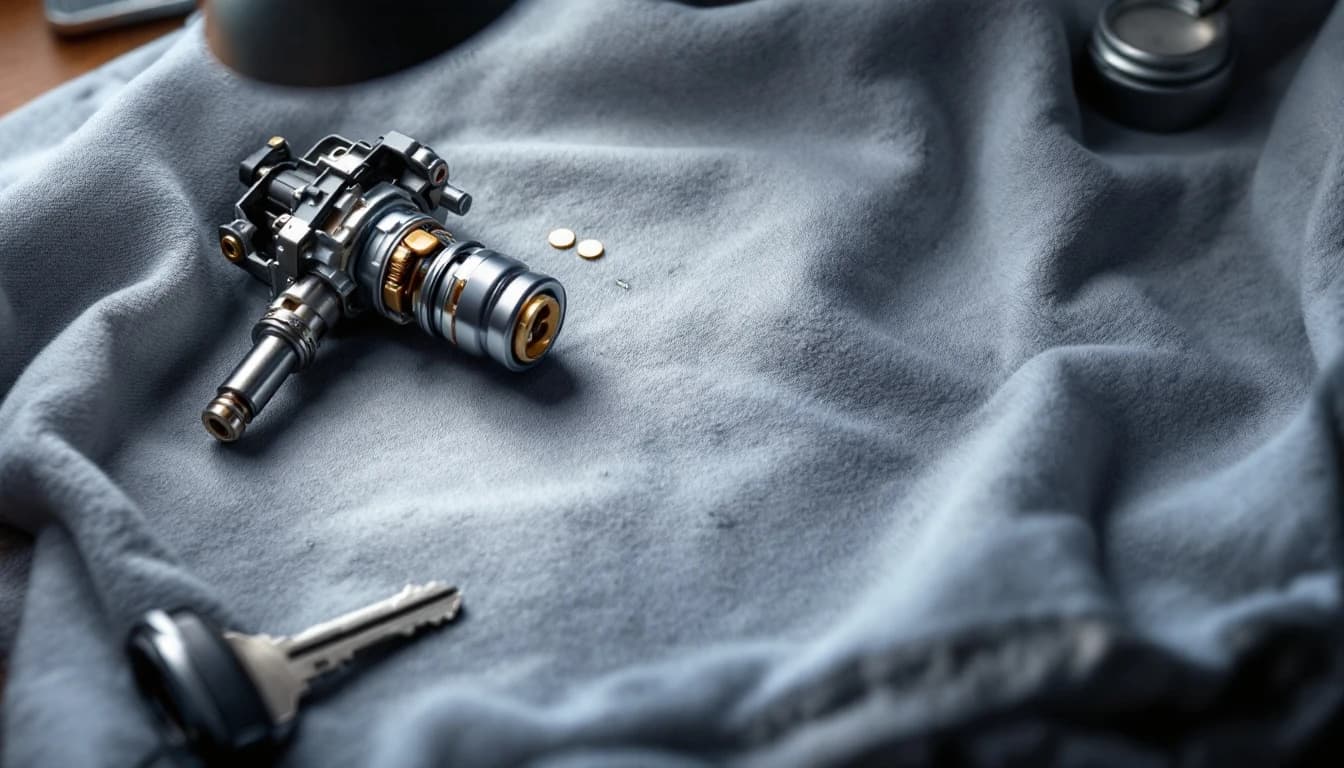
On Ford's traditional column ignitions, the lock cylinder is held in place by a spring-loaded retaining pin, and that pin is only accessible when the cylinder has been rotated to the accessory or run position. In normal service that is fine — you turn the key, press the pin through a small access hole, and the cylinder slides straight out.
But the failure mode people actually call about is a cylinder that will not turn. Which means the pin cannot be reached. Which means the standard removal procedure is unavailable precisely when you need it.
The professional answer is not force. It is one of several controlled techniques — impressioning or decoding a correct key to the original code so the cylinder can be turned normally, manipulating the wafers to release, or where the cylinder is genuinely destroyed, a controlled drilling of the lock at the correct depth and angle to release the retainer without damaging the column, the ignition switch behind it or the wiring loom.
That is the difference between a locksmith call and a body-shop call. Done properly, the column is untouched and the repair is a new cylinder plus a key. Done badly, you are buying a column.
What each repair actually costs
| Symptom | Likely cause | Repair | Typical DFW range |
|---|---|---|---|
| Worn key, spare works fine | Key wear | New key cut to original code | $150–$250 |
| Neither key turns, no seizure | Worn cylinder | Cylinder replacement, keyed to existing key | $200–$400 |
| Cylinder fully seized | Failed cylinder | Controlled removal + replacement + key | $250–$450 |
| Key won't come out | Retainer or cylinder fault | Cylinder service or replacement | $200–$400 |
| Turns but nothing happens electrically | Ignition switch (electrical half) | Switch replacement | Varies by model |
| Turns, cranks, won't start, theft light on | PATS transponder or antenna | Key or antenna diagnosis | $150–$300 |
"Keyed to existing key" is the option owners rarely know to ask for. A replacement cylinder can usually be pinned to match the key you already carry, so you leave with one key that operates the doors and the ignition, exactly as before. The alternative — a cylinder with its own new key — leaves you carrying two keys forever. Ask for the first.
The ignition switch is a genuinely separate component from the lock cylinder, sitting behind it and doing the electrical work. A truck whose key turns freely through all positions but produces no crank, no dash lights, or intermittent power loss usually has a switch problem, not a lock problem. It is a common misdiagnosis in both directions.
When it is PATS, not the lock
If the key turns normally, the engine cranks, and the theft indicator on the dash is lit or flashing, the mechanical side of the system is working perfectly and the immobilizer is refusing to authorise the engine. That is a different repair entirely.
Ford's Passive Anti-Theft System has been through several generations, and the failure points are consistent: a transponder chip that has failed in the key, an antenna ring around the lock cylinder that can no longer read a healthy key, wiring in the column that has flexed once too often, or a lost key registration after a battery event.
The free test is the same as before — try the spare. If the spare starts it, the daily key's transponder has failed. If neither key starts it, the fault is on the vehicle side, and the antenna ring is the most common culprit on high-mileage trucks. Our Ford key fob programming guide covers the programming side, and what the security light means on each make covers how to read the dash before calling anyone.
For work trucks the stakes are different, which is why fleets increasingly pre-programme spares rather than discovering a PATS fault on a Monday morning — the approach described in our fleet key program guide.
Why Ford trucks specifically
The pattern is not manufacturer sloppiness. It is duty cycle.
Full-size trucks accumulate ignition cycles faster than almost anything else on the road — multiple short trips, job-site stops, hours of accessory use. A work truck can see three or four times the annual ignition cycles of a commuter sedan. Add heavy keyrings hanging off the cylinder, which side-load the wafers on every bump, and Texas heat cycling the lubricant, and the result is wear that arrives at a mileage the owner considers premature but the lock considers normal.
Two habits genuinely extend the life of the next cylinder. Take the weight off the keyring — the ignition key should carry as little as possible. And replace a worn key as soon as it starts needing a wiggle, because continuing to use it accelerates wear in the lock and turns a $200 problem into a $400 one.
What to have ready when you call
Whether your spare works. The single most valuable piece of information, and it costs nothing to check.
Whether the key turns at all, and if not, whether it turns partially or not one degree.
Whether the key comes out normally.
Whether the theft light is on when the key is in the run position.
Year, model and cab configuration. F-150, Expedition, Explorer and Super Duty share family traits but not parts.
Those five answers usually resolve the job to one line on the phone — a key, a cylinder, a switch, or a transponder problem — which means the right parts arrive on the first visit. For the broader diagnostic ladder that applies across makes, our guide on what to check when a key won't turn works through the same logic vehicle-agnostically, and ignition switch and lock cylinder repair covers the repair side in more depth.
Frequently Asked Questions
Why does my Ford key need jiggling to turn?
Almost always key wear. Every insertion drags the blade over the wafers inside the lock, and after years the peaks of the cuts round off so the key no longer lifts each wafer to exactly the right height. The test is free: try a spare that has lived in a drawer. If the spare turns smoothly, your daily key is worn and a new one cut to the vehicle's original code fixes it for $150–$250. If the spare behaves the same way, the cylinder is worn.
My F-150 key won't turn at all. What do I check first?
Two things that are not faults. First, steering-wheel load: if the column lock is under pressure from the wheels being turned or the truck parked against a kerb, the cylinder physically cannot rotate — rock the wheel gently side to side while turning the key. Second, on automatics, confirm the shifter is fully in Park. If neither releases it and your spare does not work either, the cylinder has likely seized and needs professional removal.
Why is a seized Ford ignition cylinder harder to remove?
Because the retaining pin that holds the cylinder in the housing is only accessible once the cylinder has been rotated to the accessory or run position. When the cylinder will not turn, the normal removal path is unavailable. A locksmith gets around it by decoding or impressioning a correct key so the cylinder turns normally, by manipulating the wafers, or where the lock is destroyed, by drilling at a controlled depth and angle that releases the retainer without damaging the column, switch or wiring.
Can a new ignition cylinder use my existing key?
Usually yes, and you should ask for it. A replacement cylinder can be pinned to match the key you already carry, so one key continues to operate both the doors and the ignition. The alternative leaves you carrying separate keys for the door and the ignition permanently, which is an avoidable annoyance if it is specified up front.
What is the difference between the ignition lock cylinder and the ignition switch?
The lock cylinder is the mechanical part your key enters; the switch is the electrical component behind it that actually powers the accessory, run and start circuits. If the key turns freely through all positions but there is no crank, no dash lights or intermittent power, the switch is the likely fault. If the key will not turn, or sticks, or comes out in the wrong position, it is the cylinder. They fail independently and are often misdiagnosed for each other.
My key turns and the engine cranks but won't start, with the theft light on. Is that the ignition?
No — the mechanical side is working correctly and the immobilizer is refusing to authorise the engine. On Ford that is the PATS system, and the usual causes are a failed transponder in the key, an antenna ring around the cylinder that can no longer read the key, column wiring damage, or a lost key registration after a battery event. Try the spare: if it starts, the daily key has failed; if neither works, the fault is on the vehicle side.
Can this be repaired at my location or does the truck need towing?
The overwhelming majority of these jobs are done at the vehicle, including seized-cylinder removal and replacement, because the work is at the column rather than under the hood. That matters most in exactly the situation where towing is worst — a truck that cannot be started or steered is expensive to move. Confirm on the phone, but plan on mobile repair being the normal path.
How do I stop the next cylinder wearing out?
Two habits do most of the work. Keep weight off the ignition key — a heavy keyring hanging from the cylinder side-loads the wafers on every bump, and work trucks see plenty of bumps. And replace a key as soon as it starts needing a wiggle, because a worn key accelerates wear inside the lock. Continuing to use one is what converts a straightforward key replacement into a cylinder job.
Try the spare before you spend anything
Not Your Basic Locksmith repairs and replaces ignition lock cylinders on Ford trucks and SUVs at the vehicle across the DFW metroplex — Arlington, Fort Worth, Dallas, Grand Prairie, Mansfield, Irving and the surrounding cities — including seized-cylinder removal, keying the new cylinder to your existing key, and PATS key and antenna diagnosis.
Call or text (682) 344-1957 and tell us the model and year, whether your spare key turns the ignition, whether the key comes out cleanly, and whether the theft light is lit. That is normally enough to name the fault and bring the right parts on the first visit. Owner-operated, ALOA Master Automotive Locksmith credentialed, based at 1168 W Pioneer Parkway in Arlington. Texas DPS certificate #B28531501.