Volvo Key and Immobilizer System Decoder
Volvo owners get quoted wildly different numbers for what sounds like the same job, and the reason is not the shop. It is that "Volvo key" describes at least four genuinely different security architectures built between 1998 and 2026, and the one in your car decides everything downstream: how a spare is made, what happens when every key is gone, whether the work can be done in your driveway, and whether an independent specialist can perform it at all.
This page decodes which system you have from platform and model year, explains what each one means practically, and sets out what to establish before you call anyone — including us. As of August 2026, a diagnostic read that confirms the system and the state of the key data runs $90–$150 in Dallas–Fort Worth against a typical dealer diagnostic of $185–$295, and it is usually credited if you book the repair. For where Volvo sits among the European brands on key cost generally, see our European car key replacement cost page.
The four systems, in one paragraph each
Transponder blade key with the immobilizer centred on the CEM (roughly 1998–2009). A conventional cut blade with a transponder chip in the head. An antenna ring around the ignition lock reads the chip, and the Central Electronic Module — the CEM, which is the closest thing a Volvo of this era has to a brain — decides whether the engine controller is allowed to run. Key data lives centrally, which is why a Volvo of this generation with a CEM problem presents as a key problem.
Semi-smart key, inserted into a dash slot (roughly 2004–2013 on the smaller platform). The distinctive rectangular Volvo fob that pushes into a slot on the dashboard rather than turning in a barrel. Electronically it is a step beyond the blade key: the fob is read by the slot, authenticated against the immobilizer function, and on some models carries the personal-settings and driver-memory data too. Owners often do not realise the emergency blade lives inside it.
Smart key with a dash slot and optional Keyless Drive (roughly 2007–2018 on the larger platform). The same slot concept, but with proximity entry and start available as an option. The car may respond to the key in your pocket, or may require the fob in the slot, on the same model year — trim decides it. That ambiguity is worth knowing about before you diagnose a "key not detected" complaint.
Full proximity key, no slot (roughly 2016 onward on the current architecture). The XC90 relaunch and everything derived from it moved to a modern proximity system with a start button and no receptacle. Key data and vehicle access are managed across networked modules with far tighter gating than earlier generations, and — as on every marque's newest platforms — independent access is more limited here than it is on a fifteen-year-old car.
The decoder table
Use platform and model year to find your system. Generations overlap during changeover years, so where your car sits on a boundary, verify against the key you are holding: a blade that turns in a barrel, a rectangular fob that pushes into a slot, or a fob that stays in your pocket.
| Model | Platform | Years (approx.) | Key system |
|---|---|---|---|
| S60 / S80 / V70 / XC70 | P2 | 1999–2009 | Transponder blade key, CEM-centred immobilizer |
| XC90 (first generation) | P2 | 2003–2014 | Transponder blade key, CEM-centred immobilizer |
| S40 / V50 | P1 | 2004–2012 | Semi-smart key, dash slot |
| C30 / C70 (second generation) | P1 | 2006–2013 | Semi-smart key, dash slot |
| S60 (second generation) / V60 | P3 | 2011–2018 | Smart key, dash slot; Keyless Drive optional |
| S80 (second generation) | P3 | 2007–2016 | Smart key, dash slot; Keyless Drive optional |
| XC60 (first generation) | P3 | 2009–2017 | Smart key, dash slot; Keyless Drive optional |
| V70 / XC70 (third generation) | P3 | 2008–2016 | Smart key, dash slot; Keyless Drive optional |
| XC90 (second generation) | SPA | 2016–2026 | Proximity key, start button, no slot |
| S90 / V90 / V90 Cross Country | SPA | 2017–2026 | Proximity key, start button, no slot |
| XC60 (second generation) | SPA | 2018–2026 | Proximity key, start button, no slot |
| S60 / V60 (third generation) | SPA | 2019–2026 | Proximity key, start button, no slot |
| XC40 / XC40 Recharge | CMA | 2018–2026 | Proximity key, start button, no slot |
What each system means when you actually need a key
Spare while a working key exists. This is the cheap, easy, fast version on every generation, and the gap between it and the alternative is the largest single number in Volvo key work. On the older platforms the existing key gives the car a way to authenticate you; on the newest ones it is the difference between a routine addition and a much more constrained procedure. If you own a Volvo and have exactly one key, this paragraph is the whole article.
All keys lost. Harder on every generation and materially harder as the years advance. On CEM-era cars the work is centred on the module that holds the key data. On slot-key cars the reader and the immobilizer function both have to be satisfied. On the current proximity platform, access is gated far more tightly, and the honest answer for the newest vehicles is that the dealer may be the only path — a limitation that applies industry-wide, not to Volvo alone. Our page on security gateway modules and key programming on 2018-and-newer vehicles explains where those walls currently sit.
A key that unlocks but will not start. The remote function and the immobilizer function are separate systems inside one fob. Doors responding proves the fob battery is alive and proves nothing about authentication. On slot-key cars, also suspect the slot itself: it is a mechanical receptacle in a cabin, and receptacles collect debris. Our guide to the immobilizer and security light by make covers how to read what the dash is telling you.
A key that works intermittently. Usually the transponder or the antenna ring rather than the module. Intermittent is good news diagnostically — it means the security chain is fundamentally intact.
What drives the price on a Volvo
We do not publish a flat Volvo figure, because five variables move it more than the badge does, and any shop that quotes a firm price before knowing them is guessing:
- Which system the car uses, per the table above. This is the largest single factor.
- Whether a working key survives. Across every European brand we cover, all-keys-lost prices materially above a spare — that pattern holds on Volvo too.
- What the key part costs and how quickly it can be sourced. On lower-volume models, parts lead time is a real constraint rather than a labour question.
- Whether the fault is the key or the module. A CEM or reader problem is a different job from a key job, and diagnosis is what separates them.
- Whether anyone has already attempted the work. A partial or failed programming attempt has to be undone before anything moves forward.
That is what the $90–$150 diagnostic read buys: an answer to all five before money is committed to a part. For a general sense of where European brands land, our European car key replacement cost page carries the published bands by make, and our Volvo key replacement page covers the service itself. Call (682) 344-1957 with your year, model and symptom for a firm figure before dispatch.
Identifying your key without opening anything
Three checks, none of which require tools:
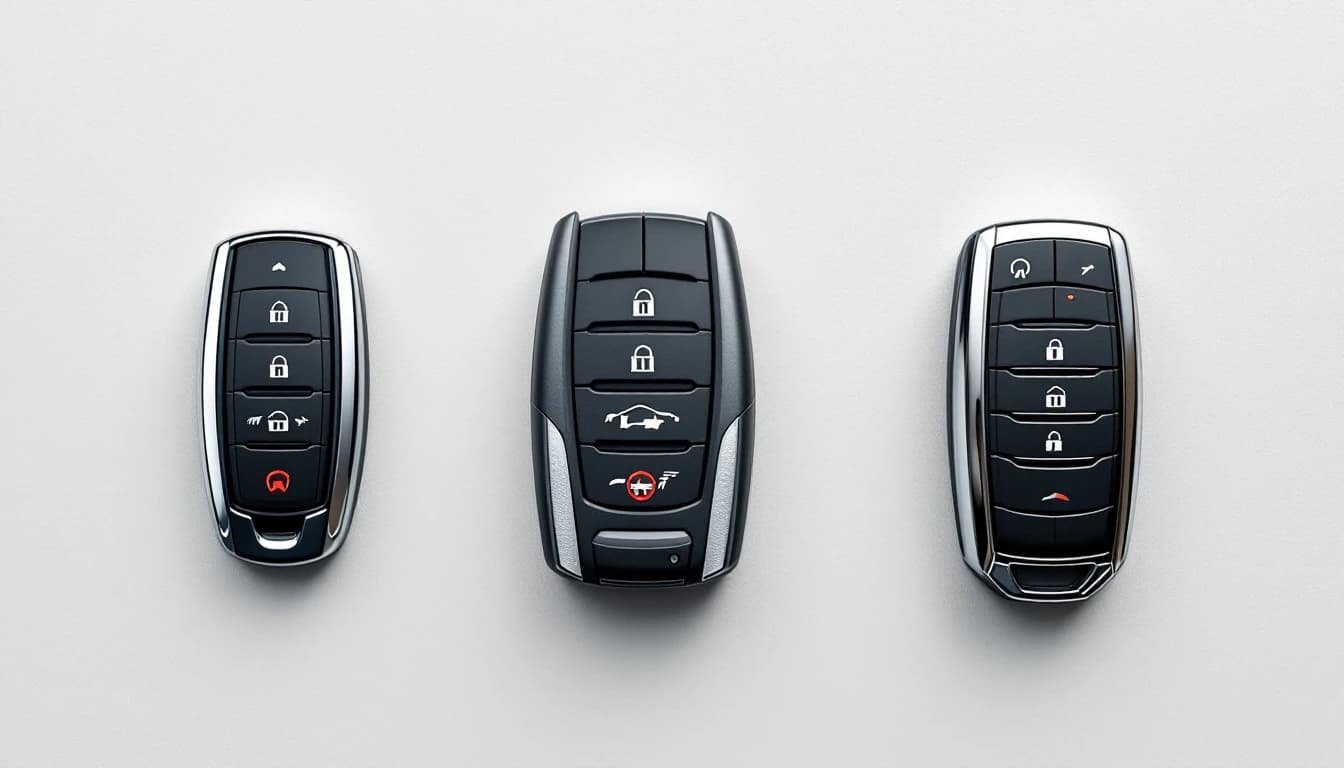
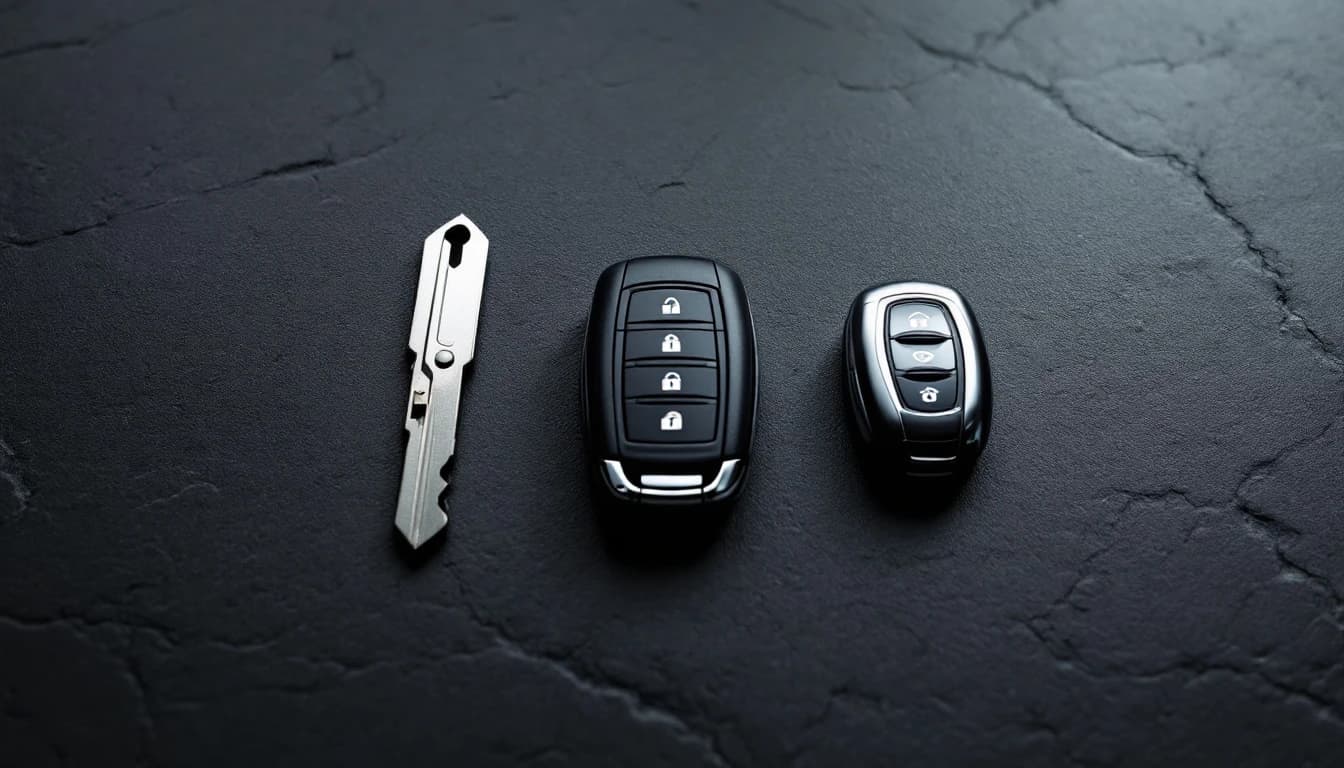
Look at the shape. A cut blade that turns in a barrel is the transponder generation. A rectangular fob that pushes into a dashboard slot is the semi-smart or smart generation. A rounded fob with no slot to go into is the current proximity system.
Find the emergency blade. Slot and proximity keys hide a mechanical blade behind a small catch. It is what opens the driver's door when the car's battery is flat or the fob is dead, and an alarming number of owners discover it exists only during a lockout.
Read the fob's own label. The FCC ID and part number moulded or printed on the back of the fob identify it precisely. That single string is more reliable than any year-based guess, and it is worth photographing before you call anyone — our guide to identifying your car key by FCC ID, chip and blade explains how to read it.
The one recommendation that saves the most money
Buy the second key while the first one still works.
It is unglamorous advice and it is the correct advice on every platform in the table above, but it compounds on the newer ones, where the gap between a routine spare and an all-keys-lost recovery is widest and the constraints are tightest. A Volvo with two working keys is an inconvenience away from a spare. A Volvo with zero working keys is a tow, a wait for parts, a longer procedure and — on the current generation — possibly a dealership appointment.
The same logic applies across marques, which is why our push-to-start spare key relearn guide exists: the brand changes the procedure, not the arithmetic.
Aftermarket fobs and Volvo
Fob quality is a real variable rather than a marketing one. A correctly specified aftermarket key programmed properly works exactly like an original; a poorly made one fails early, loses range, or is rejected by the car outright and wastes the programming labour along with the part. Our guide to aftermarket versus OEM key fobs covers where the savings are genuine and where they are false economy — and this matters more on European cars than on volume domestic models, because the population of low-quality parts in circulation is larger.
What to have ready when you call
Proof of ownership. Registration or title matching your ID. Any shop that will program a key without checking is a shop that would do it for someone else with your car, and Texas takes that seriously. Our proof of ownership for car key replacement in Texas guide covers what to bring and what to do when the registration is locked in the car.
Year, model and platform, and whether the key goes into a slot, a barrel, or stays in your pocket.
Whether any key still works, even intermittently.
Whether anything has already been attempted by you or another shop.
Response inside Arlington city limits typically runs 12–22 minutes, Dallas 25–45. Our shop is at 1168 W Pioneer Parkway in Arlington; every other city in the metro is served mobile, which matters because a Volvo with no working key cannot be driven to anyone. Locksmith companies in Texas are regulated by the Texas Department of Public Safety Private Security Program under Occupations Code Chapter 1702 — not TDLR. Not Your Basic Locksmith operates under Texas DPS certificate #B28531501.
If you want the equivalent decoder for another European marque, we publish the same format for BMW chassis codes and key systems, Land Rover and Range Rover key generations, and Porsche key systems. And if the fault turns out to sit in a module rather than a key, our guide to BCM programming near me and how to vet a module shop covers what to ask before you commit.
Frequently Asked Questions
How do I know which key system my Volvo uses?
By platform and model year, using the table above — but the fastest check is the key itself. A cut blade that turns in an ignition barrel is the transponder generation. A rectangular fob that pushes into a dashboard slot is the semi-smart or smart generation. A rounded fob with no slot is the current proximity system. Where the table and the key disagree, trust the key.
Can a locksmith make a Volvo key?
On the older platforms, routinely — the transponder, semi-smart and smart-key generations are established work for an equipped shop. On the newest proximity vehicles, access is far more tightly gated and the dealer may be the only path, which is a platform limitation rather than a Volvo-specific one. A diagnostic read establishes which situation your car is in before anyone commits.
What is the CEM on a Volvo?
The Central Electronic Module — the central body controller on the older platforms, and the module the immobilizer function is built around. Because key data is held centrally rather than in a standalone immobilizer box, a CEM fault on a car of that era frequently presents as a key fault, which is why diagnosis comes before a key is cut.
My Volvo key unlocks the doors but the car will not start. Why?
Because the remote function and the immobilizer function are separate systems inside one fob. A responding remote proves the battery is good and nothing more. The cause is usually the transponder, the reader or slot, or the key data in the module — and on slot-key cars, a debris-filled slot is a genuinely common and cheap answer.
Is all-keys-lost more expensive on a Volvo?
Yes, on every generation, and the gap widens on newer platforms. With a working key the car can authenticate you and the spare is a routine addition. With no working key the procedure is longer and more constrained, and the vehicle usually cannot be driven anywhere — which is why mobile service matters more in that scenario than in any other.
Where is the emergency key blade on a Volvo fob?
Inside the fob, behind a small catch. Slot and proximity keys all carry one, and it opens the driver's door when the car's battery is flat or the fob is dead. On some models the door keyhole sits under a cap on the handle that the blade itself is designed to pry off.
Should I buy a spare Volvo key before I need one?
Yes, and it is the clearest money-saving decision available to a Volvo owner. A spare made while an original still works is a routine job on every generation in the table. The same car with every key gone is slower, more constrained and more expensive, and on the newest platform it can mean a dealership appointment rather than a driveway visit.
Are aftermarket Volvo key fobs any good?
The good ones are indistinguishable in use; the bad ones fail early, lose range or are rejected outright, and a rejected fob wastes the programming labour along with the part. The variable is the quality of the specific part, not the word "aftermarket" — which is exactly why we are selective about what we fit.