BMW FRM Failure
A failing footwell module (FRM) does not announce itself. It shows up as a scatter of faults that seem unrelated: a headlight that will not come on, a light that will not switch off, a battery that is flat on Monday after being fine on Friday, a window that stops halfway, a remote that works one day in three. All of them come from one small box under the dash, and that is the clue.
As of November 2026, the usual route in Dallas–Fort Worth is a diagnostic read at $90–$150 (a dealer typically charges $185–$295), then a bench repair of the module at $250–$450. A dealer generally replaces the whole unit, and where a module truly cannot be saved, replacement and coding is $500–$800 locally against $700–$1,200 plus a tow at a dealer.
This page is the diagnosis: what the FRM does, how it fails, what imitates it, and what to check before you pay anyone.
What the FRM does
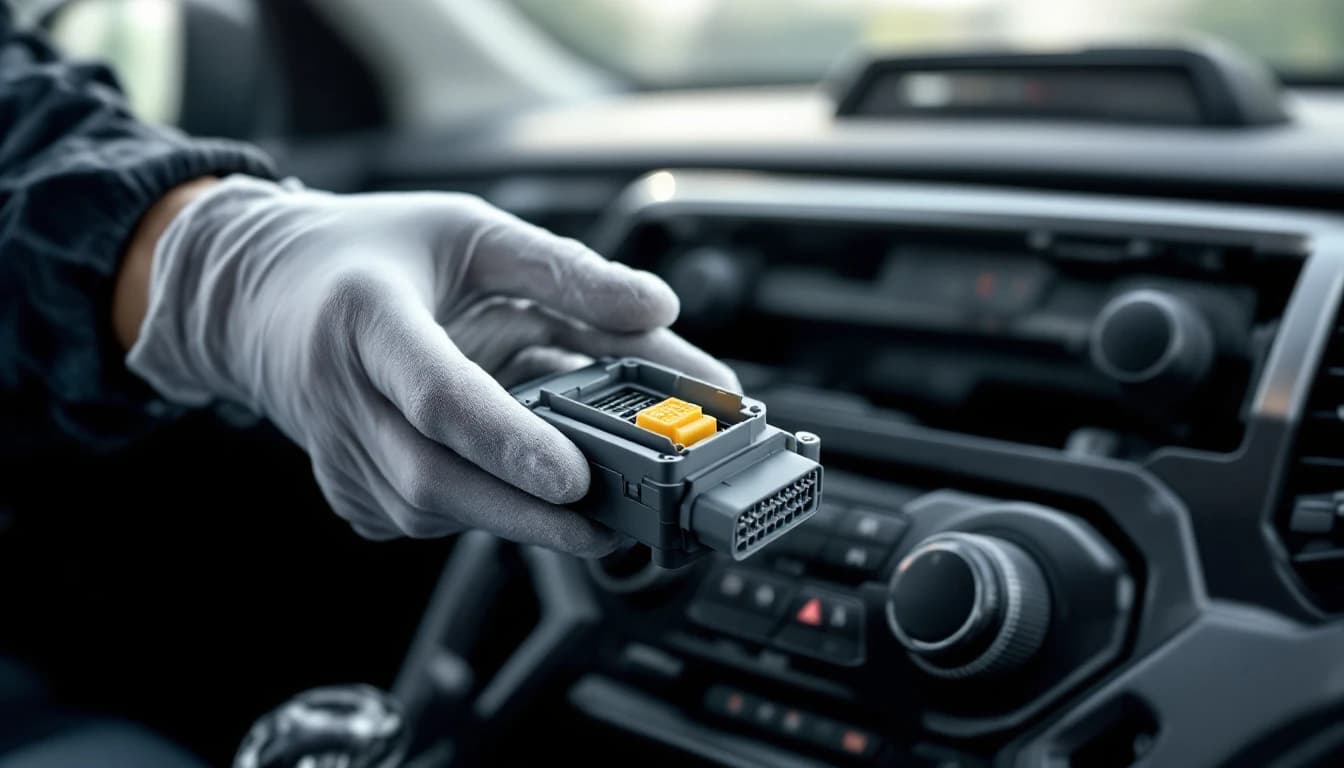
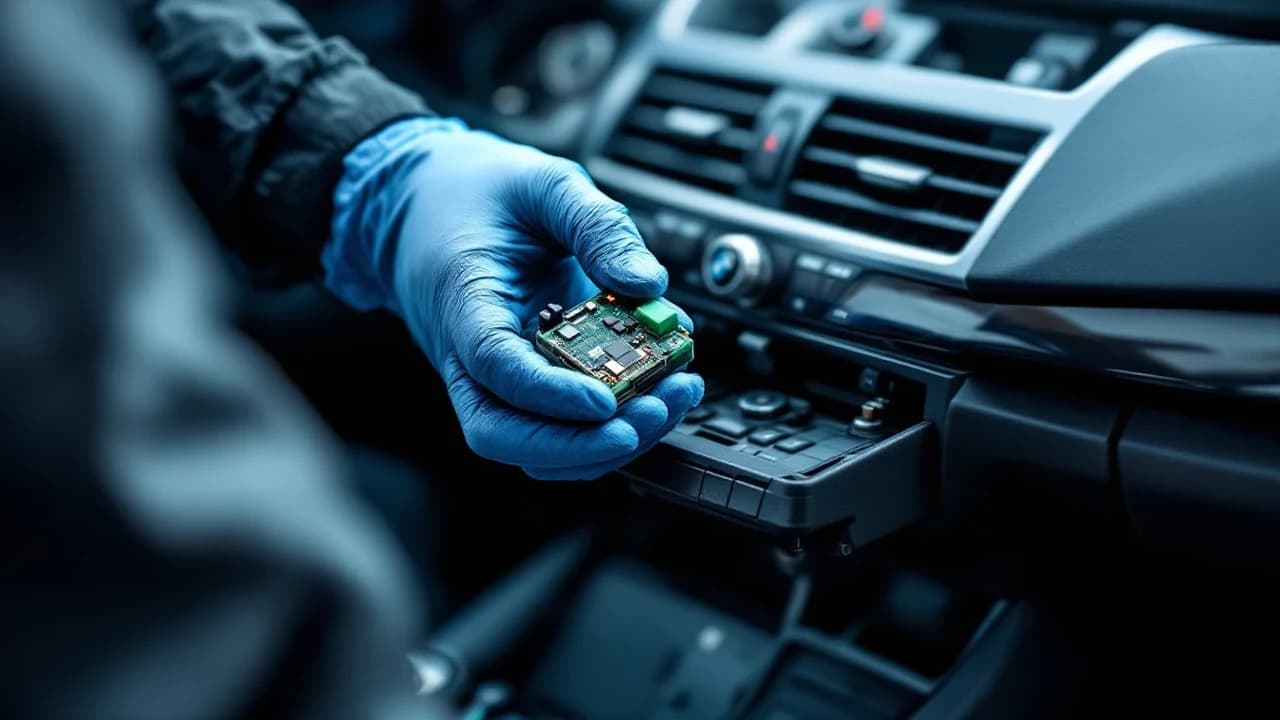
The FRM, short for Fußraummodul in German, sits in the footwell on the driver's side, behind a trim panel, on many E-series BMWs. It is a body controller. Depending on the car, it handles:
- exterior lighting: low and high beam, indicators, brake and tail lights
- interior lighting and some courtesy functions
- central locking and the remote receiver on some cars
- window and sunroof control
- wiper and washer functions
- the connection between the key side of the car and several comfort systems
It is not the module that holds the keys — on E-series cars that job belongs to the CAS. Our BMW module glossary lays out who does what.
Which BMWs have an FRM
The FRM was fitted to many cars in the E8x, E9x and related platform families. Typical examples, by approximate years:
| Platform | Typical models | Approximate years |
|---|---|---|
| E81 / E82 / E87 / E88 | 1 Series | about 2004–2013 |
| E90 / E91 / E92 / E93 | 3 Series | about 2005–2013 |
| E84 | X1 | about 2009–2015 |
| E89 | Z4 | about 2009–2016 |
| E70 / E71 | X5 / X6 | about 2007–2014 |
The symptoms, grouped by what they tell you
Lighting symptoms
- A headlight, tail light or indicator that will not work with a good bulb
- A light that stays on and will not turn off
- Hazard lights or indicators that behave erratically
- Daytime running lights missing or on all the time
Battery and power symptoms
- A battery that drains overnight, or over a weekend
- The car starts fine after a jump but is flat again in a day or two
A module that does not go to sleep keeps drawing current, which is why battery drain is one of the most common reasons an FRM car reaches a workshop. Our guide to a dead battery overnight after key or module work covers the drain side in more depth.
Window, lock and remote symptoms
- A window that stops partway, or will not respond to the switch
- Doors that will not lock or unlock from the remote
- A remote that works intermittently
Communication and warning symptoms
- A flurry of warning lights at once
- Several dash messages at once, none of them clearly related
- A scan tool that shows faults in several systems with a single common cause
That last group is the signature. When several unrelated functions fail together, the shared controller is the likeliest cause.
Why the FRM fails
The FRM carries power-handling electronics and sits low in the cabin, which is the part of the car that sees the most moisture. The commonly reported causes are:
Moisture and corrosion. Water that comes in through a door seal, a drain, a pollen filter housing or a leaking windscreen can reach the footwell and attack the module's board and connectors.
Heat and age. Electronic parts that switch lights and motors run warm. After many years, components and solder joints can fail.
Voltage events. A jump start, a failing battery or a charging fault can damage electronic controllers.
Water damage elsewhere. Several European modules fail for similar reasons, and the pattern is covered in water damage and electrical faults in European cars.
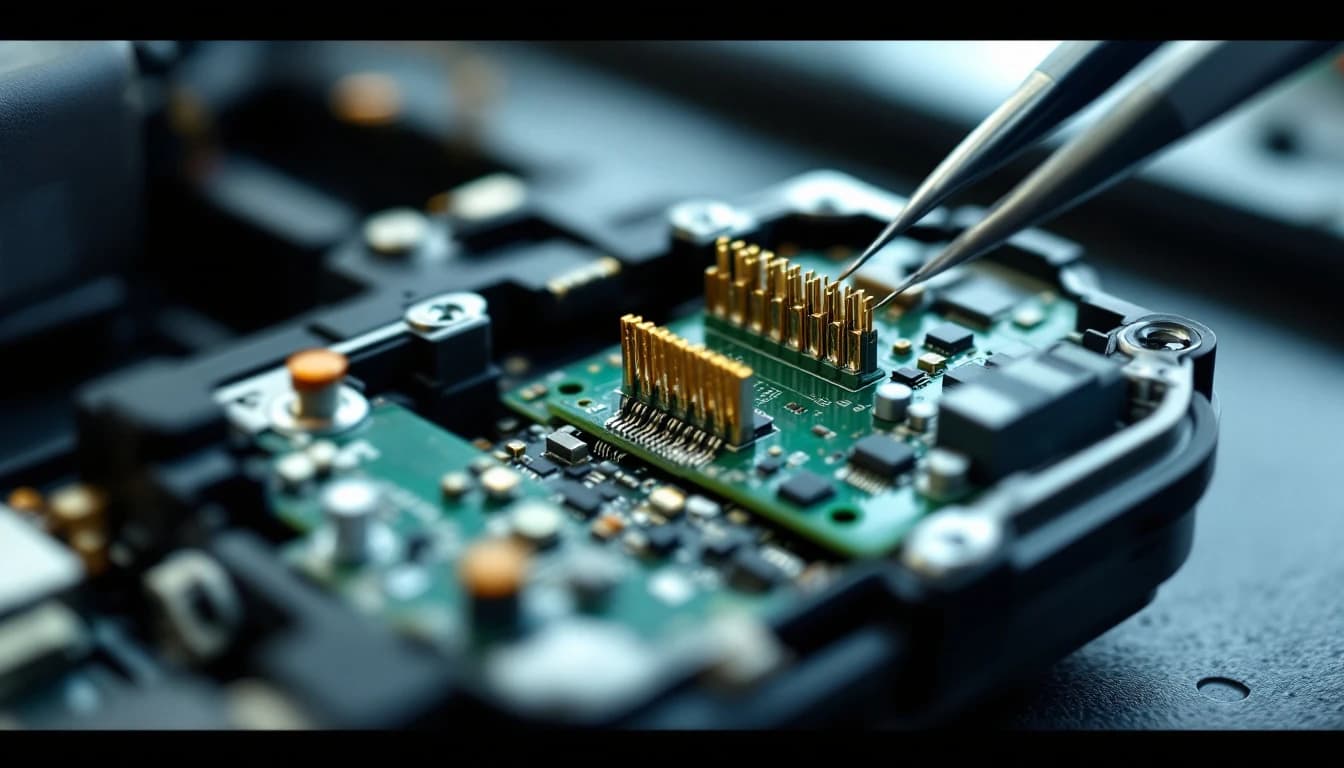
None of these means the whole module is scrap. In many cases the failed part is a single component on the board, which is why bench repair exists.
What gets mistaken for an FRM fault
Before accepting "it's the FRM", rule out these six.
- A weak or old battery. Low voltage causes odd behaviour across many modules and mimics a failing controller.
- A single failed bulb or a corroded bulb socket. One dead light does not need a module.
- A blown fuse. Check the relevant fuse before anything else.
- A failing alternator or a poor ground. Charging and earth faults produce warning lights everywhere.
- A worn door-lock actuator or window motor. The module may be fine and the motor dead.
- A key or remote problem. A weak key battery explains a remote that works sometimes. Our guide to a fob that unlocks the doors but the car will not start covers the key side.
The reason this list matters is cost. Replacing a module for a fault it did not cause is the most expensive wrong turn on the page.
Driveway checks worth ten minutes
You do not need tools for most of these.
- Test the battery. Most parts stores check it for free. A battery that is failing explains more electrical symptoms than any other part.
- Check the fuses for the affected circuit. Your owner's manual identifies them.
- Look for water. Press the driver's footwell carpet and check under the mats. Damp carpet or a musty smell points at moisture.
- Change the bulb in the affected light with a known good one, if only one light is affected.
- Note the pattern. Does the fault appear after rain? After the car has been parked overnight? After a car wash? Patterns help diagnosis enormously.
- Write down every dash message and whether it comes and goes.
Do not pull the module out or open it yourself. These modules store configuration, and handling them wrongly can turn a repairable unit into a replacement.
What the repair involves
1. Diagnostic read. A scan of the car's control units, $90–$150 in DFW, usually credited toward the repair. It shows which controllers report faults and whether they point to a common cause. It is the cheapest step and the one that separates a module fault from a battery fault.
2. Bench repair. The module is removed and repaired on a bench by replacing failed components and cleaning corrosion, then refitted and tested. In our local price sheet this runs $250–$450, and it is the most common BMW module job in this metro. A dealer, by contrast, generally replaces the module.
3. Replacement and coding. Where the board is genuinely unrepairable, a replacement module is fitted and coded to the car, at $500–$800 locally and $700–$1,200 plus a tow at a dealer.
4. Test. Lighting, windows, locks and the remote are all tested, and the battery draw is checked after the car has rested.
Ask the shop for the turnaround before you agree, because it depends on parts and on how many faults the read finds.
Cost summary
| BMW module job | Mobile / bench (DFW) | Typical dealer quote | When this is the job |
|---|---|---|---|
| Diagnostic read, module and fault chain | $90–$150 | $185–$295 | Always first; usually waived if you book the repair |
| FRM bench repair (footwell module) | $250–$450 | n/a — dealer replaces the module | The most common BMW module job in this metro |
| FRM replacement + coding | $500–$800 | $700–$1,200 + tow | Only when the board is genuinely unrepairable |
| Flatbed, when the car cannot be driven | not needed | $150–$300 | Avoided by mobile service |
When to call a professional
Call a specialist, rather than keep guessing, if:
- more than one unrelated function has failed
- the battery keeps going flat after you replaced it
- you find water in the footwell
- a scan shows faults in several systems
- the car will not lock, so it cannot be left safely
Our BMW FRM repair near me page describes the service, and the dedicated BMW FRM repair page has more detail. For Arlington-area cars see BMW FRM repair in Arlington.
What to have ready when you call
- Year, model and VIN.
- Exactly which functions have failed, and when they started.
- Any water in the car, recent repairs or battery replacement.
- Whether the battery has been tested.
- Where the car is. Mobile service comes to it.
Frequently Asked Questions
What are the signs of a failing BMW FRM?
Several unrelated faults at once: lights that fail or will not switch off, a battery that drains overnight, windows or locks that stop working, and a remote that works intermittently. The shared cause is the footwell module.
Can a bad FRM drain the battery?
Yes. A module that does not go to sleep keeps drawing current and can flatten a battery in a day or two. Test the battery first, because a failing battery causes similar symptoms.
How much does an FRM repair cost in DFW?
As of November 2026, bench repair is typically $250–$450. Replacement with coding is $500–$800 locally, against $700–$1,200 plus a tow at a dealer. A diagnostic read is $90–$150.
Should I replace the FRM or repair it?
Repair is usually the first choice, because the fault is often a failed component or corrosion rather than a dead board. Replacement is for modules that cannot be saved.
Does the FRM hold my BMW key?
No. On E-series cars the CAS holds the key data. The FRM runs body functions such as lighting. A key job and an FRM job are separate, though the symptoms can overlap.
Can water damage cause FRM failure?
Yes. Moisture in the driver's footwell is a common cause, so check the carpet for dampness.
Is it safe to drive with a failing FRM?
It depends on what has failed. Non-working exterior lights or locks that will not secure the car are safety and security concerns. Get it checked quickly.
Can you repair an FRM at my home?
The diagnostic read is done at the car. Bench repair requires the module to be removed and repaired, on the shop's schedule, so ask for the turnaround.
Get the right fault diagnosed
A BMW with lights, windows and a battery all misbehaving is rarely three faults. Not Your Basic Locksmith is licensed by the Texas Department of Public Safety Private Security Program and has specialised in European key and module work since 2012 — Arlington shop or mobile across Dallas–Fort Worth. Call (682) 344-1957 with your year, model, VIN and the list of symptoms.